10 Myths About Drug Addiction Debunked by Experts
Experts debunk 10 dangerous myths about drug addiction debunked — from willpower to relapse — so you can understand the truth about substance use disorder today.

Drug addiction debunked myths are everywhere. They show up in casual conversations, political debates, school assemblies, and even medical settings. And they do real damage. When people believe that addiction is just a lack of willpower, or that someone has to “hit rock bottom” before they can get better, those beliefs delay treatment, fuel stigma, and cost lives.
The truth is that substance use disorder is one of the most misunderstood conditions in modern medicine. Despite decades of research from institutions like the National Institute on Drug Abuse (NIDA) and the American Society of Addiction Medicine, misinformation continues to spread faster than the facts.
These myths do not just shape public opinion. They shape policy, funding, family responses, and the way people in active addiction see themselves. A person who genuinely believes they should be able to “just stop” is far less likely to seek professional help. A family that sees addiction as a moral failure rather than a chronic brain disease is far less likely to offer support without judgment.
This article breaks down 10 of the most persistent and harmful drug addiction myths and replaces them with what experts actually say. Whether you are personally affected, know someone who is, or simply want to understand the issue better, this is the article you need.
Myth 1: Drug Addiction Is Just a Lack of Willpower
The Reality Behind This Dangerous Belief
This is probably the most widespread drug addiction myth in existence, and it causes enormous harm. The idea that someone struggling with addiction could simply choose to stop if they really wanted to completely ignores what happens to the human brain during prolonged substance use.
According to the National Institute on Drug Abuse, long-term drug use physically alters the brain’s structure and function. Specifically, it affects the prefrontal cortex — the part of the brain responsible for decision-making, impulse control, and self-regulation — along with the brain’s reward and motivation systems.
When someone repeatedly uses drugs, the brain adapts. It produces less dopamine naturally and becomes less sensitive to it. The person now needs the substance just to feel normal. The compulsion to use is not a character flaw; it is a neurological response to chemical changes in the brain.


The American Medical Association and the American Society of Addiction Medicine have both formally classified addiction as a chronic brain disease. You would not tell someone with diabetes to “just decide” to regulate their blood sugar. The same logic applies here.
Willpower matters in recovery, but it is rarely sufficient on its own. Effective addiction treatment typically involves a combination of behavioral therapy, medical support, peer support, and in many cases, medication-assisted treatment.
Myth 2: You Can Always Spot an Addict
High-Functioning Addiction Is More Common Than People Think
Ask most people to picture someone with a substance use disorder, and they will conjure a very specific image — someone who has lost everything, lives on the streets, looks visibly unwell. That image is not wrong in some cases. But it is far from the full picture.
Many people with active drug addiction hold down jobs, maintain relationships, pay their bills on time, and appear completely put-together on the outside. These are sometimes called high-functioning addicts, and their very stability can make the problem harder to identify and treat.
The stigma attached to the stereotype actually makes things worse. People who do not match the cultural image of an addict often deny they have a problem — both to others and to themselves. They use their functioning life as evidence that things are not that bad, when in reality the addiction may already be causing serious internal damage.
Substance use disorder affects people of every income level, profession, age group, race, and background. Reports from the Centers for Disease Control and Prevention consistently show that addiction does not discriminate. The doctor, the teacher, the parent, the student — anyone can develop a problem with drugs or alcohol given the right combination of biological, psychological, and environmental factors.
Myth 3: Addiction Is a Choice, Not a Disease
What the Science Actually Says About Substance Use Disorder
The choice argument goes like this: the person chose to take the drug the first time, so everything that follows is on them. It is a tidy narrative that places all the responsibility on the individual and none on biology, environment, or circumstance.
The science tells a more complicated story. Yes, the initial decision to use a substance often involves choice. But addiction is what happens after the brain has been changed by repeated use. At that point, the concept of free choice becomes far more complicated.
Major medical organizations — including the American Psychiatric Association, which lists substance use disorder in the Diagnostic and Statistical Manual of Mental Disorders (DSM-5) — recognize addiction as a medical condition. It involves:
- Compulsive drug-seeking behavior despite harmful consequences
- Loss of control over substance use
- Negative emotional states when the substance is not available
- Brain chemistry changes that affect memory, motivation, and impulse control
Viewing addiction as a moral failure rather than a health issue does not help people recover. It pushes them away from treatment, adds unnecessary shame, and creates barriers between people in recovery and the support they need.
Myth 4: Only Illegal Drugs Cause Addiction
Prescription Drugs and Alcohol Are Just as Dangerous
There is a common assumption that if a drug is legal or prescribed by a doctor, it must be safe and non-addictive. This belief has contributed to some of the most serious public health crises of the past two decades.
The opioid epidemic in the United States is a direct result of this myth. Millions of people became dependent on prescription painkillers — drugs legally prescribed by their doctors — before many of them ever touched an illicit substance. Prescription opioids like oxycodone and morphine activate the same reward pathways in the brain as heroin does.
Benzodiazepines (used for anxiety and sleep), certain stimulants (prescribed for ADHD), and even common cough medicines containing codeine all carry real addiction potential. Alcohol, which is entirely legal and socially normalized, is responsible for more deaths and health damage globally than most illegal substances combined.
According to the Substance Abuse and Mental Health Services Administration (SAMHSA), alcohol use disorder affects tens of millions of adults in the United States alone. Marijuana, often dismissed as harmless, can also lead to dependency in a meaningful percentage of regular users, particularly those who start using it in adolescence.
The takeaway is simple: the legal status of a drug has nothing to do with its addiction potential.
Myth 5: People Have to Hit Rock Bottom Before They Can Get Help
Early Intervention Saves Lives
This is one of the most dangerous addiction myths because it actively discourages early treatment. The idea that someone has to lose everything — their job, their family, their home, their health — before they can truly begin recovery is both outdated and deadly.
Experts across the board are clear on this point: the earlier someone receives treatment, the better the outcome. Prolonged drug use causes cumulative damage to the brain, the body, and the person’s social environment. Waiting for things to get worse does not increase motivation. It increases damage.
There is no requirement for crisis before treatment. Many people successfully enter substance use disorder treatment because a family member encouraged them, an employer intervened, a court ordered it, or they simply recognized on their own that things were heading in the wrong direction.
The NCBI notes that recovery can begin at any point in the addiction process. The earlier, the better. Holding out for rock bottom is not strategy — it is a myth that costs people years of their lives, and sometimes the lives themselves.
Myth 6: Relapse Means Treatment Failed
Why Relapse Is Part of Recovery for Many People
Relapse is painful. For the person in recovery and for their loved ones, it can feel like a complete collapse. But treating relapse as evidence of failure — of the person, or of the treatment — misunderstands what chronic disease management actually looks like.
Drug addiction is classified as a chronic condition, like diabetes, hypertension, or asthma. All of these conditions require ongoing management. All of them are subject to setbacks. A person with high blood pressure who stops taking their medication and experiences a health crisis has not “failed.” They have relapsed, in the medical sense of the word, and the appropriate response is to return to or adjust treatment.
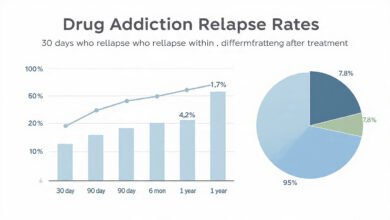
According to NIDA, relapse rates for substance use disorders are in line with those for other chronic diseases — somewhere between 40 and 60 percent. This is not an argument against treatment. It is an argument for persistence.
When someone relapses, the goal is to:
- Return to treatment or therapy as quickly as possible
- Review and adjust the treatment plan
- Address any underlying triggers or co-occurring mental health issues
- Strengthen the support system around the individual
Shame and punishment are counterproductive. What works is compassionate, evidence-based support that treats relapse as a signal to recalibrate, not a reason to give up.
Myth 7: Addiction Only Affects Certain Types of People
Who Actually Develops a Substance Use Disorder
The stereotypes attached to drug addiction — that it primarily affects people of a certain race, socioeconomic class, or neighborhood — are not only inaccurate, they are harmful. They make it easier for people in privileged groups to avoid confronting their own or their loved ones’ substance use, because the stereotype does not apply to them.
The reality is that addiction is a disease of the human brain, and all human beings have a brain. Risk factors include:
- Genetic predisposition (family history of addiction)
- Early exposure to drugs or alcohol
- Trauma, including adverse childhood experiences
- Co-occurring mental health conditions like depression or anxiety
- Environmental stress and social factors
None of these risk factors are exclusive to any particular demographic. A teenager in a wealthy suburb is just as capable of developing opioid dependency as anyone else. A corporate executive can be just as trapped in alcohol use disorder as someone without a job.
The National Institute on Drug Abuse has consistently emphasized that addiction crosses every demographic boundary. Recognizing this is not just about accuracy. It is about ensuring that resources, empathy, and treatment options are available to everyone who needs them.
Myth 8: Medication-Assisted Treatment Is Just Trading One Drug for Another
The Science Behind MAT Is Clear and Consistent
This myth is particularly common in some recovery communities and even among some healthcare providers. The argument is that using medications like methadone, buprenorphine, or naltrexone to treat opioid addiction is no different from using the opioid itself — that the person is simply dependent on a new substance.
This framing is both medically incorrect and harmful.
Medication-assisted treatment (MAT) works by stabilizing the brain’s chemistry without producing the dangerous euphoria and behavioral consequences of the addictive substance. Buprenorphine, for example, acts on the same receptors as opioids but does so in a way that blocks cravings and withdrawal without getting the patient high. Naltrexone works differently — it blocks the euphoric effects of opioids entirely, making relapse less rewarding.
The evidence base for MAT is strong. The World Health Organization lists methadone and buprenorphine as essential medicines. Studies consistently show that MAT:
- Reduces mortality in people with opioid use disorder
- Lowers the risk of HIV and hepatitis C transmission
- Decreases criminal behavior associated with active addiction
- Improves social functioning and quality of life
The goal of MAT is not to keep someone dependent forever. It is to stabilize them enough to engage with therapy, rebuild their life, and eventually — if appropriate — taper off under medical supervision. Refusing or discouraging someone from MAT based on this myth can cost them their life.
Myth 9: You Can’t Force Someone Into Treatment — It Won’t Work
What the Research Says About Involuntary Treatment
The idea that addiction treatment only works when a person wants it and has sought it out on their own is understandable. But it is not entirely accurate.
Research published by NIDA and others consistently shows that people who enter treatment under pressure — from family members, employers, or the legal system — can achieve outcomes just as good as those who enter voluntarily. In some cases, structured pressure actually improves treatment retention, because people are more motivated to stay engaged.
This does not mean that any form of forced or coercive treatment is automatically effective or ethical. The quality of treatment matters enormously. But the premise that someone has to be completely self-motivated from day one before treatment can help is false.
Interventions, court-mandated treatment programs, and employer assistance programs all have legitimate track records. What matters most is not the initial motivation, but:
- The quality and appropriateness of the treatment program
- Whether co-occurring conditions are being addressed
- The strength of ongoing support systems
- Continued engagement after formal treatment ends
If you have a loved one in active substance use disorder who is resistant to help, do not assume there is nothing you can do. Consult a professional interventionist or addiction specialist about your options.
Myth 10: Once an Addict, Always an Addict — Recovery Is Impossible
Why Long-Term Recovery Is Not Just Possible, It’s Common
This might be the most demoralizing drug addiction myth of all. The belief that addiction is a permanent identity from which no one truly escapes keeps people from seeking help, and it keeps people in recovery from fully embracing their progress.
The facts are different. Millions of people are in long-term recovery from substance use disorder right now. They hold jobs, raise families, contribute to their communities, and live full, meaningful lives. They are not anomalies. They are the expected outcome of good treatment and sustained support.
Yes, addiction changes the brain. But the brain is also remarkably plastic. With sustained abstinence, proper treatment, healthy habits, and support, many of the neurological changes caused by drug use can be reduced or reversed over time. This is not wishful thinking. It is documented neuroscience.
Recovery looks different for different people. For some, it means complete abstinence. For others, it means harm reduction and managed use. For many, it is an ongoing process that requires attention and maintenance — just like managing any other chronic health condition. But the trajectory for most people who receive appropriate care is improvement, not permanent decline.
The stigma attached to the phrase “once an addict, always an addict” does active harm. It treats people as broken beyond repair and discourages both treatment-seeking and reintegration into society. The more accurate and more compassionate framing is: addiction is a chronic condition that responds to treatment, and recovery is genuinely possible.
Why These Myths Persist — and Why Dismantling Them Matters
The Role of Stigma, Media, and Education
Drug addiction myths do not survive because people are malicious. They survive because stigma goes largely unchallenged, because media portrayals of addiction are dramatic rather than accurate, and because many of us received no meaningful education on the subject.
The consequences of unchallenged misinformation are measurable:
- People delay seeking treatment because they believe it won’t work or that they should be able to handle it themselves
- Families respond with shame and anger rather than informed support
- Policymakers fund punitive approaches rather than evidence-based treatment
- Healthcare providers sometimes pass judgment rather than offering care
Dismantling these myths is not just an academic exercise. It is a public health imperative. Every time someone corrects a myth about substance use disorder in a conversation, shares accurate information online, or advocates for evidence-based treatment over punishment, they are potentially saving a life.
If you or someone you know is struggling with drug addiction, the right response is not judgment, waiting, or hoping the problem resolves on its own. It is reaching out for professional help as early as possible.
Key Facts to Remember About Drug Addiction
Here is a quick-reference summary of the truths behind each myth:
- Addiction is a chronic brain disease, not a moral failure or a choice
- Anyone can develop a substance use disorder, regardless of background
- High-functioning addiction is real and common
- Prescription and legal drugs carry genuine addiction potential
- Early treatment produces better outcomes than waiting for rock bottom
- Relapse is not failure — it is a signal to adjust treatment
- MAT is evidence-based and saves lives
- Coerced treatment can and does work
- Long-term recovery is possible and common
- Stigma is one of the biggest barriers to getting help
Conclusion
The ten drug addiction myths covered in this article share a common thread: they all make it harder for people to get the help they need. Whether it is the belief that addiction is just a willpower problem, that relapse means giving up, or that recovery is impossible, each of these misconceptions has real consequences for real people. The expert consensus is consistent — substance use disorder is a complex, chronic, but treatable brain disease that responds to evidence-based care.
Dismantling these myths requires replacing them with facts: that addiction crosses all demographics, that medication-assisted treatment works, that early intervention matters, and that recovery is not just possible but common. The more we challenge these false narratives in our communities, our conversations, and our healthcare systems, the better the outcomes for everyone affected by drug addiction.