Cannabis Use Disorder: Diagnosis and Treatment Options
Cannabis Use Disorder affects millions worldwide. Learn the 11 DSM-5 diagnostic criteria, proven treatment options, and how to take the first step toward recovery.

Cannabis Use Disorder (CUD) is one of the most underrecognized substance use conditions in the world today. Despite a cultural narrative that cannabis is completely harmless, the clinical reality is more complicated. As legalization spreads across the United States and beyond, use rates are climbing — and so are the number of people who develop a problematic relationship with the drug.
This is not a moral judgment. Cannabis use disorder is a genuine medical diagnosis with real criteria, real consequences, and real treatment pathways. According to the Diagnostic and Statistical Manual of Mental Disorders, Fifth Edition (DSM-5), CUD affects anywhere from 9% to 31% of people who report past-year cannabis use. That range is wide, but even the lower estimate translates to millions of individuals whose daily functioning, relationships, and mental health are quietly being eroded.
What makes CUD especially tricky is that many people don’t recognize it in themselves. Unlike alcohol or opioid dependence, the signs tend to be subtle at first — a slow drift toward using more, social withdrawal, difficulty concentrating when not using. By the time someone is seeking help, they often have years of heavy use behind them.
This article breaks down what cannabis use disorder actually is, how clinicians diagnose it, what the most effective treatment options look like today, and what the research says about long-term outcomes. Whether you’re a patient, a family member, or a clinician looking for a clinical refresher, this guide covers everything you need to know.
What Is Cannabis Use Disorder?
Cannabis use disorder is a clinical condition defined by a problematic pattern of cannabis use that causes significant impairment or distress in a person’s life. It falls under the broader umbrella of substance use disorders (SUDs) — the same diagnostic category that includes alcohol use disorder and opioid use disorder.
CUD is not simply “using a lot of weed.” The distinction lies in whether that use is causing real harm — to relationships, work performance, physical health, mental health, or overall daily functioning — and whether the person is unable to stop or cut back despite wanting to.
The condition exists on a spectrum:


- Mild CUD — 2 to 3 diagnostic criteria met
- Moderate CUD — 4 to 5 criteria met
- Severe CUD — 6 or more criteria met
Severe CUD is what most people mean when they talk about marijuana addiction. However, even mild CUD deserves clinical attention, because left untreated it tends to progress over time.
THC (delta-9-tetrahydrocannabinol) is the primary psychoactive compound in cannabis responsible for both its pleasurable effects and its addictive potential. THC acts on the brain’s endocannabinoid system, particularly on CB1 receptors, triggering dopamine release and reinforcing repeated use. Over time, the brain adapts to this artificial stimulation, which is what drives tolerance, craving, and cannabis withdrawal symptoms when use stops.
How Common Is Cannabis Use Disorder?
Almost 20 million people aged 12 years or older report past-month cannabis use in the United States, and 8 million report daily or near-daily use. These numbers have been climbing steadily over the past decade alongside the expansion of legal cannabis markets and a declining perception of risk.
Contrary to the popular perception that cannabis is low-risk, heavy cannabis use is associated with cognitive impairment, increased risk for psychotic disorders and other mental health problems, lower educational attainment, and unemployment.
Despite these numbers, very few people with CUD actually seek treatment. Although cannabis use has increased by nearly 18% over the past decade, few individuals receive treatment for CUD. Stigma, denial, and the perception that cannabis “isn’t a real drug” all contribute to this gap.
Cannabis Use Disorder Diagnosis: The DSM-5 Criteria
The 11 Official Diagnostic Criteria
The DSM-5 diagnosis of cannabis use disorder requires that a person meet at least 2 of the following 11 criteria within a 12-month period:
- Using cannabis in larger amounts or over a longer period than intended
- Persistent desire or unsuccessful efforts to cut down or control cannabis use
- Spending a great deal of time obtaining, using, or recovering from the effects of cannabis
- Craving or a strong desire to use cannabis
- Recurrent cannabis use resulting in failure to fulfill major role obligations at work, school, or home
- Continuing to use cannabis despite persistent or recurrent social or interpersonal problems caused or worsened by its effects
- Giving up or reducing important social, occupational, or recreational activities because of cannabis use
- Recurrent cannabis use in physically hazardous situations
- Continued cannabis use despite knowing it is causing or worsening a physical or psychological problem
- Tolerance — needing more cannabis to achieve the same effect, or diminished effect with the same amount
- Withdrawal — experiencing characteristic withdrawal symptoms when use stops or decreases
According to the American Psychiatric Association, you must have at least two of these signs present for over 12 months to be diagnosed with cannabis use disorder.
Cannabis Withdrawal Syndrome
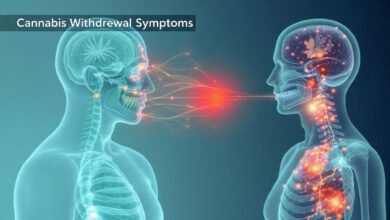
One important shift in the DSM-5 was the formal recognition of a cannabis withdrawal syndrome — something that was absent from earlier diagnostic editions. Withdrawal symptoms typically appear within 24 hours of stopping or significantly reducing use, and they can include:
- Irritability, anger, and aggression
- Anxiety and restlessness
- Insomnia and vivid dreams
- Decreased appetite and weight loss
- Depressed mood
- Physical discomfort (sweating, chills, headaches)
Early withdrawal symptoms typically peak within the first week of cannabis use reduction, and symptoms usually improve as THC levels decrease in the body.
The severity of withdrawal correlates directly with how long and how heavily someone has been using. Heavy, long-term users experience more intense withdrawal, which in turn increases the risk of relapse.
Screening Tools for CUD
Clinicians have several validated tools available to screen for cannabis use disorder:
- CAGE-AID (adapted from the alcohol screening tool)
- AUDIT-C adapted for cannabis
- Cannabis Use Disorder Identification Test (CUDIT) and its short form, the CUDIT-SF — one of the most widely used and validated tools specifically designed for CUD screening
Although screening tools for CUD are not as widely studied as those for other substance use disorders, there are several assessment tools available to providers, including the Cannabis Use Disorder Identification Test Short-Form (CUDIT-SF).
Risk Factors for Developing Cannabis Use Disorder
Understanding who is most at risk helps clinicians intervene early and helps individuals recognize warning signs in themselves or others.
Biological and genetic risk factors:
- Family history of substance use disorder
- Early onset of cannabis use (adolescence)
- Genetic variants affecting the endocannabinoid system
Psychological risk factors:
- Pre-existing anxiety disorders or depression
- PTSD and trauma history
- ADHD and impulse control difficulties
- Using cannabis to self-medicate symptoms of a mental health condition
Environmental risk factors:
Access to cannabis is a particularly significant environmental risk factor. Factors that increase the extent of exposure include use of cannabis by a member of your household and use of cannabis by your peers.
- Living in a state or country where cannabis is legal or normalized
- High-stress environments (poverty, unstable housing)
- Early exposure to trauma or adverse childhood experiences
Cannabis Use Disorder and Co-Occurring Mental Health Conditions
This is one of the most clinically important aspects of CUD — and one that’s often missed in general practice. Dual diagnosis (the co-occurrence of a substance use disorder and a mental health condition) is extremely common in people with CUD.
About half of people who experience a mental health condition will also experience a substance use disorder like CUD and vice versa. This is known as a dual diagnosis. SUDs and other mental health conditions happen because of overlapping factors like genetic vulnerabilities, issues with similar areas of the brain, and environmental influences.
The most common co-occurring conditions include:
- Major depressive disorder
- Generalized anxiety disorder
- Bipolar disorder
- Post-traumatic stress disorder (PTSD)
- Psychotic disorders, including schizophrenia
The relationship is bidirectional. Cannabis can trigger or worsen psychosis in vulnerable individuals, while people with psychotic disorders are significantly more likely to use cannabis heavily. Cannabis cessation in individuals with psychotic disorders is associated with improved clinical outcomes and reduced relapse risk.
When treating CUD, failing to address a co-occurring mental health condition is one of the most common reasons treatment fails. As people with CUD often have co-occurring mental health conditions, treating them together rather than separately is generally better.
Treatment Options for Cannabis Use Disorder
Here is where things get genuinely promising. Despite what many people believe, cannabis use disorder is treatable. The treatment landscape has expanded significantly over the past two decades. While there is still no FDA-approved medication specifically for CUD, several behavioral therapies have strong evidence behind them — and pharmacological options are actively being studied.
For patients seeking treatment for CUD, goals can include sustained abstinence, reduced use, or harm reduction. Treatment of CUD typically occurs in the outpatient setting; however, residential or inpatient treatment may be required for more complex cases.
Behavioral and Psychosocial Treatments
1. Cognitive Behavioral Therapy (CBT)
Cognitive behavioral therapy is one of the most studied and most effective treatments for CUD. CBT helps people identify the situations, emotions, and thought patterns that trigger their cannabis use, develop coping strategies to avoid or manage those triggers, and build a life that doesn’t depend on the drug.
The goal of CBT is to teach individuals how to identify the circumstances and triggers that promote cannabis use, develop coping skills to prevent return to use, and pursue alternative behaviors. Several randomized controlled trials examining the role of CBT in the treatment of CUD have found reductions in cannabis use and fewer cannabis-related issues compared to control groups.
CBT is typically delivered in individual or group formats over 6 to 12 weeks, though longer treatment durations have shown better outcomes.
2. Motivational Enhancement Therapy (MET)
Motivational enhancement therapy is specifically designed for people who feel ambivalent about quitting — which, honestly, is most people with CUD when they first seek help. Rather than pushing people to change, MET works to resolve that ambivalence and build the internal motivation needed to do the hard work of recovery.
One approach called motivational interviewing helps to turn ambivalence about quitting into energy to quit.
MET is often used as a brief intervention (2 to 4 sessions) and is especially useful as an entry point to more intensive treatment or for people in the early stages of considering change.
3. Contingency Management (CM)
Contingency management is a behavioral approach that uses tangible rewards — vouchers, prizes, or privileges — to reinforce positive behaviors like abstinence, treatment attendance, and meeting personal goals.
Contingency management gives patients tangible rewards for positive behaviors.
CM is a behavioral intervention that utilizes financial or other incentives to positively reinforce abstinence, or other desirable target behaviors such as treatment attendance, and has yielded beneficial effects in substance use disorders during treatment.
One limitation of CM is that the benefits can wane after the incentives stop — which is why it’s most effective when combined with other therapies like CBT or MET.
4. Combined Behavioral Approaches
The research strongly supports combining therapies rather than relying on one alone. Clinical trials have primarily focused on cognitive-behavioral therapy, motivational enhancement therapy, and contingency management, and the evidence base suggests that a combination of the three treatment modalities produces the best outcomes.
This combination approach is now considered the gold standard for cannabis use disorder treatment in adults.
5. Family-Based Therapy for Adolescents
Adolescents with CUD have specific treatment needs that adult-focused therapies don’t always address. Multidimensional Family Therapy (MDFT) is one of the strongest evidence-based options for younger patients.
Multidimensional family therapy has been found beneficial for younger adolescents who consume large amounts of cannabis and have psychiatric comorbidities.
In adolescents, care should prioritize cognitive behavioral therapy, motivational enhancement therapy, and family-based therapy, while pharmacologic options remain investigational.
Pharmacological Treatment Options
There are currently no FDA-approved medications specifically for treating cannabis use disorder. This is a significant gap in the treatment toolkit, but research is moving quickly, and several medications have shown promising results in clinical trials.
6. Cannabinoid-Based Medications
The rationale here is similar to nicotine replacement therapy — use a less harmful form of the substance to reduce withdrawal symptoms while people work through behavioral treatment.
- Nabiximols (Sativex): A cannabis-derived spray containing both THC and CBD. The use of cannabinoids such as dronabinol and nabiximols may mitigate some symptoms of withdrawal and craving; however, use should be considered experimental.
- Nabilone: A synthetic CB1 agonist approved for chemotherapy-related nausea. In a laboratory study, 6 to 8 mg/day of nabilone reduced cannabis use in a laboratory model of relapse and reduced symptoms of cannabis withdrawal.
- Dronabinol (synthetic THC): Has shown modest effects on withdrawal symptoms in inpatient settings.
7. Other Promising Pharmacological Options
- N-acetylcysteine (NAC): An antioxidant that modulates glutamate signaling. N-acetylcysteine and gabapentin are two of the most promising medications, although no pharmacologic treatment has emerged as clearly efficacious.
- Varenicline: Primarily used for smoking cessation. In a placebo-controlled pilot trial of 72 participants, treatment with varenicline was associated with greater rates of cannabis abstinence compared with placebo.
- CBD (Cannabidiol): Non-intoxicating and non-addictive, CBD has shown early promise in reducing cravings and anxiety related to cannabis use. Research is ongoing.
- Naltrexone: Typically used for alcohol and opioid use disorder, it has shown some effects on cannabis self-administration in controlled studies.
- Gabapentin: An anticonvulsant that has shown mixed results in CUD trials and needs further investigation before it can be recommended routinely.
The bottom line on medications: they are best used as adjuncts to behavioral treatment, not standalone solutions. Psychotherapeutic treatment remains first line for the treatment of CUD in adults and adolescents.
Setting Goals for Treatment
One important — and often overlooked — aspect of treating cannabis use disorder is that abstinence is not always the only valid goal. When considering treatment for CUD, it is important to set shared goals with patients; these treatment goals may appropriately range from decreasing cannabis use to complete abstinence.
For some patients, harm reduction is a realistic and appropriate starting point. For others — particularly those with psychotic disorders or severe functional impairment — abstinence is the clear target. A good clinician meets the patient where they are rather than imposing a one-size-fits-all goal from the start.
What Treatment Looks Like in Practice
Treatment for cannabis use disorder is rarely a straight line. CUD is a chronic, relapsing condition, and treatment often requires multiple attempts, level of care adjustments, and ongoing support.
A typical treatment pathway might look like this:
- Screening and assessment — using validated tools like CUDIT-SF and a structured clinical interview
- Setting shared treatment goals — abstinence, reduction, or harm reduction
- Outpatient behavioral therapy — usually CBT, MET, or a combination
- Medication consideration — for managing withdrawal symptoms or co-occurring conditions
- Addressing co-occurring mental health conditions simultaneously
- Relapse prevention planning — identifying triggers, building coping skills, establishing social support
- Long-term monitoring — because recovery is a process, not an event
For more complex cases — severe CUD, significant psychiatric comorbidity, prior treatment failures — residential or inpatient treatment may be appropriate before stepping down to outpatient care.
Effective management of cannabis-related disorders requires clinicians to integrate validated screening tools, structured diagnostic assessments, and psychosocial treatment strategies while monitoring for acute toxicity, withdrawal, and comorbid psychiatric conditions.
Special Populations and Tailored Treatment
Adolescents
Young people with CUD face unique developmental vulnerabilities. The adolescent brain is still developing, and early heavy cannabis use is associated with lasting effects on memory, attention, and executive function. Family involvement is critical — and family-based therapies like MDFT have the strongest evidence in this group.
People with Co-Occurring Psychosis
Comorbidity management requires concurrent treatment of coexisting psychiatric illness to optimize outcomes. Anxiety disorders, depressive disorders, bipolar disorder, PTSD, and psychotic disorders should receive guideline-concordant treatment alongside interventions for CUD.
People with ADHD
In patients with ADHD, behavioral therapy and digital interventions such as CANreduce 2.0 support meaningful reductions in cannabis use.
Pregnant Women
Cannabis use during pregnancy carries significant risks to fetal neurodevelopment and should be addressed immediately in a non-judgmental, supportive clinical context. Behavioral therapies remain the primary treatment approach; medications are generally avoided during pregnancy.
Support Resources for Cannabis Use Disorder
Finding help is easier than many people think. Several well-established resources exist:
- SAMHSA’s National Helpline — free, confidential, 24/7 treatment referral service: 1-800-662-4357
- FindTreatment.gov — a federal resource for locating nearby treatment programs
- Marijuana Anonymous — a 12-step peer support program available in person and online
- SMART Recovery — a science-based, four-step program available in person and online
- National Institute on Drug Abuse (NIDA) — extensive evidence-based information on cannabis and addiction
The Road Ahead: Emerging Research
The field of cannabis use disorder treatment is moving fast. Several promising areas of research include:
- CB1 neutral antagonists like AM4113, which may reduce cannabis-seeking behavior without the psychiatric side effects seen with earlier CB1 blockers like rimonabant
- Pregnenolone derivatives (such as AEF0117) that act as signaling-specific CB1 inhibitors and have shown early promise in preclinical models
- Digital therapeutics and app-based interventions like CANreduce 2.0, which make CBT accessible outside clinical settings
- Personalized medicine approaches that use genetics to match patients to the most effective treatments
While no magic pill exists yet, the trajectory of research is encouraging. Preliminary results for clinical trials testing a drug that increases the brain’s cannabis-like proteins are promising — especially in terms of reducing drug use and withdrawal symptoms.
Conclusion
Cannabis use disorder is a real, diagnosable, and treatable medical condition that affects millions of people globally. Diagnosing it requires meeting at least 2 of 11 DSM-5 criteria over a 12-month period, with severity ranging from mild to severe based on the number of criteria met. The most effective treatments currently available are behavioral — particularly cognitive behavioral therapy, motivational enhancement therapy, and contingency management — ideally used in combination.
While no FDA-approved medications specifically target CUD, several pharmacological options show promise as adjuncts to therapy, and research is advancing rapidly. Co-occurring mental health conditions must be treated alongside CUD for the best outcomes, and treatment goals should be individualized — whether that means full abstinence, reduced use, or harm reduction. The most important step anyone can take is simply recognizing the problem and asking for help.