Famous Cocaine Addiction Recovery Stories That Inspire Hope
Discover 10 powerful famous cocaine addiction recovery stories that prove sobriety is possible. Real journeys from celebrities who battled cocaine and won their lives back.
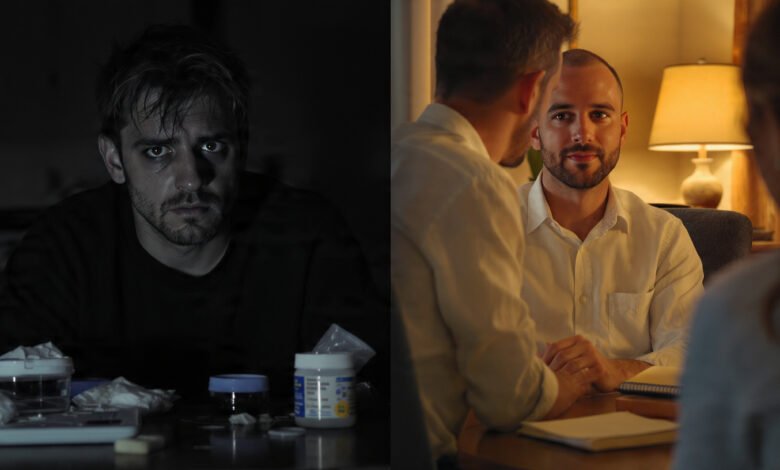
Cocaine addiction recovery is one of the most difficult journeys a person can face. Cocaine is a powerful stimulant that rewires the brain’s reward system rapidly, making cravings intense and relapse common even among people who genuinely want to get clean. The road back to a stable, sober life is rarely a straight line.
But here is the thing people often forget: recovery happens every single day, in ordinary homes, in treatment centers, and sometimes in the middle of a Hollywood career that most of the world is watching.
Famous cocaine addiction recovery stories matter not because celebrities are somehow more important than anyone else, but because their visibility strips away the shame that often stops people from seeking help. When a household name admits they hit rock bottom, it sends a quiet but powerful message to the person watching at home: if they could do it, maybe I can too.
This article walks through 10 well-documented, inspiring recovery stories from people who faced serious cocaine use disorder and found their way out. Each story looks at what the addiction looked like, what triggered the turn toward recovery, and what long-term sobriety has meant for their lives. If you or someone you love is fighting cocaine dependence, these stories are for you.
What Makes Cocaine Addiction So Difficult to Overcome
Before diving into the stories, it helps to understand why cocaine addiction treatment is so challenging in the first place.
Cocaine stimulates the brain’s dopamine system in a way that natural rewards simply cannot match. Over time, repeated use depletes the brain’s ability to feel pleasure from normal activities. This is why people in the grip of cocaine abuse often describe feeling empty, anxious, and incapable of enjoying anything without the drug.
According to the National Institute on Drug Abuse (NIDA), there is currently no FDA-approved medication specifically for cocaine use disorder, which means behavioral therapies, peer support, and structured rehabilitation programs carry most of the weight in treatment. This makes the recovery process genuinely hard and genuinely human.

The good news is that long-term sobriety from cocaine is absolutely achievable. The stories below prove it.
10 Famous Cocaine Addiction Recovery Stories That Inspire Hope
1. Robert Downey Jr. — The Most Remarkable Hollywood Comeback
If you are going to talk about famous cocaine addiction recovery, Robert Downey Jr. has to come first. His story is not just famous; it is arguably the most dramatic reversal of fortune in modern entertainment history.
Downey was introduced to drugs as a young child. His father, a filmmaker, gave him marijuana when he was just six years old, normalizing substance use from the very beginning. By his teenage years, he was experimenting with harder substances, and cocaine and heroin became regular parts of his life well into his adult career.
Through the late 1990s and early 2000s, Downey faced a string of drug-related arrests, multiple stints in rehab facilities, and a California prison sentence. Studios stopped casting him. His career, which had shown enormous promise, looked finished. He became a cautionary tale in real time.
The real shift came around 2003. Downey committed to a serious 12-step recovery program but paired it with other approaches — therapy, meditation, and Wing Chun Kung Fu, the Chinese martial art that gave him physical discipline and mental focus. He has spoken about how his wife, producer Susan Levin, was also central to his recovery, offering consistent support without enabling his old behavior.
By 2008, he was Iron Man. By the time Avengers: Endgame came out in 2019, he was one of the highest-paid actors on earth. His sobriety journey stands as a permanent, public argument that cocaine addiction recovery is real.
Key takeaway: A combination of structured rehabilitation, physical discipline, and personal support reshaped his life entirely.
2. Elton John — Finding Purpose After Cocaine and Alcohol
Sir Elton John’s story is different from most because the moment that flipped his perspective had nothing to do with a legal consequence or personal crisis. It was grief.
When Ryan White, a young AIDS activist who had become a close friend, died in 1990, Elton John confronted the fact that he had spent the previous decade in a fog of cocaine and alcohol use. He described the 1980s as years largely lost to substance abuse — a decade that should have meant something but that he mostly could not remember clearly.
He sought treatment in 1990, and in the years that followed, he established the Elton John AIDS Foundation as a way of channeling the loss of his friend into something lasting. Recovery, for him, became deeply linked to purpose. He did not just stop using cocaine; he redirected the energy into advocacy, philanthropy, and music that he actually remembers creating.
John has been open in interviews about the fact that cocaine dependence had been a long, compounding problem. He had used the drug regularly for years, and stopping required real medical and psychological support. His willingness to speak publicly about addiction treatment helped normalize the conversation around celebrity substance use disorder.
Key takeaway: Grief and purpose can be powerful drivers of sustained cocaine recovery.
3. Bradley Cooper — Getting Sober Before the Fame Arrived
Bradley Cooper’s story is less widely discussed than Downey’s, but it may resonate more with people who struggle with cocaine addiction in their 20s before their lives are fully established.
Cooper’s problems began in his 20s after moving to Los Angeles. Dealing with low self-esteem, he turned to alcohol and cocaine as coping mechanisms. He struggled toward sobriety between the ages of 29 and 34, a decision he credits with saving both his career and his life.
The key detail in Cooper’s story is that he got clean before he was famous, which is actually harder in some ways. There was no intervention from a studio, no public embarrassment that forced his hand. He simply recognized that cocaine use was destroying his potential and made the choice to stop.
Since achieving sobriety, Cooper went on to star in Silver Linings Playbook, American Sniper, and A Star Is Born, the last of which he also directed and for which he received multiple Academy Award nominations. He has said plainly that none of that would have happened if he had not addressed his substance use disorder first.
Key takeaway: Cocaine recovery without public pressure is possible and it can happen before your life hits a visible bottom.
4. Demi Lovato — An Ongoing and Honest Recovery Story
Demi Lovato’s relationship with cocaine addiction and recovery is not a tidy before-and-after story, and that honesty is exactly what makes it so valuable.
Lovato began using cocaine as a teenager during the height of their Disney Channel fame. The drug became wrapped up with eating disorder behavior and undiagnosed bipolar disorder, creating a layered mental health crisis that no single treatment approach could fully address. They first entered drug rehabilitation in 2010.
The path since has included periods of sobriety, periods of relapse, and one near-fatal overdose in 2018 that landed them in the hospital for two weeks. Lovato has been consistently transparent about all of it — including the uncomfortable middle parts where recovery was not working the way they hoped.
By late 2021, Lovato described being fully sober, not relying on any substances including alcohol. They have spoken about how addressing the underlying mental health conditions alongside the cocaine abuse was essential, something that earlier treatment attempts did not fully do.
Lovato has said, “Recovery is something that you have to work on every single day, and it’s something that doesn’t get a day off.” That framing — recovery as daily practice rather than a destination — is one of the most realistic descriptions you will find anywhere.
Key takeaway: Co-occurring disorders like bipolar disorder must be treated alongside cocaine addiction for lasting recovery to take hold.
5. Stephen King — Recovery That Unlocked a New Level of Work
Stephen King’s cocaine addiction recovery story is unique because of what came after it: some of the best work of his career.
King was a heavy cocaine user from approximately 1978 until 1986, a period during which he was simultaneously raising a family and producing an enormous amount of work. He has admitted in interviews that he barely remembers writing some of his most beloved novels from that era because he was so consistently under the influence.
It was his family that staged the intervention. His wife Tabitha gathered evidence of his drug and alcohol use — beer cans, bottles, pill containers — and presented it to him directly. He has said he did not want to hear it, but he heard it anyway.
After getting clean, King wrote The Green Mile, Bag of Bones, and Hearts in Atlantis, among many others — books that are widely considered sharper and more emotionally resonant than much of his work from the cocaine years. His story makes a different kind of case for cocaine addiction treatment: you may not know how much the drug is actually costing you until you stop.
Key takeaway: Substance use disorder can quietly degrade your best work even when you think it is not affecting you.
6. Eric Clapton — Building Recovery Into a Lifelong Mission
Eric Clapton’s road through addiction stretched across several decades and multiple substances. He dealt with heroin addiction in the early 1970s, recovered from that, but then continued using cocaine and alcohol for years afterward. It was not until 1987 that he finally achieved the kind of sustained sobriety that would hold.
Clapton has more than 30 years of recovery and fiercely advocates for others. He even built his own addiction treatment center. The Crossroads Centre in Antigua opened in 1998 and has treated thousands of people with alcohol and drug addiction over the decades since.
What makes Clapton’s story particularly instructive is the gap between his early partial recoveries and his eventual lasting sobriety. He stopped using heroin but kept using cocaine. He attended treatment but relapsed on other substances. True cocaine addiction recovery for him required confronting all of his addictions at once, not trading one for another.
Key takeaway: Partial recovery that leaves other substances in place often delays lasting sobriety. Comprehensive addiction treatment addresses the whole picture.
7. Drew Barrymore — Starting Young and Recovering Early
Drew Barrymore’s story is one of the earliest and most documented cases of childhood celebrity substance abuse. She was a legitimate movie star as a young child, and by her early teens she was using cocaine at parties in Hollywood.
Her cocaine addiction led to her being blocked from working at just the age of 12, which she later recounted in an interview. By her own account, she had used a range of substances before most people graduate high school.
What is striking about Barrymore’s story is how young she was when she turned it around. She entered rehabilitation as a teenager, got serious about recovery, and rebuilt her career and personal life from a starting point most people would consider catastrophic. She has called recovery the single greatest accomplishment of her life.
Her story is important particularly for parents and for young people because it demonstrates that cocaine addiction does not wait for adulthood and neither does the path back from it.
Key takeaway: Cocaine addiction recovery can begin at any age, and an early start on sobriety can lead to a full and remarkable life.
8. Tim Allen — From Cocaine Arrest to Comedy Legend
Tim Allen is not someone most people immediately associate with cocaine addiction, which is part of what makes his story worth telling.
After early struggles with cocaine abuse that included incarceration for drug possession, Allen cleaned up his act and later wrote about his experience. He said, “It put me in a position of great humility, and I was able to make amends to friends and family and refocus my life on setting and achieving goals.”
Allen was arrested in 1978 for possession of cocaine with intent to distribute and served over two years in federal prison. He has credited that period of incarceration as a turning point that forced genuine self-reflection. After his release, he pursued sobriety, got into stand-up comedy, and eventually built one of the most successful television careers in American history with Home Improvement and later Last Man Standing.
His story underlines something important about cocaine recovery: consequences do not have to permanently define you. The arrest, the prison time, the loss of early opportunities — none of that prevented him from building a meaningful career and life on the other side.
Key takeaway: Even significant legal consequences tied to cocaine addiction do not close the door on a full and successful life.
9. Robin Williams — Humor, Heart, and a Battle With Cocaine
Robin Williams was one of the most gifted comedic performers who ever lived, and he was also candid about his struggles with cocaine and alcohol throughout the 1980s.
Williams has said that the overdose death of his friend John Belushi was the wake-up call he needed to get help with his own addiction. Watching someone he respected and cared about die from a cocaine and heroin overdose made the risk real in a way that abstract warnings never had.
Williams achieved sobriety and maintained it for decades, though he relapsed in 2006 and returned immediately to treatment. He spoke openly about how ongoing recovery required constant attention. He was a vocal advocate for addiction treatment and for reducing the stigma around substance use disorder.
His story is a reminder that cocaine addiction recovery is not a one-time achievement but a practice — and that returning to treatment after a relapse is not failure. It is part of the process.
Key takeaway: Relapse does not erase cocaine addiction recovery. Reaching back out for help quickly after a setback is itself a form of courage.
10. Mary-Kate Olsen — Choosing Recovery in the Public Eye
Mary-Kate Olsen grew up entirely on camera. By the time she and her twin sister Ashley were teenagers, they were managing a billion-dollar brand. The pressure was relentless, and by her early twenties, Olsen had developed a serious problem with cocaine alongside an eating disorder.
In 2004, Olsen spent six weeks in rehabilitation to address her eating disorder and addiction. She stepped back from the spotlight during that period and took the time to genuinely work on her health rather than manage appearances.
What makes her story notable is the deliberate choice to prioritize recovery over maintaining a public image. In an industry that often encourages denial, she acknowledged the problem and did something about it. She later went on to build one of the most respected fashion labels in the industry with her sister.
Olsen has said, “The way I see it, you have to take every chance you get because there may not be another one. You have to learn from your mistakes because nobody’s perfect.”
Key takeaway: Stepping away from public life temporarily for drug rehabilitation can save the long-term career and wellbeing it appears to put at risk.
What These Famous Cocaine Addiction Recovery Stories Have in Common
Looking across all 10 stories, a few themes keep showing up.
Professional help was non-negotiable. Every person on this list used some form of structured addiction treatment — inpatient rehab, therapy, 12-step programs, or a combination. No one simply white-knuckled their way through cocaine dependence alone.
Underlying issues had to be addressed. Lovato’s bipolar disorder, Cooper’s self-esteem struggles, Barrymore’s childhood environment — in nearly every case, the cocaine abuse was connected to something deeper that also required attention.
Relapse is part of many recovery journeys. Williams relapsed. Lovato relapsed multiple times. Affleck relapsed. None of them stopped trying, and that persistence was the difference.
Purpose and community accelerated recovery. Elton John found purpose in advocacy. Clapton built a treatment center. Many joined AA or 12-step programs and found accountability in community. Having a reason beyond yourself to stay sober appears to strengthen long-term outcomes.
How Cocaine Addiction Treatment Actually Works
Understanding these stories is more useful when you also understand what evidence-based cocaine addiction treatment looks like in practice. According to SAMHSA’s treatment guidelines, cocaine use disorder is typically treated through:
- Cognitive Behavioral Therapy (CBT): Helps identify triggers for cocaine use and develop healthier coping strategies
- Contingency management: Uses positive reinforcement to encourage sustained sobriety
- 12-step and peer support programs: Provide community, accountability, and shared experience
- Dual diagnosis treatment: Addresses co-occurring mental health disorders alongside cocaine addiction
- Residential or inpatient rehabilitation: Provides intensive structured care away from old environments and triggers
The common thread across both the famous stories above and the clinical research is this: cocaine addiction recovery works best when it is comprehensive, consistent, and connected to professional and social support.
Why These Stories Matter Beyond Celebrity Culture
It would be easy to dismiss famous cocaine addiction recovery stories as entertainment. Rich people with access to the best treatment centers in the world getting better is a different story from what most people face, right?
Not entirely. The mechanics of cocaine dependence — the neurological changes, the cravings, the emotional triggers — are the same regardless of tax bracket. What changes is access to resources, which is a real and unfair gap. But the human experience of wrestling with substance use disorder and eventually choosing a different path is universal.
These stories are valuable because they make that struggle visible. They challenge the assumption that addiction is a character flaw rather than a medical condition. They show that people who have lost almost everything to cocaine abuse can rebuild. And they remind anyone fighting cocaine addiction today that they are not uniquely broken.
Conclusion
Famous cocaine addiction recovery stories like those of Robert Downey Jr., Elton John, Demi Lovato, Stephen King, Eric Clapton, Drew Barrymore, Tim Allen, Robin Williams, Bradley Cooper, and Mary-Kate Olsen all carry a single, consistent message: recovery from cocaine addiction is real, it is possible, and it often comes through a combination of professional addiction treatment, honest self-reflection, personal support, and — perhaps most importantly — the decision to keep trying even after setbacks.
These stories are not fairy tales with clean endings; several involve relapses, public failures, and long difficult stretches. That is exactly what makes them credible and worth reading. Cocaine dependence is a serious, documented substance use disorder, not a moral failing, and every one of these individuals found a way through it. If you or someone you love is struggling, their stories are not just inspiration — they are evidence that the path forward exists.