How to Support Someone in Addiction Recovery: A Complete Guide
Learn how to support someone in addiction recovery with 10 proven, compassionate strategies that protect your well-being and strengthen their sobriety journey.
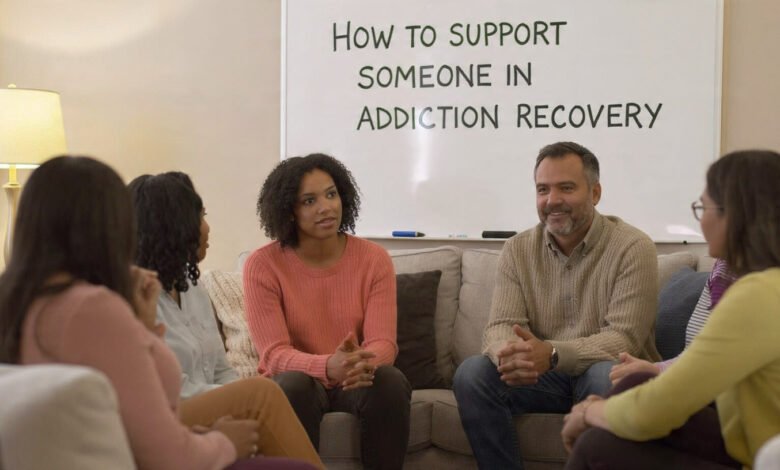
How to support someone in addiction recovery is one of the most searched questions by families, partners, and friends who love someone fighting substance use disorder. It’s a question that comes loaded with fear, hope, exhaustion, and an overwhelming desire to just do something right. If you’re standing in that place right now, this guide is for you.
Addiction recovery is not a straight line. It’s a long, deeply personal process filled with progress, setbacks, breakthroughs, and some very hard days. The person going through it needs consistent, informed, and healthy support from the people around them. But here’s what most guides won’t tell you: supporting someone in recovery is a skill. It takes knowledge, boundaries, patience, and a willingness to take care of yourself in the process.
Research consistently shows that family support in recovery is one of the strongest predictors of long-term sobriety. But the wrong kind of support, like covering up consequences, giving money without accountability, or walking on eggshells 24/7, can unintentionally slow recovery down.
This article breaks down exactly what helpful support looks like, what to avoid, how to handle relapse, and how to protect your own mental health along the way. Whether your loved one is in early recovery, heading into a treatment program, or has been sober for years, these strategies apply at every stage.
Understanding Addiction Before You Can Support Recovery
Before you can effectively support someone in addiction recovery, you need to understand what you’re actually dealing with.
Substance use disorder (SUD) is classified as a chronic brain disease, not a character flaw or a failure of willpower. According to the National Institute on Drug Abuse (NIDA), addiction changes the structure and function of the brain, particularly the areas responsible for reward, stress, and self-control. This is why someone can desperately want to stop using and still find it incredibly difficult.
Why People Use Substances in the First Place
People don’t wake up one day and decide to become addicted. Substance misuse often begins as a response to something: trauma, chronic pain, anxiety, depression, peer pressure, curiosity, or a need to cope with overwhelming feelings. Understanding this context helps you respond with empathy rather than judgment.


Common root causes of addiction include:
- Co-occurring mental health disorders like depression, PTSD, or anxiety (this is known as a dual diagnosis)
- Childhood trauma or adverse life experiences
- Genetic predisposition and family history
- Social environments where substance use is normalized
- Untreated chronic physical pain
When you understand that addiction is driven by these factors, it becomes easier to separate the person from the behavior, which is the foundation of genuinely useful support.
The Stages of Recovery
Recovery doesn’t begin and end with detox. It unfolds in stages, and your role as a support person changes depending on where your loved one is in the process:
- Pre-contemplation – They don’t yet see a problem
- Contemplation – They’re starting to think about change
- Preparation – They’re getting ready to take action
- Action – They’re actively engaging in treatment or sobriety
- Maintenance – They’re working to sustain long-term recovery
- Relapse – They return to use temporarily (this is common and part of the process for many people)
Knowing which stage your loved one is in helps you calibrate your support rather than push them in a direction they’re not ready for.
How to Support Someone in Addiction Recovery: 10 Proven Strategies
1. Educate Yourself About Addiction and Recovery
The single most powerful thing you can do before anything else is learn. Read about substance use disorder, how different substances affect the brain, what withdrawal looks like, and what evidence-based treatment involves. The more informed you are, the less likely you are to say the wrong thing, react in unhelpful ways, or hold unrealistic expectations.
Resources worth exploring include SAMHSA’s National Helpline (1-800-662-4357), Al-Anon literature, and books like Beyond Addiction: How Science and Kindness Help People Change by Jeffrey Foote.
Being educated also means learning the language of recovery. Avoid terms like “junkie,” “addict,” or “clean” (implying they were dirty before). Instead, use person-first language: “someone in recovery,” “a person with substance use disorder,” or “someone who uses drugs.” Language shapes how your loved one feels about themselves and their ability to change.
2. Communicate With Honesty and Compassion
Good communication is at the core of supporting someone in recovery. But it’s a balance. You want to be honest without being harsh, and caring without being enabling.
Here’s how to approach conversations:
- Use “I” statements instead of accusations. Say “I feel scared when I don’t hear from you” instead of “You never check in and I always worry.”
- Listen more than you talk. Let your loved one share what they’re going through without immediately jumping in with solutions or lectures.
- Avoid bringing up the past constantly. Recovery requires forward focus. Repeatedly bringing up past mistakes creates shame, and shame is one of the biggest relapse triggers.
- Be honest about what you can and cannot do. If you’re reaching your limit, say so clearly and calmly.
The goal isn’t to have perfect conversations. It’s to create an environment where your loved one feels safe being honest with you, including when they’re struggling.
3. Set and Maintain Healthy Boundaries
This is where a lot of people get stuck. Boundaries are not punishments. They are not walls you put up because you’re angry. Healthy boundaries in recovery support are agreements you make with yourself about what you will and will not accept, and they exist to protect both of you.
Examples of healthy boundaries include:
- “I will not give you money if I don’t know how it’s being spent.”
- “I will not cover for you with your employer if you miss work due to substance use.”
- “I will not have substances in our home.”
- “If you come home visibly intoxicated, I will go to a friend’s house for the night.”
The key is to set boundaries calmly, communicate them clearly, and actually follow through. Boundaries that are stated but not enforced quickly become meaningless. Your loved one needs to see that you mean what you say, not because you’re trying to punish them, but because consistency builds trust.
4. Avoid Enabling Behavior
Enabling is one of the most common pitfalls for people who genuinely love someone with an addiction. It happens when your desire to help actually removes the natural consequences of their substance use, which takes away a major source of motivation to change.
Common enabling behaviors include:
- Paying off debts created by drug or alcohol use
- Lying to employers, family members, or friends to cover up their behavior
- Making excuses for missed responsibilities
- Providing financial support with no accountability
- Minimizing the severity of the problem to keep the peace
There’s a fine line between support and enabling, and it can be hard to see from the inside. A useful question to ask yourself: “Am I doing this because it genuinely helps their recovery, or because it relieves my own anxiety in the short term?” If it’s the latter, it’s worth reconsidering.
5. Encourage Professional Treatment and Support Programs
You cannot and should not try to be your loved one’s therapist, sponsor, and doctor all at once. Professional addiction treatment exists for good reason. Your job is to encourage them to use it and to support that decision.
Treatment options range widely and include:
- Inpatient or residential rehab programs for intensive, structured care
- Outpatient treatment programs that allow someone to live at home while getting help
- Medication-Assisted Treatment (MAT) using medications like buprenorphine or naltrexone to manage cravings and withdrawal
- Behavioral therapies like Cognitive Behavioral Therapy (CBT) or Dialectical Behavior Therapy (DBT)
- 12-step programs like Alcoholics Anonymous (AA) or Narcotics Anonymous (NA)
- SMART Recovery, a science-based alternative to 12-step programs
You can help by researching options together, offering to make phone calls, or even going with them to their first appointment. Reducing the friction of getting help can make a real difference, especially in early recovery when motivation is fragile.
6. Build a Structured and Stable Environment
Recovery thrives in stability. Chaos, unpredictability, and high-stress environments are significant relapse triggers. If you live with or spend significant time with someone in recovery, you can support them by creating a calm, structured home environment.
Practical ways to do this include:
- Removing or securing alcohol and other substances in your home
- Establishing predictable routines around meals, sleep, and activities
- Avoiding creating unnecessary drama or conflict in the household
- Supporting their participation in sober activities and new hobbies
- Being reliable. If you say you’ll be somewhere, be there.
Helping your loved one fill their time with meaningful, substance-free activities is also valuable. Boredom and isolation are two of the most underestimated relapse triggers in early sobriety.
7. Celebrate Milestones, No Matter How Small
Recovery milestones deserve genuine recognition. One week sober is a big deal. Thirty days is a big deal. One year is enormous. Acknowledging progress reinforces the idea that effort matters and that change is real.
You don’t need grand gestures. Sometimes a simple “I’m really proud of you, and I know how hard you’re working” lands more powerfully than an expensive dinner. The point is that your loved one feels seen and valued for the work they’re putting in, not just for the outcome.
Be careful not to set the bar so high that only big milestones count. Recovery involves a lot of small daily wins: going to a meeting, asking for help, choosing water over alcohol at a party. Notice those things. Comment on them. It costs nothing and means everything.
8. Understand and Prepare for Relapse
This might be the hardest part of supporting someone through addiction recovery. Relapse happens, and it happens to many people who are genuinely committed to getting better. According to SAMHSA, relapse rates for substance use disorder are comparable to those of other chronic illnesses like diabetes or hypertension — between 40 and 60 percent.
This doesn’t mean treatment isn’t working. It means addiction is a chronic condition that requires ongoing management.
What to do if your loved one relapses:
- Stay calm. A panicked, angry, or devastated reaction can push them further away and deepen their shame.
- Express concern, not condemnation. “I’m worried about you. I want you to be okay” goes further than “I can’t believe you did this again.”
- Encourage them to return to treatment or their support network immediately rather than waiting until things get worse.
- Review and potentially reinforce your boundaries. A relapse may require a reassessment of what support you can realistically provide.
- Don’t blame yourself. A relapse is not your failure any more than it is theirs.
Relapse is not a sign that recovery is impossible. It’s a signal that the current treatment plan needs to be revisited.
9. Get Support for Yourself
Supporting someone in addiction recovery is emotionally, physically, and mentally demanding work. You cannot pour from an empty cup. Your own well-being is not optional, and it’s not selfish to prioritize it.
There are specific support programs designed for family members and friends of people with substance use disorder:
- Al-Anon – For family and friends of people with alcohol use disorder
- Nar-Anon – For family and friends of people with drug addiction
- SMART Recovery Family & Friends – A science-based alternative to 12-step family programs
- Individual therapy – Working with a therapist who specializes in families affected by addiction
These spaces give you room to process your own feelings, learn from people who truly understand your situation, and develop the tools to maintain your own mental health.
Self-care is not a luxury here. It’s a necessity. If you burn out, you can no longer support anyone.
10. Stay Consistent and Patient for the Long Haul
Recovery is not a sprint. For many people, it’s a lifelong process of managing a chronic condition. There will be good months and hard months. There will be stretches where everything feels like it’s working and periods where you’re terrified it’s all unraveling.
The most valuable thing you can offer over the long term is consistency. Showing up reliably. Keeping your word. Not giving up on the relationship even when it’s hard. Your loved one needs to know, deep in their bones, that they have someone in their corner who is not going anywhere.
This does not mean tolerating harm or ignoring your own needs. It means making a genuine, ongoing commitment to the relationship while also maintaining the boundaries that keep you both healthy.
What NOT to Do When Supporting Someone in Recovery
As important as knowing the right things to do is understanding what can actively harm recovery.
Avoid these behaviors:
- Lecturing or nagging about past mistakes or current behavior. It creates shame and resentment without producing change.
- Using judgmental or stigmatizing language like “addict,” “junkie,” or “hopeless case.”
- Doubting their ability to recover, especially to their face. If they’ve relapsed before, don’t use that as evidence that they’ll fail again.
- Bargaining or bribing — recovery has to come from within; you can’t buy it.
- Isolating yourself from your own support systems to focus entirely on theirs.
- Making threats you won’t follow through on. Empty ultimatums destroy trust and eliminate your leverage when it really matters.
- Trying to control every aspect of their recovery. Some things are not yours to manage.
How Family Therapy Can Strengthen the Recovery Process
Family therapy is one of the most underutilized but highly effective tools in addiction recovery support. Addiction doesn’t just affect the person using substances; it reshapes the entire family system. Unhealthy communication patterns, roles, and dynamics can develop over years of living with substance use disorder, and those patterns don’t automatically disappear once someone gets sober.
Family therapy provides a structured space where everyone involved can:
- Learn to communicate more effectively and honestly
- Understand how their behaviors may have contributed to or enabled the addiction
- Rebuild trust that was damaged by substance use
- Develop a shared understanding of what recovery requires from the whole family
Many inpatient and outpatient treatment programs include a family therapy component. If yours doesn’t, a licensed counselor with experience in addiction can work with your family independently. The investment is worth it.
Supporting a Loved One in Early Recovery vs. Long-Term Recovery
The kind of support that’s most useful shifts depending on where someone is in their recovery journey.
Early Recovery (0–12 Months)
Early recovery is typically the most intense and fragile period. The brain is still healing, cravings can be powerful, and the person is often rebuilding every area of their life from the ground up.
During this period, focus on:
- Stability and routine
- Being physically present and available
- Reducing unnecessary stressors in the shared environment
- Encouraging consistent engagement with treatment and support groups
- Celebrating small wins frequently
Long-Term Recovery (1+ Years)
As recovery progresses and stability increases, your role naturally shifts. Your loved one needs more autonomy and less hand-holding. The focus moves from crisis prevention to genuinely building a life worth staying sober for.
During this period, focus on:
- Supporting their long-term goals — career, relationships, education
- Continuing to honor boundaries but with less hypervigilance
- Engaging in shared activities and nurturing the relationship beyond the context of recovery
- Remaining alert to warning signs without treating every difficult moment as a relapse indicator
The Role of Community and Peer Support in Recovery
One thing research consistently shows is that peer support in recovery is enormously powerful. People who connect with others who have lived experience of addiction and recovery tend to do significantly better over time.
Encourage your loved one to engage with:
- 12-step programs like Alcoholics Anonymous (AA) or Narcotics Anonymous (NA)
- SMART Recovery meetings
- Sober living communities if appropriate
- Recovery coaching or sponsorship programs
- Faith-based recovery programs if that aligns with their values
These communities offer something that even the most loving family member cannot fully provide: genuine shared understanding from someone who has been through the same struggle.
Conclusion
Supporting someone in addiction recovery is one of the most challenging and most meaningful things you will ever do. It requires education, patience, clear boundaries, consistent compassion, and a commitment to your own well-being alongside theirs. From understanding the science of substance use disorder and avoiding enabling behaviors, to celebrating milestones, preparing for relapse, and seeking your own support through groups like Al-Anon or Nar-Anon, every strategy in this guide is built around one core truth: recovery is not something your loved one does alone, and neither is supporting it.
The most powerful thing you can offer is not money, problem-solving, or control — it’s steady, informed, honest love that respects both their journey and your own limits. Stay consistent, stay educated, and remember that long-term recovery is absolutely possible.