The TruThe Truth About Cannabis Addiction Rates in Americath
Cannabis addiction rates in America are rising sharply. Discover the real data on cannabis use disorder, who is most at risk, and what the science actually says.

Cannabis addiction rates in America have become one of the most debated public health topics of this generation. On one side, you have a booming industry worth nearly $40 billion, widespread legalization, and growing cultural acceptance. On the other, you have researchers sounding alarms about a measurable and growing addiction crisis that most people are not taking seriously enough.
The common belief that cannabis is “not addictive” has persisted for decades. It’s repeated casually in conversations, used as a policy argument, and reinforced by the fact that overdose deaths from cannabis alone are virtually nonexistent. But the data tells a more complicated story.
According to the 2024 National Survey on Drug Use and Health, nearly 7% of US teens and adults met the clinical criteria for cannabis use disorder. That translates to millions of real people experiencing real consequences — loss of productivity, cognitive impairment, withdrawal symptoms, and failed attempts to quit.
This article breaks down what the latest research actually shows about marijuana addiction statistics, who is most vulnerable, how rising THC potency is changing the equation, and what treatment looks like in 2025. Whether you use cannabis, love someone who does, or just want the facts, this is the clearest picture of where things actually stand.
What Is Cannabis Use Disorder, and How Is It Diagnosed?
Before we look at numbers, it helps to understand what we’re measuring. Cannabis use disorder (CUD) is the clinical term for cannabis addiction. It is a recognized diagnosis in the Diagnostic and Statistical Manual of Mental Disorders, Fifth Edition (DSM-5), and it is assessed the same way as any other substance use disorder.
To be diagnosed with CUD, a person must show at least two of the following symptoms within a 12-month period:
- Using more cannabis than intended
- Persistent desire or failed attempts to cut down
- Spending a large amount of time obtaining, using, or recovering from cannabis
- Cravings or strong urges to use
- Continued use despite social or interpersonal problems caused by it
- Giving up important activities because of cannabis use
- Using cannabis in situations where it is physically hazardous
- Continuing use despite knowing it causes physical or psychological harm
- Developing tolerance over time
- Experiencing cannabis withdrawal symptoms when stopping
The disorder is classified as mild (2-3 symptoms), moderate (4-5), or severe (6 or more). According to the latest available data, about 1 in 5 people diagnosed with CUD had a severe form of the disorder.


This is not a fringe condition. It is a clinical reality affecting millions of Americans right now.
The Real Cannabis Addiction Rates — What the Numbers Say
How Many Americans Are Addicted to Cannabis?
The scale of the problem is significant. An estimated 44.3 million Americans used marijuana each month in 2024, and 64.2 million reported using it within the past year. Out of that pool of users, the addiction rate is substantial.
The CDC estimates that people who use cannabis have about a 30% likelihood of developing some form of addiction. That figure rises considerably with frequency of use and age of first use.
NIDA reports that roughly 9% of all people who use marijuana will become dependent on it. That number climbs to about 17% for those who started using in their teens.
To put this into practical terms:
- Of the 44.3 million monthly users, as many as 13 million or more may meet diagnostic criteria
- Among adults aged 18 to 25, the cannabis use disorder rate is nearly 16%
- Rates of Substance Use Disorder involving marijuana were 3.7 times higher in 2024 than they were in 2015
These numbers are not cherry-picked from a single study. They come from the SAMHSA National Survey on Drug Use and Health, the CDC, and NIDA — the three most credible sources of substance use data in the United States.
Daily Use Is Now More Common Than Daily Drinking
One of the most striking findings to come out of recent research involves the frequency of use patterns. A landmark study published in the journal Addiction found that between 1992 and 2022, there was a 15-fold increase in the per capita rate of daily or near-daily cannabis use. For the first time ever, in 2022 there were more daily and near-daily cannabis users than daily and near-daily alcohol drinkers — 17.7 million versus 14.7 million.
This is important because frequency of use is one of the strongest predictors of developing marijuana dependence. The more often someone uses, and the more potent the product, the higher their risk of developing CUD.
The Role of Rising THC Potency in Cannabis Addiction
This is a factor that gets consistently underplayed in the public conversation about cannabis, and it matters enormously.
In the 1960s, most cannabis contained less than 5% THC, the chemical compound responsible for the psychoactive high. Today, THC potency in cannabis flower and concentrates available in licensed dispensaries can reach 40% or more.
Research from samples collected over time shows that the average delta-9 THC concentration nearly doubled, rising from 9% in 2008 to 17% in 2017 — and dispensary products regularly exceed even those levels.
Over the past two decades, the average THC potency of cannabis products has increased 3 to 5 times, amplifying the risk of neuropsychiatric, cardiovascular, and cognitive complications.
Why does this matter for addiction? Because higher THC concentrations produce stronger effects on the brain’s endocannabinoid and dopamine systems. This increases tolerance faster, makes withdrawal more uncomfortable, and raises the probability that a regular user will meet diagnostic criteria for CUD.
The cannabis someone used 20 years ago is genuinely not the same product that is available today. Public perception of risk has not caught up with the reality of what is being consumed.
Who Is Most at Risk of Developing Cannabis Addiction?
Teenagers and Young Adults
Early initiation — before age 15 — approximately doubles the lifetime risk of developing cannabis use disorder. The adolescent brain is still developing, and regular cannabis use during this period has documented effects on memory, attention, and emotional regulation.
Nearly 4,200 individuals between the ages of 12 and 20 try marijuana for the first time every single day. In 2025, daily marijuana use exceeded daily cigarette use among 8th graders, 10th graders, and 12th graders alike.
Between 2000 and 2024, the share of high school seniors who view regular marijuana use as dangerous dropped from 58% to 36%. Declining perceived risk almost always precedes rising use — and rising addiction rates follow.
Adults Aged 18 to 25
Young adults bear the heaviest burden of marijuana use disorder. According to the 2022 National Survey on Drug Use and Health, 38.2% of people aged 18 to 25 — about 13.3 million individuals — used marijuana. With a 16% disorder rate in this age group, the numbers add up quickly.
Daily and Frequent Users
Approximately 17% of weekly and 19% of daily cannabis smokers can be classified as cannabis dependent. The pattern is consistent: higher frequency equals higher risk.
People With Co-Occurring Mental Health Conditions
Cannabis use and mental health issues frequently overlap. Individuals with co-occurring cannabis use disorder and other substance use or mental health disorders tend to have more serious psychosocial and physical health problems, and worse treatment outcomes.
Research has consistently found elevated CUD rates among people managing anxiety disorders, depression, PTSD, and alcohol use disorder. The challenge is that cannabis is often used as self-medication for those conditions, which can mask the addiction while it deepens.
How Legalization Has Changed the Cannabis Addiction Landscape
The relationship between cannabis legalization and addiction rates is more nuanced than either side of the political debate tends to acknowledge.
On the positive side, states with legal cannabis markets have seen an 8% lower likelihood of youth initiation compared to non-legal states, and 12th-grade usage specifically declined from 22.6% to 16.2% between 2011 and 2024. Regulated markets may reduce access for minors in some ways.
But legalization has also brought new challenges:
- Increased product availability and variety
- Higher-potency concentrates and edibles becoming mainstream
- Reduced social stigma, which lowers the perceived risk of regular use
- Cannabis tax revenue has grown from $68.5 million in 2014 to $4.19 billion in 2023 — creating a powerful financial incentive to maximize consumption
Marijuana use surged an estimated 65.2% between 2015 and 2024, a period that closely mirrors the wave of state-by-state legalization.
The honest truth is that legalization appears to have reduced some harms — particularly youth access in regulated markets — while also contributing to a significant increase in overall consumption and, consequently, addiction rates among adults.
Cannabis Addiction and the Treatment Gap
Here is where the situation gets particularly concerning. Not only are cannabis use disorder rates rising — but most people who need treatment are not getting it.
Across multiple research timepoints spanning 16 years, CUD treatment utilization decreased over time, and most individuals who met diagnostic criteria for cannabis use disorder did not receive any treatment at all.
Several factors drive this treatment gap:
- Stigma: Many people with CUD do not view their cannabis use as a “real” addiction
- Lack of awareness: The cultural narrative that cannabis is harmless leads people to underestimate their problem
- Legalization: When something is legal, seeking help feels unnecessary or embarrassing
- Limited FDA-approved options: As of 2025, there is no FDA-approved pharmacologic therapy for cannabis use disorder. Psychosocial interventions including cognitive behavioral therapy (CBT), motivational enhancement therapy, and contingency management remain the first-line treatments.
Cognitive behavioral therapy (CBT) is consistently the most effective approach, helping people identify the thought patterns and behaviors that sustain their cannabis use. Motivational interviewing, contingency management, and peer support groups have also shown solid results.
The lack of medication options means that treatment relies heavily on behavioral change, which requires sustained commitment — particularly difficult when withdrawal symptoms can persist for weeks.
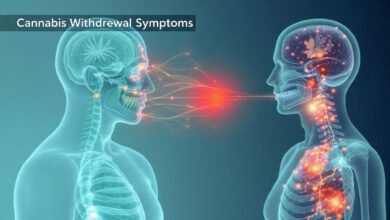
What Cannabis Withdrawal Actually Feels Like
One of the biggest myths about marijuana addiction is that quitting is easy because there is no physical withdrawal. That is simply not accurate for regular, heavy users.
Common cannabis withdrawal symptoms include:
- Irritability, anger, and anxiety
- Sleep disturbances and insomnia
- Decreased appetite and weight loss
- Restlessness and physical tension
- Depressed mood
- Strong cravings
These symptoms are real, documented in clinical literature, and are now included in the DSM-5 as a recognized withdrawal syndrome. They typically begin within 24 to 72 hours of stopping use and can persist for one to three weeks. For daily users with years of heavy use, the experience can be genuinely disruptive.
The Mental Health Connection — What the Research Shows
Cannabis use disorder does not exist in isolation. It is deeply intertwined with mental health, and the direction of causality runs both ways.
Some people use cannabis to manage anxiety, depression, or trauma symptoms. Over time, marijuana dependence can worsen those same conditions. Regular cannabis use has been linked to:
- Increased risk of anxiety and depressive disorders
- Earlier onset of psychosis in genetically vulnerable individuals
- Impaired attention, memory, and learning — particularly with early initiation
- Reduced academic and occupational performance
- Social withdrawal and relationship problems
Cannabis users have shown decreased reactivity to dopamine, suggesting a possible link to a dampening of the brain’s reward system and an increase in negative emotion and addiction severity.
This dopamine connection is important. When cannabis use alters the brain’s natural reward pathways, everyday activities — social connection, work, hobbies — can feel less rewarding by comparison. This creates a feedback loop that sustains and deepens marijuana dependence over time.
For a deeper look at the neurological mechanisms behind cannabis use disorder, the National Institute on Drug Abuse (NIDA) provides a comprehensive overview of current research on cannabis and addiction.
Demographic Disparities in Cannabis Addiction Rates
The burden of cannabis addiction in America is not distributed evenly across the population. Several demographic patterns stand out in the research.
Age: Young adults aged 18 to 25 have the highest disorder rates. Usage in the 30 to 34 age bracket jumped from 6.45 million users in 2021 to 8 million in 2022, more than doubling the rates seen in older demographics.
Gender: Male users have historically dominated marijuana addiction statistics across all age groups. However, more recent data shows women’s usage growing in younger demographic brackets.
Race: Black Americans experience the highest usage rates at 10.7% and face disproportionate impacts from cannabis dependency, particularly in urban areas where dispensary access and socioeconomic factors intersect with systemic inequities.
Region: Data from Western states consistently shows higher substance use rates than other regions, reflecting both earlier and broader legalization as well as cultural factors.
Generation: Gen Z and Millennials now account for nearly 63% of all cannabis sales nationwide, reflecting both generational shifts in attitudes toward cannabis and the broader normalization of daily use in these cohorts.
7 Key Facts About Cannabis Addiction Rates in America
Since clarity matters, here is the core of what the research tells us — in plain terms:
- About 30% of regular cannabis users will develop some form of cannabis use disorder over the course of their use.
- 9% of all lifetime cannabis users will become dependent, rising to 17% for those who start in adolescence.
- Marijuana use disorder rates were 3.7 times higher in 2024 than in 2015 — a dramatic escalation in a single decade.
- Daily cannabis users now outnumber daily drinkers in the United States — a historic first.
- THC potency has increased 3 to 5 times over the past 20 years, making addiction both faster to develop and harder to treat.
- Most people with CUD never receive treatment due to stigma, cost, lack of awareness, and the absence of FDA-approved medications.
- Early initiation before age 15 doubles the lifetime risk of developing cannabis use disorder.
For additional data and up-to-date statistics, the CDC’s Cannabis and Public Health resource center is a reliable starting point for current research.
What Needs to Change — Prevention, Policy, and Public Awareness
Addressing cannabis addiction rates in America requires honesty that cuts across political lines. The cannabis industry has every incentive to downplay addiction risk. Drug war advocates have historically overstated it. Both distortions leave the public worse off.
What a productive path forward actually looks like:
- Accurate public health messaging that acknowledges both cannabis’s legitimate uses and its real addiction potential
- Routine screening for cannabis use disorder in primary care and mental health settings
- Investment in treatment — particularly expanded access to CBT and peer support programs
- Research funding for pharmacological treatments, since no FDA-approved medication currently exists for CUD
- Potency regulation at the state level to limit the availability of extremely high-THC products that drive the most serious addiction cases
- Youth-specific prevention programs that reflect current evidence rather than outdated “just say no” messaging
The rising prevalence of CUD, driven by legalization and diminishing perceived risk, underscores the urgent need for early screening, patient education, and coordinated intervention strategies.
Conclusion
Cannabis addiction rates in America are real, rising, and consistently underestimated by the public. With roughly 30% of regular users meeting criteria for cannabis use disorder, 44.3 million monthly users, and a substance that is three to five times more potent than it was a generation ago, the scale of the problem is hard to dismiss. The most vulnerable groups — teenagers, young adults, daily users, and those with co-occurring mental health conditions — face risks that deserve honest acknowledgment rather than political spin in either direction. The treatment gap remains enormous, with most people who need help never receiving it, and no FDA-approved medication options currently available.
Legalization has brought real benefits, including regulatory oversight and tax revenue, but it has also contributed to a significant surge in use and dependency rates that public health systems are only beginning to reckon with. The path forward requires clear-eyed data, better prevention, expanded treatment access, and a willingness to hold two truths at once: cannabis is legal in many states and used responsibly by many people, and it is also genuinely addictive for a significant and growing portion of those who use it regularly.