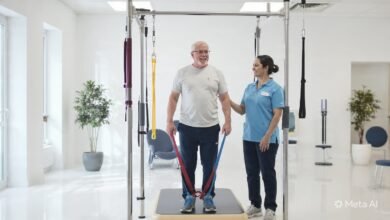
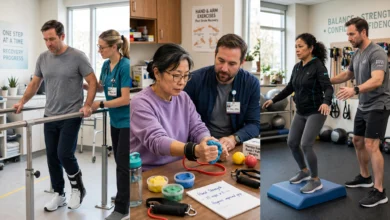
15 Physical Therapy Exercises You Can Do at Home
Discover 15 safe and effective physical therapy exercises you can do at home to build strength, ease pain, and speed up your recovery naturally.
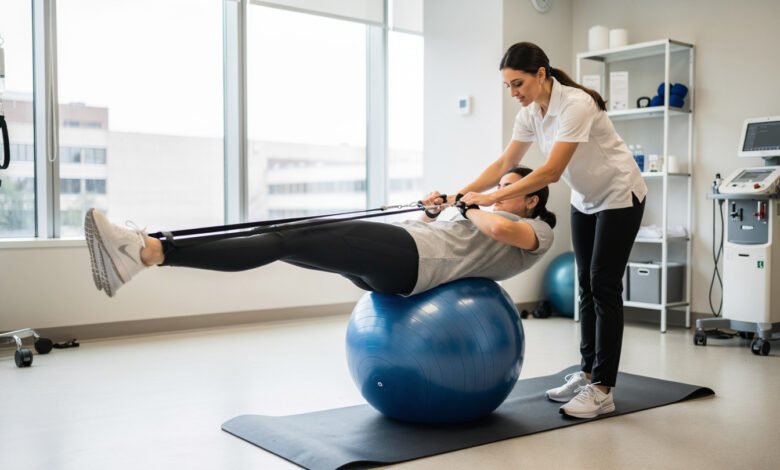
If you have ever finished a physical therapy session and wondered how to keep the progress going between visits, you are not alone. The truth is, most of your recovery actually happens at home. Therapists usually see you for 30 to 60 minutes a few times a week, but the small, consistent work you do on your own days is what really moves the needle.
The good news is that you do not need fancy equipment, a gym membership, or a huge time commitment to make real progress. A clear floor, a sturdy chair, maybe a resistance band, and a few minutes a day are usually enough. Whether you are recovering from a knee surgery, dealing with chronic back pain, easing into life after a sports injury, or simply trying to stay mobile as you get older, the right physical therapy exercises at home can be a game-changer for how you feel and move.
This guide walks you through 15 physical therapy exercises you can do at home, with step-by-step instructions, benefits, and tips for getting the most out of each one. We will also cover when to push, when to ease off, and when it is time to call your physical therapist. Think of this as your friendly, no-fluff handbook for staying strong, mobile, and pain-free without ever leaving your living room.
Why Physical Therapy Exercises at Home Matter
Doing physical therapy exercises at home is not just about saving time or money. It is about consistency. Muscles, joints, and connective tissue respond to repeated, controlled movement. When you only train them twice a week in a clinic, you miss the daily reinforcement that actually rewires how your body moves.
Here is what regular at-home rehab exercises can do for you:
- Speed up recovery after surgery, injury, or a flare-up of chronic pain
- Reduce the risk of re-injury by strengthening the muscles that support your joints
- Improve balance and mobility, which matters for everyone but especially adults over 50
- Lower long-term healthcare costs by preventing setbacks
- Give you back a sense of control over your body and your healing
Research from the American Physical Therapy Association consistently shows that patients who follow a home exercise program in addition to clinical visits recover faster and report better long-term outcomes than those who skip the homework. That is a strong case for putting on comfy clothes and getting to work.
Before You Begin: A Quick Safety Check
Before diving into any home physical therapy exercises, take a minute to set yourself up for success. These exercises are generally safe for healthy adults, but rehab is personal. What works for your neighbor might not work for you.
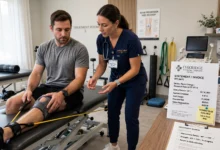
Keep these safety tips in mind:
- Talk to your doctor or physical therapist first, especially if you are recovering from surgery, have a recent injury, or live with a chronic condition like arthritis or osteoporosis.
- Warm up for 5 minutes with light walking, marching in place, or gentle arm circles. Cold muscles are more prone to strain.
- Move slowly and with control. Speed is not the goal. Form is.
- Pay attention to pain. Mild discomfort or muscle fatigue is normal. Sharp, stabbing, or sudden joint pain is not. Stop if something feels wrong.
- Breathe through every rep. Holding your breath spikes blood pressure and tightens your muscles.
- Stay consistent. Three to five short sessions a week beats one long, exhausting session.
Now, let’s get into the exercises.
The 15 Best Physical Therapy Exercises You Can Do at Home
Below are 15 of the most commonly prescribed rehab exercises at home that physical therapists recommend for general strength, mobility, balance, and pain relief. They cover the lower body, upper body, core, and a few full-body movements.
1. Glute Bridges
The glute bridge is one of the most useful physical therapy exercises at home for anyone with lower back pain, weak hips, or tight hip flexors from too much sitting. It strengthens the glutes, hamstrings, and core all at once.
How to do it:
- Lie on your back with your knees bent and feet flat on the floor, hip-width apart.
- Press through your heels and lift your hips toward the ceiling until your body forms a straight line from shoulders to knees.
- Squeeze your glutes at the top for 2 seconds.
- Lower slowly back to the floor.
Reps: 2 to 3 sets of 10 to 15
Tip: Keep your ribs down and avoid arching your lower back. The lift should come from your glutes, not your spine.
2. Bird Dog
The bird dog is a classic core stability exercise that physical therapists love because it teaches your spine to stay neutral while your arms and legs move. Great for back pain, posture, and balance.
How to do it:
- Start on your hands and knees with your wrists under your shoulders and knees under your hips.
- Slowly extend your right arm forward and your left leg back at the same time.
- Hold for 3 seconds, keeping your hips level and your back flat.
- Return to the start and switch sides.
Reps: 2 sets of 8 to 10 per side
Tip: Imagine balancing a glass of water on your lower back. If it would spill, slow down and shorten your range.
3. Wall Sits
Wall sits build serious strength in the quads, glutes, and calves without putting much stress on the knees. They are a favorite for knee rehabilitation exercises at home.
How to do it:
- Stand with your back flat against a wall and your feet about 2 feet out in front of you.
- Slide down the wall until your knees are bent at roughly 90 degrees, like sitting in an invisible chair.
- Hold the position, breathing steadily.
- Push back up to standing.
Hold time: Start with 15 to 20 seconds, work up to 60.
Tip: Make sure your knees stay behind your toes. If you feel pain in the kneecap, come up a few inches higher.
4. Heel Slides
Heel slides are gentle, controlled, and one of the first post-surgery physical therapy exercises for the knee. They help restore range of motion after a knee injury, surgery, or long period of immobility.
How to do it:
- Lie on your back with your legs straight.
- Slowly slide one heel toward your buttocks, bending the knee as far as comfortable.
- Pause for 2 seconds.
- Slide the heel back to the starting position.
Reps: 2 sets of 10 per leg
Tip: Use a towel under your heel on a smooth floor to make it slide easier. Never force the bend.
5. Clamshells
Clamshells target the gluteus medius, a small but mighty hip muscle that helps stabilize your pelvis when you walk. Weakness here is linked to knee pain, IT band issues, and lower back trouble.
How to do it:
- Lie on your side with your knees bent at 90 degrees and stacked on top of each other.
- Keep your feet together and slowly lift your top knee toward the ceiling like a clamshell opening.
- Pause at the top for 2 seconds.
- Lower with control.
Reps: 2 sets of 12 to 15 per side
Tip: Do not let your top hip roll back. The movement should come purely from the hip, not the spine.
6. Standing Calf Raises
Calf raises are simple, but they pack a lot of value. They strengthen the lower legs, improve balance, and support better walking mechanics, especially after an ankle sprain or Achilles issue.
How to do it:
- Stand near a wall or counter for balance, feet hip-width apart.
- Slowly rise onto the balls of your feet.
- Pause at the top for 1 to 2 seconds.
- Lower back down with control.
Reps: 2 to 3 sets of 15 to 20
Tip: For a tougher version, do them one leg at a time. For an easier version, hold the wall lightly with both hands.
7. Quad Sets
Quad sets are about as gentle as physical therapy exercises at home get, but they are one of the first things therapists prescribe after knee surgery. They wake up the quadriceps without bending the knee.
How to do it:
- Sit or lie on the floor with one leg straight in front of you.
- Tighten the muscle on top of your thigh, pressing the back of your knee gently into the floor.
- Hold for 5 seconds.
- Relax fully.
Reps: 2 sets of 10 per leg
Tip: Place a small rolled towel under your knee if pressing flat feels uncomfortable.
8. Straight Leg Raises
Straight leg raises build strength in the quadriceps and hip flexors without bending the knee, which makes them a smart choice when knee pain limits other exercises.
How to do it:
- Lie on your back with one knee bent (foot on the floor) and the other leg straight.
- Tighten the quad of your straight leg, then lift it about 12 inches off the floor.
- Hold for 2 seconds at the top.
- Lower slowly.
Reps: 2 sets of 10 to 12 per leg
Tip: Keep your toes pointed up at the ceiling and avoid swinging the leg. Slow and controlled wins.
9. Shoulder Pendulums
If you have ever dealt with a frozen shoulder, rotator cuff strain, or post-surgery stiffness, you have probably met the pendulum. It uses gravity to gently mobilize the shoulder joint without forcing it.
How to do it:
- Stand next to a sturdy chair or table, supporting yourself with the unaffected arm.
- Let your affected arm hang loose toward the floor.
- Use your body to gently swing the arm in small circles, then forward and back, then side to side.
- Keep the shoulder muscles relaxed throughout.
Time: 1 to 2 minutes per direction
Tip: Do not actively muscle the arm. The whole point is to let it dangle and move passively.
10. Wall Push-Ups
Wall push-ups give you a safer entry point to upper body strengthening, especially helpful for older adults or anyone recovering from a shoulder, elbow, or wrist issue.
How to do it:
- Stand about 2 feet away from a wall, feet shoulder-width apart.
- Place your palms on the wall at shoulder height and slightly wider than your shoulders.
- Bend your elbows and lean your chest toward the wall.
- Push back to the starting position.
Reps: 2 sets of 10 to 15
Tip: Keep your body in one straight line from head to heels. If it gets too easy, step your feet farther from the wall.
11. Seated Rows With a Resistance Band
Most of us spend hours hunched forward at desks, phones, or steering wheels. Seated rows pull the shoulders back and strengthen the upper back, which is huge for posture and neck pain relief.
How to do it:
- Sit on the floor with your legs straight in front of you.
- Loop a resistance band around your feet and hold one end in each hand.
- Sit tall, then pull the band toward your waist, squeezing your shoulder blades together.
- Slowly return to the start.
Reps: 2 to 3 sets of 12 to 15
Tip: Keep your elbows close to your body and avoid shrugging your shoulders up toward your ears.
12. Standing Hamstring Stretch
Tight hamstrings pull on your pelvis and lower back, which can quietly fuel back pain, poor posture, and stiff knees. A daily stretch goes a long way.
How to do it:
- Stand facing a low chair, step, or coffee table.
- Place one heel on the surface with your leg straight and toes pointed up.
- Keep your back flat and gently hinge forward at the hips until you feel a stretch in the back of your thigh.
- Hold for 20 to 30 seconds, then switch legs.
Reps: 2 to 3 holds per leg
Tip: You should feel a stretch, not pain. If you cannot keep your back straight, lower the height.
13. Cat-Cow Stretch
Borrowed from yoga and embraced by physical therapists, cat-cow gently mobilizes the entire spine. It is great for back pain, stiffness, and warming up before other exercises.
How to do it:
- Start on your hands and knees with a neutral spine.
- Inhale as you drop your belly, lift your chest, and look slightly upward (cow pose).
- Exhale as you round your back, tuck your chin, and pull your belly toward your spine (cat pose).
- Move slowly between the two positions.
Reps: 8 to 10 slow rounds
Tip: Sync the movement with your breath. The slower you go, the more you will feel it.
14. Dead Bug
Despite the funny name, the dead bug is a serious core strengthening exercise that protects your lower back by teaching your deep core muscles to stay engaged while your limbs move.
How to do it:
- Lie on your back with your arms straight up toward the ceiling and your knees bent at 90 degrees over your hips.
- Press your lower back gently into the floor.
- Slowly lower your right arm overhead and your left leg toward the floor at the same time.
- Return to start and switch sides.
Reps: 2 sets of 8 to 10 per side
Tip: If your lower back lifts off the floor, you went too far. Shorten the range until you can keep contact the whole time.
15. Single Leg Balance
Balance is a use-it-or-lose-it skill, and it is one of the most overlooked aspects of recovery and aging well. Practicing single leg stance helps prevent falls, strengthens stabilizing muscles, and improves coordination.
How to do it:
- Stand near a wall or sturdy chair for safety.
- Shift your weight to one foot and lift the other foot a few inches off the floor.
- Hold the position with your eyes open, keeping your standing leg slightly soft.
- Switch sides.
Hold time: Start with 10 seconds per side, work up to 30 to 60.
Tip: Once it feels easy, try it with your eyes closed (still near a wall) for a much bigger challenge.
How Often Should You Do These Exercises?
A common mistake people make with at-home rehab exercises is going too hard, too fast, getting sore, and quitting. Recovery is a marathon, not a sprint.
A reasonable starting plan looks like this:
- Frequency: 4 to 5 days a week
- Duration: 15 to 25 minutes per session
- Intensity: You should finish feeling worked, not wrecked
- Progression: Add reps, sets, or hold time gradually, usually every 1 to 2 weeks
You do not need to do all 15 exercises every day. Pick 5 to 8 that target your specific goals or problem area, then rotate the rest in over the week. For example, you might focus on lower body and core on Monday, upper body and balance on Wednesday, and full body on Friday.
According to Harvard Health Publishing, even 10 to 15 minutes of focused movement most days of the week can meaningfully improve strength, mobility, and pain levels for most adults. The trick is showing up consistently.
When to See a Physical Therapist in Person
While physical therapy exercises at home are powerful, they are not a complete replacement for professional care, especially after injury or surgery. A licensed physical therapist can assess your movement, catch hidden issues, and personalize a plan that fits your body.
Consider booking an in-person evaluation if you experience any of the following:
- Pain that lasts more than 2 weeks despite rest and home exercises
- Sharp, sudden, or worsening pain during or after movement
- Swelling, numbness, tingling, or weakness in a limb
- Loss of range of motion or new stiffness
- Recovery from a surgery, fracture, or major injury
- Dizziness, balance problems, or recent falls
- Chronic conditions like arthritis, sciatica, or post-stroke symptoms
In many places, you can see a physical therapist directly without a doctor’s referral. Check your state’s rules and your insurance plan. The cost of an evaluation is almost always less than the cost of letting a small problem turn into a big one.
Tips to Get the Most Out of Your Home PT Routine
A few small habits can make your home physical therapy program dramatically more effective.
- Schedule it like an appointment. A set time on your calendar is more likely to actually happen than a vague intention to “do it later.”
- Track your progress. A simple notebook or app where you log reps, hold times, and how you feel can keep you motivated and reveal patterns.
- Pair it with something you already do. Stretch while watching TV. Do balance work while brushing your teeth. Stack the habit onto an existing routine.
- Use props. A yoga mat for comfort, a resistance band for variety, a sturdy chair for support, and a small towel can cover almost any exercise.
- Listen to your body day to day. Some days you will feel strong. Other days you will feel stiff or tired. Adjust the intensity rather than skipping entirely.
- Stay hydrated and well-fed. Tissue repair needs water, protein, and rest. The exercises are only one piece of the puzzle.
Frequently Asked Questions
Are home physical therapy exercises as effective as clinic visits?
For maintenance, prevention, and minor issues, yes, home exercises can be very effective. For complex injuries, post-surgical rehab, or chronic pain that has not responded to self-care, a hands-on evaluation by a physical therapist is hard to replace. The best results usually come from combining the two.
How long until I see results from physical therapy exercises at home?
Most people start to notice small improvements in pain or stiffness within 1 to 2 weeks of consistent practice. Strength gains and bigger functional changes usually show up around the 4 to 8 week mark. Stay patient and stay regular.
Can I do these exercises if I have arthritis?
Most of these rehab exercises are gentle enough for people with arthritis, and movement is generally one of the best things you can do for joint pain. That said, talk to your doctor or therapist first, and modify any exercise that flares up your symptoms. Pain that lasts more than 2 hours after exercise is a sign you did too much.
Do I need any equipment to start?
Not really. A clear floor space and a sturdy chair will cover most of these. A yoga mat makes floor work more comfortable, and a resistance band opens up more options for upper body work. Total investment to get started is usually under $30.
What is the difference between physical therapy and just exercising?
General exercise builds fitness. Physical therapy exercises at home are specifically chosen to address an injury, weakness, or movement problem. They tend to be more controlled, more targeted, and often slower than typical workouts. The goal is restoring function, not building a six-pack.
Should I feel sore after these exercises?
A little muscle fatigue or mild next-day soreness is normal, especially when you are starting out. Sharp joint pain, swelling, or pain that lasts for days is not. If that happens, scale back and check in with a professional.
Conclusion
The 15 physical therapy exercises you can do at home in this guide cover everything from gentle post-surgery moves like heel slides and quad sets to whole-body movements like bird dogs and dead bugs. They do not require a gym, fancy gear, or hours of free time. What they do require is consistency, patience, and a little bit of attention to how your body responds.
Whether you are bouncing back from an injury, working around a chronic issue, or simply trying to keep your joints and muscles in good shape, a regular home routine can quietly change how you move and feel. Start small, stay steady, listen to your body, and do not hesitate to bring in a licensed physical therapist when you need extra support. Your future self will thank you.