Can You Be Addicted to Edibles? What Research Shows
Can you be addicted to edibles? Research says yes — and it may surprise you. Learn the real signs, risks, and science behind cannabis edible dependence today.

Can you be addicted to edibles? It’s a question more people are asking as cannabis-infused gummies, chocolates, and beverages become mainstream. The old assumption was that weed — in any form — was just a harmless, non-addictive plant. But science has moved well past that. And edibles, because of how they work in the body, carry some specific risks that even regular cannabis users tend to underestimate.
The legal cannabis market has exploded. In the United States alone, edibles now account for a significant share of cannabis sales, and their popularity keeps climbing. They’re discreet, they don’t involve smoking, and they feel more “controlled” to many people. But that sense of control can be misleading.
Edible addiction, or more precisely, cannabis use disorder (CUD) related to edibles, is real. It’s documented in clinical literature, recognized by the DSM-5, and increasingly showing up in therapists’ and addiction counselors’ offices. The fact that you’re eating a gummy rather than lighting a joint doesn’t change how THC interacts with your brain’s reward system.
This article breaks down what the research actually says — how edible addiction develops, why it can be particularly sneaky, what the warning signs are, and what you can do about it. No scare tactics, just honest information backed by evidence.
What Are Edibles and Why Are They Different?
Before getting into the addiction question, it helps to understand why edibles behave differently from smoked or vaped cannabis.
When you smoke cannabis, THC (tetrahydrocannabinol) enters your bloodstream through your lungs and reaches your brain within minutes. The high comes on fast, peaks quickly, and fades within a couple of hours. You have a reasonably clear sense of when it starts and stops.
Edibles work through your digestive system. After you eat a cannabis-infused product, it passes through your stomach and small intestine. The liver then metabolizes THC into 11-hydroxy-THC, a compound that crosses the blood-brain barrier more efficiently than THC inhaled from smoke. The result is a high that:


- Takes 30 minutes to 2 hours to kick in
- Is often stronger and more intense
- Can last 4 to 8 hours, sometimes longer
- Is harder to predict based on dose
This delayed onset is where a lot of problems start. People eat one dose, feel nothing after an hour, eat more, and then get hit with a much stronger effect than expected. Over time, this pattern — combined with the longer duration of effects — can accelerate tolerance buildup and increase the risk of dependence.
Can You Actually Get Addicted to Edibles?
Yes. The short answer, supported by research, is that you can become addicted to edibles — and the mechanism is the same as with any form of cannabis.
Cannabis use disorder is defined in the DSM-5 as a problematic pattern of cannabis use leading to significant impairment or distress. It affects an estimated 9% of people who ever use cannabis, according to data from the National Institute on Drug Abuse (NIDA). Among daily users, that figure jumps to around 25–50%.
The addiction risk with edibles specifically is tied to a few key factors:
How THC Affects the Brain’s Reward System
THC works by binding to cannabinoid receptors — particularly CB1 receptors — throughout the brain and body. These receptors are part of the endocannabinoid system, which plays a role in mood, appetite, memory, and pain regulation.
When THC binds to CB1 receptors in the brain’s reward circuitry — specifically the nucleus accumbens — it triggers a dopamine release. Dopamine is the neurotransmitter associated with pleasure, motivation, and reinforcement. This is the same basic mechanism involved in addiction to substances like alcohol, opioids, and nicotine.
With repeated use, especially heavy or daily use, the brain starts to adapt. It downregulates cannabinoid receptors, meaning it produces fewer of them or makes them less responsive. This leads to:
- Tolerance — needing more THC to get the same effect
- Dependence — your brain starts to rely on THC to feel “normal”
- Withdrawal when you stop using
Why Edibles May Carry a Higher Dependence Risk
Research hasn’t conclusively proven that edibles are more addictive than other forms of cannabis, but there are reasons to believe the risk may be elevated for some people.
The potency factor. Because 11-hydroxy-THC (the metabolite produced when THC is processed by the liver) is more potent than inhaled THC, the neurological impact per session can be more intense. More intense stimulation of the reward system means stronger reinforcement.
Dosing difficulties. The unpredictability of edibles makes it easy to accidentally consume too much. Some people find they need to eat more over time just to get the same effect — a classic marker of THC tolerance.
Duration of use. A 6–8 hour high from edibles means your brain is bathed in THC for longer periods than with smoking. Extended exposure per session can accelerate receptor downregulation.
Reduced harm perception. Because edibles don’t involve inhaling smoke, many users perceive them as “healthier” or “safer,” which can lower the psychological barrier to frequent use. People who would feel guilty about smoking every day may have fewer reservations about eating a gummy.
Signs You May Be Addicted to Edibles
Cannabis edible addiction often develops gradually and doesn’t always look the way people expect addiction to look. Here are the key warning signs, based on DSM-5 criteria for cannabis use disorder:
Behavioral and Psychological Signs
- You need more than you used to. If the dose that worked six months ago barely touches you now, that’s tolerance — one of the clearest early signs of developing dependence.
- You’ve tried to cut back and couldn’t. You tell yourself you’ll only use on weekends, or only one gummy a night, but the limits keep slipping.
- You spend a lot of time obtaining, using, or recovering from edibles. This includes planning your day around when you’ll use, or feeling foggy and unproductive after a long edibles session.
- Cravings. You find yourself thinking about edibles often, especially when stressed, bored, or trying to sleep.
- Using despite knowing it’s causing problems. If edibles are affecting your work, relationships, memory, or mental health, and you continue anyway, that’s a significant red flag.
- Giving up activities you used to enjoy in favor of using edibles.
- Using in situations where it’s risky, like before driving or before important responsibilities.
Physical Signs
- Disrupted sleep without edibles. Many people who use cannabis regularly for sleep find they can’t sleep without it. This is dependence.
- Changes in appetite. THC affects the endocannabinoid system’s regulation of hunger. Chronic users often experience significant appetite changes when they stop.
- Memory and cognitive issues. Chronic THC use is associated with short-term memory problems, difficulty concentrating, and slower processing speed — effects that tend to be more pronounced with high-potency edibles used frequently.
Cannabis Withdrawal: Is It Real?
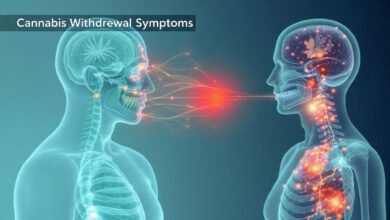
This is still a point of debate in popular culture, but not in clinical medicine. Cannabis withdrawal syndrome is recognized by the DSM-5 and is well-documented in research.
Symptoms typically begin within 24–72 hours of stopping use and can last 1–2 weeks, sometimes longer in heavy users. They include:
- Irritability, anxiety, or mood swings
- Sleep disturbances and vivid dreams
- Decreased appetite or nausea
- Restlessness
- Headaches
- Sweating and chills
For people who use edibles heavily — particularly high-potency edibles daily — these withdrawal symptoms can be surprisingly uncomfortable. They’re rarely dangerous, but they’re real enough to drive people back to using, which is how the cycle of dependence is maintained.
A 2020 study published in Drug and Alcohol Dependence found that cannabis withdrawal symptoms were significantly associated with greater cannabis use and higher potency products, both of which are common in the edibles market as it has evolved toward stronger concentrations.
Who Is Most at Risk?
Not everyone who eats cannabis edibles will develop a problem. But certain factors significantly increase the risk of cannabis use disorder:
Age of First Use
Early-onset cannabis use is one of the strongest predictors of later dependence. Adolescents who use cannabis regularly are 4–7 times more likely to develop cannabis addiction than adults who start using. The developing brain — which isn’t fully mature until around age 25 — is more vulnerable to the neurological changes that drive dependence.
This is especially relevant given that edibles are more palatable and less conspicuous than smoking, making them popular among younger users.
Frequency and Potency
Daily or near-daily use of high-potency cannabis products dramatically increases risk. Today’s edibles market includes products with THC concentrations far exceeding what was available even a decade ago. A 100mg gummy isn’t unusual in states with legal markets, and people regularly consume doses that would have been considered extreme in earlier years.
Mental Health
There’s a significant overlap between cannabis use disorder and mental health conditions including:
- Anxiety disorders (people often use edibles to self-medicate anxiety, but chronic use can worsen it)
- Depression
- ADHD
- PTSD
Using edibles to manage mental health symptoms without professional guidance is a common pathway to dependence. The relief is real in the short term, but the underlying condition doesn’t get treated, and the brain’s tolerance grows.
Genetic Factors
Research indicates that genetics play a role in addiction vulnerability across substances, and cannabis is no exception. People with a family history of substance use disorders may have a higher biological predisposition to developing cannabis dependence.
The Overconsumption Problem with Edibles
Even among people who don’t develop full cannabis use disorder, edible overconsumption is a well-documented issue with its own health risks.
Because edibles take so long to produce effects, accidental overconsumption is common. Emergency room visits related to edibles have increased significantly in states following legalization. Symptoms of acute THC overconsumption from edibles can include:
- Severe anxiety and panic attacks
- Paranoia
- Rapid heart rate
- Nausea and vomiting
- Disorientation and confusion
- In extreme cases, temporary psychosis
These acute episodes aren’t addiction, but they can be traumatic, and counterintuitively, they don’t always deter continued use. Some people become more cautious. Others develop a complicated relationship with edibles — continuing to use despite negative experiences.
Edibles and Cannabis Use Disorder: What the Research Says
Let’s look at what the clinical literature actually shows.
DSM-5 Recognition
The fifth edition of the Diagnostic and Statistical Manual of Mental Disorders (DSM-5) includes cannabis use disorder as a diagnosable condition with mild, moderate, and severe specifiers. The criteria are the same regardless of how cannabis is consumed — smoked, vaped, or eaten.
Prevalence Data
According to SAMHSA’s 2022 National Survey on Drug Use and Health, approximately 16.3 million Americans aged 12 or older met criteria for cannabis use disorder in the past year. As edibles become a larger share of total cannabis consumption, they’ll inevitably account for a growing proportion of these cases.
Research on High-Potency Products
Several studies have examined how product potency affects dependence risk. A 2019 study from researchers at King’s College London found that daily use of high-potency cannabis was associated with a significantly higher risk of psychosis and dependence compared to lower-potency products. High-dose edibles fall squarely in this category.
The 11-Hydroxy-THC Question
Research on whether 11-hydroxy-THC (the liver metabolite of edible cannabis) has a distinct risk profile compared to inhaled THC is still evolving. What’s established is that it’s more potent and longer-lasting. Some researchers argue this pharmacological profile creates conditions more conducive to neurological adaptation — the foundation of dependence. More controlled studies are needed, but the early evidence is worth taking seriously.
Edibles vs. Other Forms of Cannabis: Addiction Comparison
People often ask whether edibles are more or less addictive than smoked cannabis. The honest answer is: it’s complicated, and it depends on the individual and their patterns of use.
| Factor | Smoked/Vaped Cannabis | Edibles |
|---|---|---|
| Onset time | Minutes | 30 min – 2 hours |
| Duration | 1–3 hours | 4–8 hours |
| Potency per dose | Variable | Often higher (11-OH-THC) |
| Dosing accuracy | Moderate | Difficult |
| Tolerance buildup | Yes | Yes, potentially faster |
| Withdrawal risk | Yes | Yes |
| Harm perception | Higher | Lower |
The lower harm perception of edibles combined with their longer duration and potential higher potency makes them a product where dependence can develop before users realize what’s happening. Smoking has visible, immediate signals — coughing, the smell, the act itself. Eating a gummy feels more like taking a supplement.
Can You Use Edibles Responsibly?
Yes, many people use cannabis edibles without developing a problem. Responsible use tends to involve:
- Infrequent use — not daily, and with planned breaks
- Low to moderate doses — starting low and going slow, especially with new products
- Not using as a coping mechanism for stress, anxiety, sleep, or emotional pain
- Being honest with yourself about whether use is increasing over time
- Avoiding use if you have a personal or family history of addiction or mental health conditions
- Not mixing with alcohol or other substances, which compounds impairment and can accelerate dependence
The challenge is that these responsible use guidelines are hard to maintain once dependence is already developing. One of the hallmarks of substance use disorder is the erosion of the ability to self-regulate.
How to Get Help for Edible Addiction
If you recognize signs of cannabis use disorder in yourself or someone you care about, the good news is that effective help exists.
Professional Treatment Options
- Cognitive-behavioral therapy (CBT) is the most evidence-supported treatment for cannabis addiction. It helps people identify triggers, develop coping strategies, and change patterns of use.
- Motivational enhancement therapy (MET) is a short-term approach that helps people find their own reasons to change.
- Contingency management uses rewards to reinforce abstinence or reduced use.
There are currently no FDA-approved medications specifically for cannabis use disorder, though research is ongoing. Some medications are used off-label to manage specific withdrawal symptoms, particularly sleep issues and anxiety.
Support Resources
- SAMHSA’s National Helpline: 1-800-662-4357 (free, confidential, 24/7)
- Marijuana Anonymous (MA) offers 12-step support specifically for cannabis dependence
- Outpatient treatment programs and addiction counselors familiar with cannabis use disorders
Addressing Common Myths
“You can’t get addicted to something natural”
Plenty of natural substances are addictive — tobacco, alcohol (fermented from plants), and opium are obvious examples. “Natural” doesn’t mean “harmless” or “non-addictive.” THC is a psychoactive compound regardless of how it was grown.
“Edibles aren’t as harmful because there’s no smoke”
True that there’s no respiratory impact, but that doesn’t speak to the addiction risk. Cannabis edible addiction is driven by neurological changes from THC exposure, not from combustion products.
“It’s just psychological”
This is partly true but misses the point. Psychological dependence is real dependence. The brain changes that drive psychological addiction are measurably physical. And as discussed, cannabis withdrawal has clear physiological components.
“You have to use a lot to get addicted”
Some people develop cannabis use disorder after relatively modest use, particularly if they started young, use high-potency products, or have underlying vulnerabilities. There’s no safe threshold that applies to everyone.
The Big Picture: Edibles in a Changing Cannabis Landscape
The legal cannabis industry has a financial incentive to downplay addiction risks, just as the tobacco and alcohol industries did before it. Products are marketed as wellness tools, sleep aids, and stress relievers. Dosing standards remain inconsistent. High-potency products with 50mg, 100mg, or more of THC per serving are sold openly in dispensaries.
This doesn’t mean everyone who uses edibles will become addicted. Most won’t. But the cultural narrative that cannabis — and particularly edibles — is somehow exempt from addiction risk is not supported by evidence. The research is clear that cannabis addiction is real, that it affects a meaningful percentage of users, and that edibles have specific characteristics that make dependence worth taking seriously.
As the market grows and consumption habits evolve, expect to see more clinical research specifically on edible cannabis addiction, including long-term studies on dependence risk, dose-response relationships, and treatment outcomes.
Conclusion
Addicted to edibles is a real possibility — not a myth, not fearmongering. The research shows clearly that cannabis use disorder can develop through edible consumption, driven by the same neurological mechanisms that underlie other substance addictions. Edibles carry some unique risk factors: delayed onset that makes dosing unpredictable, longer-lasting effects that extend THC exposure per session, higher potency through liver metabolism, and a lower harm perception that can mask early signs of dependence.
Warning signs include building tolerance, failed attempts to cut back, cravings, withdrawal symptoms when stopping, and continued use despite negative consequences. The risk is higher for people who start young, use frequently or in high doses, self-medicate mental health conditions, or have a history of addiction in their family. Help is available through CBT, motivational therapy, and support groups, and recovery is absolutely possible — but the first step is recognizing that the risk is real in the first place.