The Benefits of Physical Therapy for Chronic Pain Management
Discover how physical therapy for chronic pain management eases discomfort, restores mobility, and offers a safe, drug-free path to lasting relief.

Living with chronic pain changes everything. The way you sleep, the way you move, the way you talk to people you love. Pills help some, but they come with side effects, dependency risks, and that nagging feeling that you are just covering up the real problem instead of solving it. This is where physical therapy for chronic pain management quietly does some of the most important work in modern healthcare.
If you have been dealing with stubborn back pain, an arthritic knee, post-surgical stiffness, fibromyalgia, or one of those mystery aches that no scan can fully explain, a good physical therapist can do more than hand you a sheet of stretches. They look at how your whole body moves, find the patterns that keep feeding your pain, and rebuild your strength and confidence step by step. The science backs it too. Major health organizations now recommend physical therapy for chronic pain before opioids for many conditions, and the long-term outcomes are often better.
In this guide, we will break down exactly how physical therapy works for chronic pain management, what real benefits you can expect, which conditions respond best, what your first session will look like, and how to get the most out of every appointment. No fluff, no medical jargon you need a dictionary for. Just clear, practical information you can actually use.
What Chronic Pain Actually Is (and Why It Sticks Around)
Pain that lasts longer than three to six months is generally considered chronic. Unlike a sprained ankle or a surgical incision, chronic pain often outlives the original injury. Sometimes there is no clear injury at all. The nervous system, in a sense, gets stuck in alarm mode. Nerves become more sensitive, muscles guard and tighten, posture shifts to avoid certain movements, and over time the body forgets how to move without bracing.
This is why simply resting often makes things worse. Muscles weaken, joints stiffen, and the brain becomes even more protective. The pain feedback loop tightens. Breaking that loop is exactly what good physical therapy for chronic pain management is designed to do.
Common types of chronic pain include:
- Lower back pain and sciatica
- Neck pain and tension headaches
- Osteoarthritis and rheumatoid arthritis
- Fibromyalgia
- Post-surgical pain that lingers
- Repetitive strain injuries
- Chronic neuropathic pain
- Pelvic pain and chronic hip issues
Most of these respond well to a structured rehabilitation plan, especially when started before the body adapts too deeply to the pain.
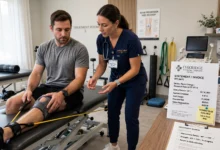
How Physical Therapy for Chronic Pain Management Actually Works
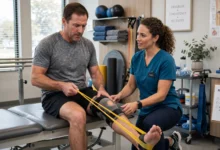
A licensed physical therapist (often abbreviated as PT or DPT, for Doctor of Physical Therapy) is a movement specialist with clinical training in anatomy, biomechanics, neuroscience, and rehabilitation. The job is not just to make you feel better in the room. The job is to retrain your body and your nervous system to function with less pain over the long haul.
Here is what that usually looks like in practice.
Manual Therapy
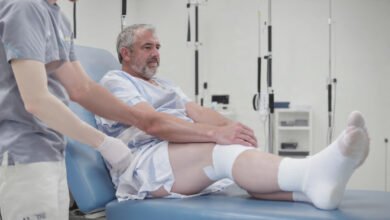
This is the hands-on part of treatment. Your therapist may use joint mobilizations, soft tissue release, myofascial work, trigger point therapy, and gentle manipulation to ease tight tissue, improve joint glide, and calm overactive nerves. Done well, manual therapy reduces pain quickly enough that you can move better, which sets up everything else.
Therapeutic Exercise
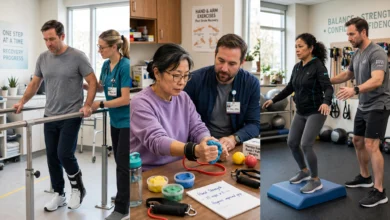
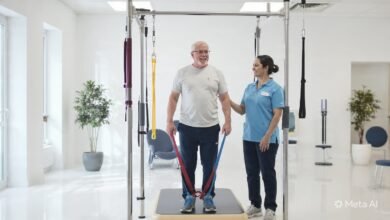
This is the heart of physical therapy for chronic pain management. Carefully progressed exercises rebuild the strength, flexibility, and endurance that chronic pain has eroded. Therapeutic exercise might include:
- Core stability work for back pain
- Glute and hip strengthening for knee or low back issues
- Scapular control exercises for neck pain
- Graded aerobic conditioning for fibromyalgia
- Balance training for older adults
- Specific stretches matched to your tissue restrictions
The exercises are tailored, not generic. A good therapist watches how you move and adjusts in real time.
Modalities
These are the supporting tools, used to reduce pain so you can do the harder work of moving better. Common modalities include:
- Heat and cold therapy
- Electrical stimulation (TENS units)
- Ultrasound therapy
- Dry needling (in many states and countries)
- Cupping and instrument-assisted soft tissue mobilization
- Aquatic therapy for people who cannot tolerate land-based exercise yet
Modalities are not magic on their own, but they make the rest of the program more tolerable, especially in the first few weeks.
Pain Neuroscience Education
This is the most underrated part of treatment. When you understand what is actually happening in your nervous system, the fear around pain drops. Research consistently shows that simply teaching patients how chronic pain works reduces pain intensity and disability. Your therapist may explain things like central sensitization, the difference between hurt and harm, and why pacing matters.
Posture and Movement Retraining
If your daily habits keep loading the same painful tissues, no exercise plan will fully fix the problem. Therapists analyze how you sit at your desk, how you lift, how you sleep, and how you walk. Small tweaks here often deliver the biggest long-term wins.
The 10 Most Important Benefits of Physical Therapy for Chronic Pain
Now to the heart of the matter. Here are the specific reasons physical therapy for chronic pain management has become a first-line option recommended by major health authorities like the Centers for Disease Control and Prevention and the American Physical Therapy Association.
1. Real Pain Reduction Without Medication
This is the headline benefit. A skilled PT program can lower pain levels through movement, manual therapy, and nervous system retraining, without the side effects of long-term medication. For people who have been on painkillers for years, this is often life-changing. The CDC has explicitly recommended non-opioid options like physical therapy as a preferred first step for many types of chronic pain.
2. Improved Mobility and Range of Motion
Chronic pain almost always shrinks how much your joints can move. Stiff hips, locked-up shoulders, and tight hamstrings become normal. Physical therapy methodically restores that lost range, which often reduces pain on its own because tissues stop being pulled into uncomfortable end ranges all day.
3. Stronger Muscles That Protect Your Joints
Weak muscles force joints, ligaments, and discs to take loads they were not designed to handle. Strengthening the right muscles (often the deep stabilizers, glutes, and shoulder blade muscles) takes that pressure off and lets painful tissues finally calm down. This is especially important for knee osteoarthritis, chronic low back pain, and rotator cuff problems.
4. Helps You Avoid Unnecessary Surgery
Multiple studies have shown that for many common conditions (including some types of meniscus tears, shoulder impingement, lumbar disc issues, and even some cases of spinal stenosis), outcomes after a structured PT program match or beat surgical outcomes at one and two years out. Surgery is sometimes necessary, but it should rarely be the first option. Physical therapy for chronic pain gives the body a real shot at healing first.
5. Targets the Root Cause, Not Just Symptoms
Pills mask pain. Physical therapy asks why the pain showed up in the first place. Maybe your shoulder hurts because your mid-back is stiff. Maybe your knee aches because your hip is weak. Maybe your headaches come from the way you hold your phone. Solving the underlying problem produces results that last well beyond the treatment plan.
6. Better Posture and Daily Movement
Posture is not about standing like a soldier. It is about how efficiently your body distributes load throughout the day. Physical therapists are trained to spot small inefficiencies and correct them. Better posture and movement mean less wear and tear, fewer flare-ups, and more energy at the end of the day.
7. Improved Mental Health
Chronic pain and depression travel together. When pain limits what you can do, mood drops, sleep suffers, and anxiety creeps in. Movement-based treatment breaks that cycle. Exercise releases endorphins, restores a sense of control, and rebuilds confidence in your body. Many patients say the mental shift is just as valuable as the physical one.
8. Better Sleep
Pain wrecks sleep. Sleep deprivation makes pain worse. It is a brutal loop. By reducing pain levels and teaching better positioning, physical therapy for chronic pain management often improves sleep quality within weeks, which then accelerates everything else.
9. Lower Long-Term Healthcare Costs
Several large studies have shown that patients who see a physical therapist early for back pain end up spending significantly less on imaging, injections, surgeries, and emergency visits over the following year. Investing in PT up front often saves money down the line.
10. Tools You Keep for Life
Maybe the most underrated benefit. A pill bottle runs out. Your knowledge of how to manage your body does not. By the end of a good treatment plan, you walk out with a personal toolkit (specific exercises, self-mobilization techniques, knowledge about flare-ups) that lets you handle the next bad week without panicking. That kind of independence is what real chronic pain management looks like.
Conditions That Respond Especially Well to Physical Therapy
Not every condition benefits equally, but the list of those that do is long. Here are the ones where physical therapy has the strongest track record for chronic pain relief.
Chronic Low Back Pain
This is the most common reason people seek out PT, and one of the conditions where the evidence is strongest. Manual therapy combined with progressive exercise and education typically outperforms passive treatments like rest or pain medication alone.
Neck Pain and Cervicogenic Headaches
If you spend hours at a screen, you probably already know this pain. Physical therapy can address tight upper traps, weak deep neck flexors, and joint stiffness that drive both chronic neck pain and tension-type headaches.
Osteoarthritis (Knee, Hip, Shoulder)
The instinct with arthritic joints is to rest them. The evidence says the opposite. Loaded, progressive exercise is one of the most effective treatments for knee osteoarthritis, often delaying or eliminating the need for replacement surgery.
Fibromyalgia
This condition is tricky because exercise can flare symptoms if it is too aggressive. A PT trained in chronic widespread pain knows how to start incredibly gently, build slowly, and incorporate aerobic work, which research has shown to be one of the most effective treatments for fibromyalgia symptoms.
Sciatica and Radiculopathy
Nerve pain running down the leg responds well to neural mobilization techniques, directional preference exercises, and core stability work in most cases.
Post-Surgical Chronic Pain
Some people heal from surgery only to find pain lingering months later. Physical therapy helps desensitize tissues, restore movement patterns, and rebuild strength.
Tendinopathies
Chronic Achilles, patellar, gluteal, and rotator cuff tendinopathies all respond best to graded loading programs, which only a knowledgeable physical therapist can really design and progress correctly.
Pelvic Pain
A growing specialty in PT. Chronic pelvic pain, painful intercourse, and post-pregnancy pain can all be addressed by pelvic floor physical therapists.
Chronic Headaches and Migraines
Many headaches have a musculoskeletal driver in the upper neck. Manual therapy and targeted exercises often reduce frequency and intensity dramatically.
TMJ Disorders
Jaw pain, clicking, and headaches often respond to PT focused on the jaw, upper neck, and posture.
What to Expect at Your First Physical Therapy Session
Knowing what is coming makes the first appointment less stressful. Here is the typical flow.
The Initial Evaluation (45 to 60 minutes)
Your therapist will:
- Take a thorough history (when the pain started, what makes it better or worse, your goals, your medical background)
- Ask about your work, hobbies, sleep, stress, and any past injuries
- Watch you move, bend, walk, and perform tasks that bother you
- Test your strength, flexibility, joint range, and balance
- Sometimes use specific tests for things like nerve sensitivity or joint stability
Treatment Begins (Often Same Day)
Most therapists will start treatment during the first visit, even if just for fifteen minutes. You should leave with at least one or two home exercises and a clear sense of the plan ahead.
A Typical Plan
For most chronic conditions, expect somewhere between six and twelve sessions over four to twelve weeks, often starting at twice a week and tapering as you improve. More complex cases (after surgery or with severe disability) may take longer.
What to Wear
Loose, comfortable clothing you can move in. If your back or hips are being treated, shorts and a t-shirt are ideal. For shoulder or neck issues, a tank top helps your therapist see the relevant areas.
What to Bring
- Any imaging reports or surgical notes
- A list of medications
- Your insurance card
- A list of your goals (this matters more than people think)
How Long Until You Feel Better?
Honest answer: it depends. Some people notice meaningful relief after the first or second session, especially with neck or back pain that responds quickly to mobilization and education. Others (chronic widespread pain, conditions you have had for years, post-surgical complications) need six to eight weeks before the changes really stick.
A reasonable guide:
- Acute flare-up of an old injury: 2 to 4 weeks
- Chronic back or neck pain: 4 to 8 weeks
- Knee or hip osteoarthritis: 8 to 12 weeks
- Fibromyalgia or central sensitization: 12+ weeks of slow, steady progress
- Post-surgical rehab: 6 weeks to 6 months depending on the procedure
If you are not seeing any change after about four to six visits, that is a fair point to ask your therapist what is going on and whether the plan needs to shift. A good PT welcomes that conversation.
Tips to Get the Most Out of Physical Therapy for Chronic Pain
The patients who do best are not always the ones with the simplest cases. They are the ones who engage with the process. Here is how to be that patient.
1. Do Your Home Exercises
This is the single biggest predictor of success. Sessions in the clinic plant the seeds. The home program is what actually grows them. Even fifteen minutes a day, done consistently, beats two hours once a week.
2. Communicate Clearly
If something hurts more than expected, say so. If an exercise feels pointless, ask why it is in the program. If a goal changes (you have a wedding to dance at, a hike you want to do, a baby on the way), tell your therapist. The plan should adapt to your life.
3. Be Patient With Setbacks
Chronic pain rarely improves in a straight line. There will be days that feel worse for no clear reason. That is not failure. It is normal nervous system noise. Stay the course unless something truly alarming happens, and trust the trend over the day-to-day.
4. Pace Yourself
A common mistake is doing too much on a good day and then crashing for three days afterward. Your therapist will likely teach you a concept called graded activity or pacing. Use it. Steady progress beats heroic days.
5. Pay Attention to Sleep, Stress, and Nutrition
Pain is not just a tissue problem. Poor sleep, high stress, and inflammatory diets all amplify chronic pain. You do not need to overhaul your life overnight, but small improvements in these areas multiply the benefits of physical therapy for chronic pain management.
6. Move Outside the Clinic
Walking, swimming, gentle cycling, yoga, tai chi. Whatever fits your body and life. The point of PT is to get you moving in the world again, not to make you dependent on the clinic.
When Physical Therapy May Not Be Enough
Honesty matters here. PT is powerful, but it is not a cure-all. There are situations where you will need additional help.
- Severe structural problems (large rotator cuff tears in active patients, advanced bone-on-bone arthritis, certain disc conditions with progressive nerve damage) sometimes require surgery
- Significant mental health components (depression, PTSD, anxiety disorders) often need parallel work with a therapist or psychiatrist
- Sleep disorders like untreated sleep apnea will limit how much progress you can make
- Inflammatory conditions (rheumatoid arthritis, ankylosing spondylitis, lupus) need medical management alongside PT
- Complex regional pain syndrome and severe central sensitization may benefit from a multidisciplinary pain clinic
A good physical therapist will tell you when something is outside their scope and refer you on. That is a sign of a great clinician, not a failure of treatment.
How to Choose the Right Physical Therapist
Not every PT is a fit for every patient or every condition. A few things to look for:
Look for Specialization
If you have a complex problem, find a therapist who treats it often. Many therapists pursue advanced certifications such as:
- OCS (Orthopedic Clinical Specialist)
- SCS (Sports Clinical Specialist)
- NCS (Neurologic Clinical Specialist)
- Fellowship training in manual therapy
- Pelvic health certifications
- Pain neuroscience training
Ask About Their Approach
Some clinics rely heavily on machines and modalities. Others emphasize hands-on care and exercise. Neither is automatically wrong, but for chronic pain management, an active approach (lots of movement, education, and progressive exercise) tends to produce better long-term results than a passive one.
Check How Much One-on-One Time You Get
Some clinics see four patients an hour with assistants doing most of the exercise supervision. That can work, but if you have a complex case, you want more dedicated time with the actual therapist.
Read Reviews and Ask for Referrals
Word of mouth is gold here. Ask your doctor, friends, or local fitness professionals for names of PTs they trust.
Trust Your Gut After the First Visit
Did the therapist listen? Did they explain what is going on? Did the plan make sense? If yes, you probably found a good one. If not, it is okay to try someone else.
Combining Physical Therapy With Other Approaches
The best outcomes for chronic pain usually come from a combination of strategies. PT works well alongside:
- Cognitive behavioral therapy (CBT) for pain
- Mindfulness and meditation practices
- Massage therapy
- Acupuncture (the evidence is mixed but reasonable for some conditions)
- Chiropractic care (when used as part of an active treatment plan, not endless passive adjustments)
- Dietary changes to reduce systemic inflammation
- Sleep hygiene improvements
- Medical care including injections or medications when appropriate
A multidisciplinary approach respects how complicated chronic pain really is. No single tool fixes everything for everyone.
What the Research Says
A few quick highlights from the evidence base for physical therapy for chronic pain management:
- The CDC’s guidelines for prescribing opioids for chronic pain explicitly recommend non-pharmacologic therapies like physical therapy as preferred first-line treatments for many chronic pain conditions
- Multiple meta-analyses show exercise therapy as effective as or better than medication for chronic low back pain at one year
- Land and water-based exercise reduces pain and improves function in knee and hip osteoarthritis at levels comparable to NSAIDs without the gastrointestinal risks
- Pain neuroscience education combined with exercise outperforms exercise alone for chronic musculoskeletal pain
- Patients who see a PT first for back pain are significantly less likely to need imaging, injections, opioids, or surgery in the following year
The science is not perfect, and not every study agrees on every detail, but the broad pattern is consistent: active, individualized physical therapy is one of the most evidence-supported tools we have for managing chronic pain.
Common Myths About Physical Therapy
A few persistent misconceptions are worth clearing up.
“Physical therapy is just exercise. I can do that at home.” Generic exercise and prescribed exercise are not the same thing. Dosage, progression, technique, and exercise selection all matter. Most people self-prescribing get one of these wrong.
“It hurt during my last PT, so it does not work for me.” There is a difference between productive discomfort and harmful pain. A skilled therapist knows where the line is and stays on the right side of it. If your last therapist did not, try someone else before giving up.
“I need a referral from my doctor.” In most U.S. states and many countries, you can see a physical therapist directly without a referral. This is called direct access. Check your local rules.
“PT is too expensive.” It can feel that way up front, but compared to the cost of long-term medications, repeat imaging, injections, or surgery, a few weeks of PT is often the cheapest path to lasting chronic pain relief. Many insurance plans cover it.
“If imaging shows damage, only surgery will help.” Imaging findings often correlate poorly with pain. People without any pain commonly have disc bulges, meniscal tears, and rotator cuff issues on MRI. Treating the person, not the picture, is the right approach for most conditions.
A Realistic Picture of What Recovery Looks Like
Here is what the journey often feels like for someone starting physical therapy for chronic pain management after months or years of struggling.
Weeks 1 to 2: A little overwhelmed. Soreness from new exercises. Some movements feel awkward. A small win or two (maybe better sleep, maybe one good day) keeps you going.
Weeks 3 to 6: The exercises start to feel automatic. Pain is still there but the bad days are less brutal. You start trusting your body again. You catch yourself doing something you would not have done two months ago.
Weeks 6 to 12: Confidence grows. The conversation shifts from “how do I survive this” to “what do I want to be able to do next.” Sessions taper. You start using your tools on your own.
Beyond 12 weeks: You have a plan for flare-ups. You know which exercises to come back to. You may still have occasional pain, but it does not run your life anymore.
That is the goal. Not perfection. Not a pain-free life forever. A life where pain is no longer the loudest voice in the room.
Conclusion
Chronic pain is exhausting, isolating, and often misunderstood, but it is not something you have to live with passively. Physical therapy for chronic pain management offers a research-backed, drug-free, and surprisingly powerful path forward. By combining hands-on treatment, progressive exercise, pain education, and practical changes to how you move every day, a skilled physical therapist can help you reduce pain, restore function, avoid unnecessary surgery, sleep better, and feel like yourself again.
It takes time, consistency, and the willingness to engage with the process, but the patients who put in the work consistently see results that medication alone could never deliver. Whether you are dealing with stubborn back pain, arthritis, fibromyalgia, post-surgical pain, or any of the dozens of other conditions covered above, the right PT can help you build a body and a life that pain no longer controls. That is what real chronic pain management looks like, and it is well within reach.