Online Group Therapy: Virtual Support Groups That Work
Online group therapy connects you with real support from home. See how virtual support groups work, what they cost, and how to pick one.
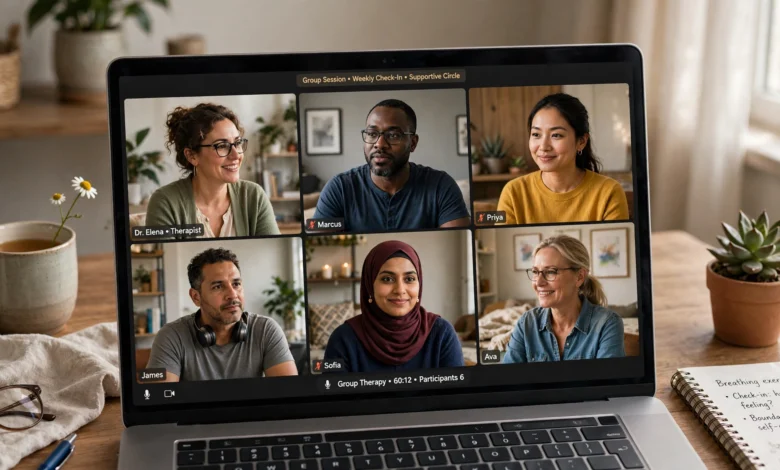
Online group therapy has quietly become one of the most practical ways people get mental health support today. You log in from your couch, your car during a lunch break, or a quiet corner of your apartment, and within minutes you’re talking with people who understand exactly what you’re going through. No waiting room, no drive across town, no awkward small talk with strangers in a hallway. Just a screen, a licensed therapist, and a small group of people working through similar struggles.
A lot of people are still skeptical. Can a virtual support group really replace sitting in a room with other humans? The research says yes, more often than you’d expect. A meta-analysis published by the American Psychological Association found that video-based group therapy produces outcomes comparable to in-person sessions, and the pandemic accelerated adoption in a way that permanently changed how therapists deliver care.
This article breaks down how online group therapy actually works, the different formats available, what it costs, who it’s best suited for, and how to find a group that won’t waste your time or your money. Whether you’re dealing with anxiety, grief, addiction recovery, or just the general weight of modern life, there’s likely a virtual group built for exactly your situation. Let’s get into it.
What Is Online Group Therapy?
Online group therapy is a structured therapeutic session led by a licensed mental health professional, conducted over video, audio, or sometimes text, with multiple participants who share a common concern. Unlike a casual chat forum or a Facebook group, it’s clinically facilitated. That distinction matters a lot.
The therapist sets an agenda, manages group dynamics, keeps conversations productive, and applies evidence-based techniques like cognitive behavioral therapy (CBT) or dialectical behavior therapy (DBT) depending on the group’s focus. Sessions typically run 60 to 90 minutes and happen on a recurring schedule, weekly or biweekly, through platforms like Zoom, Google Meet, or purpose-built teletherapy software.
Virtual support groups differ from group therapy in one key way: they don’t always require a licensed clinician. Peer-led support groups, like many 12-step programs or grief circles, are run by trained facilitators or even fellow members with lived experience. Both formats have real value, but if you’re looking for clinical treatment, you want to confirm a licensed therapist is actually running the session.
Key Features of a Legitimate Online Therapy Group
- A licensed therapist or counselor leads or co-facilitates the group
- Group size stays small, usually between 5 and 12 people
- Sessions follow a consistent structure and meeting schedule
- Confidentiality rules are explained and enforced
- The group has a defined focus (anxiety, grief, substance use, chronic illness, etc.)
- Participants are screened before joining to make sure the group is a good fit
Why Online Group Therapy Works
Group therapy has always worked on a simple principle: people heal faster when they realize they’re not alone. Moving that experience online hasn’t weakened it. If anything, it’s removed some of the biggest reasons people avoid treatment in the first place.


1. It Removes Access Barriers
Not everyone lives near a therapist who specializes in their specific issue. Rural areas, small towns, and even some cities have shortages of clinicians trained in areas like eating disorders or trauma. Online therapy groups let you join a session led by a specialist three states away without ever leaving your home. This is especially significant for people managing physical limitations, chronic illness, or caregiving responsibilities that make travel difficult.
2. It Lowers the Emotional Barrier to Entry
Walking into a room full of strangers to talk about your divorce or your depression is intimidating for a lot of people. Joining from home softens that first step. You can keep your camera off during your first session if you need to. That small amount of control often makes the difference between someone showing up and someone canceling.
3. It Fits Into Real Schedules
Traditional group therapy usually means a fixed evening slot at a physical office. Virtual support groups offer more flexibility, with sessions scheduled across different time zones and days, including early morning or late evening options for people juggling work and family.
4. It Still Delivers Genuine Connection
This is the part skeptics get wrong most often. A 2023 review from the American Psychological Association’s Monitor on Psychology noted that video teleconference group therapy produced outcomes similar to in-person groups, based on a prior meta-analysis by researchers at the Mayo Clinic. Group cohesion, the feeling of being understood and supported by peers, forms just as reliably over video as it does in a shared room, provided the facilitator knows how to build it.
5. It’s More Affordable Than Individual Therapy
Group sessions cost less per person than one-on-one therapy because the therapist’s time is split across multiple clients. Many online group therapy programs charge between $40 and $90 per session, compared to $100 to $250 for individual sessions with a licensed therapist.
Types of Online Group Therapy and Virtual Support Groups
Not every group is built the same way. Understanding the different formats helps you find the one that actually fits your situation instead of just picking the first result that shows up in a search.
Clinician-Led Therapy Groups
These are run by licensed therapists, psychologists, or counselors and follow a structured therapeutic model. Common focuses include:
- Anxiety and depression support groups using CBT-based techniques
- DBT skills groups for emotional regulation, often used for borderline personality disorder or chronic self-harm patterns
- Grief and bereavement groups for people who’ve lost a spouse, child, or parent
- Trauma and PTSD processing groups
- Chronic illness and pain management groups
These groups tend to be the most clinically rigorous and are often covered by insurance, though coverage varies by provider and state.
Peer-Led Support Groups
Peer-led groups are facilitated by someone with lived experience rather than a clinical license. They’re often free or low-cost and focus on shared understanding rather than formal treatment. Examples include:
- Alcoholics Anonymous (AA) and Narcotics Anonymous (NA) online meetings
- SMART Recovery virtual meetings
- Postpartum support circles
- Caregiver support communities
Condition-Specific Virtual Groups
Some platforms specialize entirely around a single condition or life circumstance, such as eating disorder recovery, ADHD, autism spectrum support for adults, LGBTQ+ identity groups, or divorce and separation support. These groups can feel more relevant faster because everyone in the room, so to speak, is dealing with a closely related version of the same challenge.
Text-Based and Asynchronous Groups
A smaller but growing category involves moderated text forums or app-based check-ins rather than live video. These work well for people with social anxiety severe enough that even video feels overwhelming, or for those in time zones that make live scheduling difficult.
How to Choose the Right Online Group Therapy Program
Picking a group isn’t just about convenience. The wrong fit can leave you feeling more isolated, not less. Here’s what actually matters when you’re comparing options.
1. Confirm the Facilitator’s Credentials
Before joining any online group therapy session, verify that the person leading it holds an actual license: LCSW, LPC, LMFT, PsyD, or similar, depending on your state or country. Reputable platforms list this information clearly. If a service is vague about who’s running the group, that’s a red flag.
2. Check the Group’s Focus and Structure
A generic “mental health support group” is far less effective than one built around your specific situation. Look for groups with a clear curriculum or theme, not just an open, unstructured chat. Ask what a typical session looks like before committing.
3. Ask About Group Size
Groups larger than 12 to 15 people rarely give everyone enough space to speak meaningfully. Smaller groups, generally 6 to 10 people, tend to build trust faster and give each participant more airtime.
4. Understand the Screening Process
Reputable programs conduct a brief intake call or questionnaire before placing you in a group. This step matters because it protects group cohesion. It’s how facilitators avoid mixing incompatible needs, like putting someone in early grief into a group focused on long-term bereavement processing.
5. Review Cost and Insurance Coverage
Ask directly whether the group accepts your insurance, and if not, whether a sliding scale or reduced rate is available. Some employer Employee Assistance Programs (EAPs) also cover a set number of group sessions per year, which is worth checking before you pay out of pocket.
6. Test the Platform Itself
Confirm the video platform is HIPAA-compliant if you’re in the United States, and take a moment to test your internet connection and camera setup before your first real session. Technical hiccups during a vulnerable conversation are more disruptive than people expect.
Popular Platforms Offering Online Group Therapy
Several platforms have built reputations around virtual support groups, each with a slightly different focus:
- Grouport — Specializes in DBT and CBT-based groups for anxiety, depression, and grief, with flexible scheduling
- Circles — Offers free and low-cost peer support communities for grief, divorce, caregiving, and more
- SMART Recovery Online — Free, secular addiction recovery meetings run by trained volunteers
- Talkspace and BetterHelp — Primarily known for individual therapy but both offer group sessions as an add-on
- The Trevor Project and Trans Lifeline — Offer specialized peer support for LGBTQ+ individuals
It’s worth spending 20 to 30 minutes researching two or three platforms before committing to one, since pricing, licensing standards, and group availability vary a lot between them.
Who Benefits Most From Online Group Therapy
Online group therapy isn’t a fit for everyone, but it tends to work especially well for certain situations:
- People dealing with isolation — Chronic illness, disability, remote living, or new parenthood can all create isolation that a virtual group directly addresses.
- People managing anxiety around in-person settings — Social anxiety or agoraphobia can make traditional group therapy feel impossible, while a virtual option offers a gentler entry point.
- People with unpredictable schedules — Shift workers, single parents, and caregivers often can’t commit to a fixed weekly appointment across town.
- People processing a shared, specific experience — Grief, divorce, infertility, and chronic illness all benefit from talking to others who’ve lived through the exact same thing.
- People in early recovery from addiction — Frequent, accessible peer support has long been one of the strongest predictors of sustained recovery, and virtual meetings make that access far easier to maintain.
That said, individuals in active crisis, experiencing suicidal ideation, or dealing with severe psychiatric symptoms usually need individual treatment or higher levels of care first. A group setting, virtual or otherwise, isn’t designed to handle acute crises. If you’re in crisis, contact the 988 Suicide and Crisis Lifeline for immediate support.
What a Typical Online Group Therapy Session Looks Like
If you’ve never joined one, the format is more approachable than most people expect.
- Check-in (5-10 minutes): Each member briefly shares how their week went or how they’re currently feeling.
- Core discussion or skill-building (30-45 minutes): The therapist introduces a topic, teaches a coping skill, or opens the floor for members to talk through a specific struggle.
- Peer feedback and support (10-20 minutes): Members respond to each other, offer perspective, and share similar experiences.
- Closing (5-10 minutes): The therapist summarizes key takeaways and may assign a small reflection exercise before the next session.
Most groups ask that you keep your camera on when possible, since visual presence genuinely helps build trust, though exceptions are usually made for people easing into the format.
Common Concerns About Online Group Therapy
“Will I actually open up on camera?”
Most people are surprised by how quickly this fades. The initial awkwardness usually resolves within two or three sessions once trust starts forming.
“Is it actually private?”
Reputable platforms use encrypted, HIPAA-compliant video software, and facilitators set clear confidentiality agreements at the start. That said, you’re responsible for your own environment. Use headphones and a private room whenever possible.
“What if I don’t connect with the group?”
This happens sometimes, and it’s not a failure on your part. Most platforms allow you to switch groups if the fit isn’t right, so don’t hesitate to ask about that option upfront.
“Does insurance actually cover it?”
Coverage has expanded significantly since 2020, and many insurers now reimburse teletherapy group sessions the same way they do individual therapy. According to guidance published by the National Alliance on Mental Illness (NAMI), it’s worth calling your insurer directly to confirm coverage details before your first session, since policies still vary by plan.
The Future of Online Group Therapy
Demand for online group therapy isn’t slowing down. Therapists are increasingly building hybrid practices that combine individual sessions with group work, recognizing that peer support accelerates progress in ways solo therapy alone often can’t. Some researchers are even exploring how extended reality tools, like VR headsets, could eventually make virtual groups feel even more immersive and socially present, closing whatever small gap remains between video and in-person experiences.
For now, though, the format that already exists works well for a huge number of people. The technology is stable, the clinical research supports it, and access has never been easier.
Conclusion
Online group therapy has moved from a pandemic-era workaround to a genuinely effective, well-researched form of mental health support. Whether you choose a clinician-led therapy group for anxiety and depression, a peer-led recovery meeting, or a condition-specific virtual circle for grief or chronic illness, the format offers real connection without the barriers that keep so many people from seeking help in the first place.
The key is doing a bit of homework: confirm the facilitator’s credentials, check the group’s focus and size, understand the cost, and give yourself a session or two to settle in before deciding if it’s the right fit. Support that used to require a drive across town is now just a login away, and for a lot of people, that difference is what finally makes consistent care possible.