How to Start a Recovery Support Group in Your Community
How to start a recovery support group in your community: a practical, step-by-step guide covering planning, promotion, and lasting peer support.

How to start a recovery support group is a question a lot of people ask after they’ve been through something hard themselves, or after they’ve watched someone they love struggle with addiction, grief, or a mental health crisis with nowhere local to turn. Maybe you searched for a recovery support group near you and came up empty. Maybe the closest one is thirty minutes away and only meets once a month. Whatever brought you here, the fact that you’re thinking about building this resource for other people says something good about you, and it also means you’re about to take on a project that genuinely changes lives.
Starting a recovery support group isn’t complicated in the way that, say, starting a business is complicated. You don’t need a license, a huge budget, or a background in counseling. What you need is a clear purpose, a handful of committed people, a safe place to meet, and a plan for keeping the group going after the first few weeks of enthusiasm fade. Most groups that fail don’t fail because the idea was bad. They fail because nobody thought through the logistics, the ground rules, or how to keep members coming back once the newness wears off.
This guide walks through everything involved in building a recovery support group in your community, from choosing a model and finding a meeting space to promoting the group and keeping it sustainable for years, not just months. Whether you’re in recovery yourself, a family member, a peer support specialist, or someone connected to a local nonprofit, church, or health department, you’ll find a workable path here.
Why Communities Need More Recovery Support Groups
Recovery doesn’t happen in isolation. Clinical treatment, therapy, and medication can address the physical and psychological sides of addiction or mental illness, but long-term recovery tends to depend heavily on peer support and connection to other people who understand what it’s like to live through this. Research from the Substance Abuse and Mental Health Services Administration consistently points to social connection and community-based support as key factors in whether someone sustains their recovery over time.
A well-run recovery support group gives people:
- A regular, predictable place to be honest about how they’re doing
- Contact with others who have lived experience, not just clinical training
- Accountability that doesn’t come from a treatment schedule or a court order
- A sense of belonging that counters the isolation addiction and mental illness often create
- Practical, real-world coping strategies from people who’ve actually tried them
In smaller towns and underserved neighborhoods, these groups are often scarce or nonexistent, which means the nearest meeting might be an hour away, inaccessible without a car, or simply full. When you start a support group locally, you’re closing a real gap, not adding to an already crowded field.
Step 1: Clarify Your Purpose and Choose a Recovery Model
Before you book a room or make a flyer, get specific about who this group is for and what it will actually do. A recovery support group for people early in addiction recovery looks very different from one built for family members of people struggling with substance use, or one focused on mental health recovery more broadly.


Ask yourself:
- Is this group for people in recovery themselves, for their loved ones, or both?
- Will it focus on a specific issue (alcohol, opioids, gambling, disordered eating, grief) or be open to multiple pathways?
- Is the goal peer support and shared experience, or something more structured like a curriculum or workbook?
- Will it be open to walk-ins, or closed to a consistent membership?
Choosing Between 12-Step, SMART Recovery, and All-Recovery Models
There isn’t one right way to structure a recovery support group, and it’s worth understanding the main models before you pick one:
- 12-Step based groups (modeled on Alcoholics Anonymous or Narcotics Anonymous) follow a structured, spiritually-oriented program with sponsors and steps. They’re widely recognized and easy for newcomers to find information about.
- SMART Recovery groups use a four-point program grounded in cognitive behavioral techniques rather than a spiritual framework. This model tends to appeal to people looking for a more secular, science-based approach. You can review SMART Recovery’s meeting facilitator training through their official site if this model fits your community.
- All-Recovery groups are pathway-neutral, meaning they welcome people regardless of which recovery method they use, whether that’s 12-step, medication-assisted treatment, SMART Recovery, faith-based recovery, or something else entirely.
- Family and loved ones’ groups focus on the people affected by someone else’s addiction or mental illness, rather than the individual in recovery.
Picking a model early gives you a framework to build everything else around, from your meeting structure to how you talk about the group when you promote it.
Step 2: Build a Small Founding Team
You don’t have to start a recovery support group alone, and honestly, you shouldn’t try to. A founding team of two to five people spreads out the workload and makes the group feel more stable from day one. Look for people who bring different strengths:
- Someone with lived experience in recovery who can speak to what members actually need
- Someone comfortable with logistics: booking rooms, managing sign-ups, handling supplies
- Someone connected to local health providers, churches, or nonprofits who can help with outreach
- A peer recovery coach or counselor, if you can find one willing to volunteer or consult
Reach out to your local health department, a nearby treatment center, a church community, or an existing recovery organization to see if anyone has already expressed interest in something like this. You might be surprised how many people have quietly wished this group existed.
Step 3: Find the Right Meeting Space
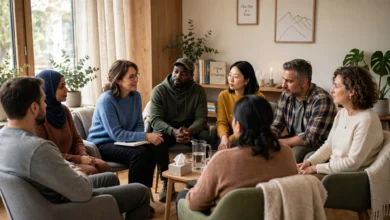
Where you meet matters more than people expect. A good space for a recovery support group is:
- Free or low-cost. Churches, libraries, community centers, and hospitals often offer free meeting rooms to community groups.
- Private. A room with a closed door, not an open lobby or a corner of a coffee shop, so members can speak honestly.
- Accessible. Ground-floor or elevator access, near public transit if possible, and easy to find.
- Neutral, if needed. Some members may feel uncomfortable meeting in a space tied to a religious institution or a treatment facility they associate with a bad experience, so it’s worth asking your founding team about this.
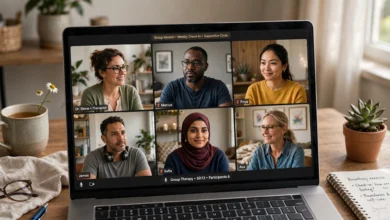
Common options include community centers, senior centers, church basements, hospital conference rooms, library meeting rooms, and recovery community organizations. If in-person space is genuinely hard to find, a video conferencing option can work as a temporary or permanent solution, especially for rural areas.
Step 4: Set Ground Rules and Confidentiality Guidelines
This step gets skipped more often than it should, and it’s one of the most important. Members of a recovery support group need to trust that what’s said in the room stays in the room. Before your first meeting, write down a short, clear set of ground rules and read them aloud at the start of every session. A solid set typically includes:
- Confidentiality: what’s shared in the group is not repeated outside it, including names or identifying details
- Respect: no interrupting, judging, or giving unsolicited advice unless it’s asked for
- Voluntary participation: members can share as much or as little as they want, and passing is always okay
- No cross-talk during sharing: comments and reactions happen after someone finishes, not during
- Sobriety or safety expectations, if applicable, such as not attending while actively intoxicated
- A crisis plan: what the facilitator does if someone discloses suicidal thoughts or an immediate safety concern
Having these rules in writing, and posting them somewhere visible, protects both your members and you as the organizer. It also sets the tone that this is a serious, respectful space, not a casual drop-in chat.
Step 5: Choose a Format and Schedule
Consistency is one of the biggest predictors of whether a recovery support group survives past its first few months. Decide on:
- Frequency: weekly is common for early recovery groups; biweekly or monthly can work for more established or specialized groups
- Length: 60 to 90 minutes is typical, long enough for meaningful sharing without dragging
- Structure: will you open with a check-in, use a discussion topic or reading, or leave it fully open?
- Facilitator rotation: will one person lead every meeting, or will facilitation rotate among trained members?
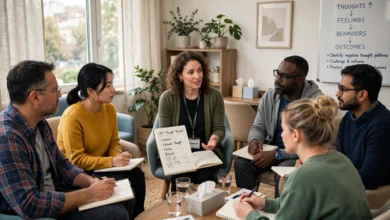
A simple, repeatable structure works better than something elaborate. Many successful groups follow a pattern like: opening and ground rules, a brief check-in from each member, a topic or open discussion, and a closing. Keeping the same format every week helps new members know what to expect and helps regulars settle into the rhythm.
Step 6: Promote Your Recovery Support Group
Once the logistics are in place, people need to actually find out your recovery support group exists. Promotion doesn’t need to be expensive, but it does need to be consistent and targeted toward the places people in recovery, or their families, are already looking.
Online and Offline Outreach Strategies
- Partner with local treatment centers, hospitals, and detox facilities and ask if they’ll share your meeting details with discharged patients.
- Contact your local health department or opioid abatement program, since many now fund and promote community recovery efforts directly.
- List your group with national meeting locators, including the SAMHSA National Helpline and treatment locator, which many people searching for help rely on.
- Use social media to create a simple page or group with your meeting time, location, and a clear description of who it’s for.
- Print flyers for libraries, community centers, churches, laundromats, and pharmacies.
- Ask local news outlets or community newsletters to run a short announcement, especially for your first meeting.
- Talk to peer recovery coaches, probation officers, and case managers, who often know people actively looking for exactly this kind of support.
Consistency in your messaging matters. Use the same name, meeting time, and description everywhere so people recognize it when they see it more than once, which is often what it takes before someone actually shows up.
Step 7: Facilitate Your First Meeting with Confidence
Your first meeting will probably feel a little awkward, and that’s completely normal. Here’s how to keep it grounded:
- Arrive early to set up chairs, materials, and any refreshments.
- Open with a welcome and read through your ground rules so everyone starts on the same page.
- Introduce yourself briefly, including why you started the group, without turning it into a long personal speech.
- Invite check-ins, letting people share their name (first name only is fine) and how they’re doing, with permission to pass.
- Guide the discussion gently, redirecting if one person dominates or if the conversation drifts somewhere unsafe.
- Close on time, thank people for coming, and confirm the next meeting date before anyone leaves.
Don’t worry if the first meeting is small. Many long-running recovery support groups started with two or three people in a room. What matters is showing up consistently so word can spread.
Common Challenges When Starting a Recovery Support Group (and How to Solve Them)
Almost every new support group runs into the same handful of problems. Knowing them ahead of time makes them much easier to handle.
- Low attendance early on. This is normal. Keep meeting on schedule even if only one or two people show up. Consistency builds trust over time.
- One person dominating conversation. Gently redirect with something like, “Let’s give someone else a chance to share,” and consider a soft time limit per person.
- Facilitator burnout. Rotate facilitation duties or bring in a co-facilitator early so the group doesn’t depend on one exhausted volunteer.
- Members in crisis. Have a clear plan in advance, including local crisis line numbers and a policy for what the facilitator does if someone discloses suicidal ideation or an emergency.
- Group drift. Without a clear purpose, discussions can wander far from recovery. Revisit your group’s stated purpose periodically to keep things focused.
- Funding and space issues. Many recovery-focused nonprofits, local health departments, and opioid settlement funds now offer small grants or free space specifically for peer support groups, so it’s worth asking before assuming you’ll need to pay out of pocket.
Keeping Your Recovery Support Group Sustainable Long-Term
Getting a recovery support group started is only half the work. Keeping it healthy for years takes some ongoing attention:
- Build a leadership pipeline. Train at least one or two other members to facilitate so the group can survive if you step back.
- Check in on group culture regularly. Ask members periodically what’s working and what isn’t.
- Track basic outcomes, such as attendance trends, without collecting identifying or overly personal data.
- Stay connected to the broader recovery community, including local coalitions, health departments, and peer support networks, so you can share resources and learn from other group leaders.
- Celebrate milestones. Marking anniversaries, sobriety dates, or the group’s own founding anniversary reinforces why the work matters.
- Revisit your ground rules yearly and adjust as the group’s needs change.
A recovery support group that lasts becomes part of the fabric of a community. People who found stability there often become the ones who help the next person walk through the door.
Frequently Asked Questions
Do I need any certification to start a recovery support group? Generally, no. Most peer-led recovery support groups don’t require a professional license, though some organizations offer optional facilitator training, including SMART Recovery’s training for group leaders. If your group will handle clinical topics or crisis situations, it’s still smart to involve a mental health professional as a consultant.
How many people do I need to start a group? You can start with as few as two or three committed people. Groups grow through consistency and word of mouth far more than through a big launch.
Should the group be free to attend? Most peer support recovery groups are free, which keeps them accessible. If you have real costs like room rental, look into grants, donations, or partnerships with local nonprofits before charging members.
What if someone shows up in crisis? Have a plan before your first meeting. Know your local crisis line number, keep it posted in the room, and decide in advance how the facilitator will respond and whether emergency services need to be contacted.
Can a recovery support group replace professional treatment? No. A recovery support group works best as a complement to, not a replacement for, professional treatment, therapy, or medical care. Encourage members to seek professional support alongside the peer group whenever needed.
Conclusion
Learning how to start a recovery support group in your community comes down to a handful of deliberate choices: knowing exactly who the group serves, building a small team you can rely on, finding a safe and consistent place to meet, setting clear ground rules around confidentiality and respect, choosing a format you can repeat week after week, promoting the group where the right people will actually see it, and leading that first meeting with patience rather than perfection.
None of this requires a big budget or a professional background, just a genuine willingness to show up for people who need somewhere to land. The groups that last aren’t the ones that started the biggest, they’re the ones that kept meeting, kept their doors open, and kept treating every person who walked in with respect. If your community doesn’t have that resource yet, you’re in a good position to build it, one meeting at a time.