The Cost of Psychotherapy in America: 2026 Pricing Guide
The cost of psychotherapy in America varies widely by state, therapist type, and insurance. Here's what you'll actually pay in 2026.
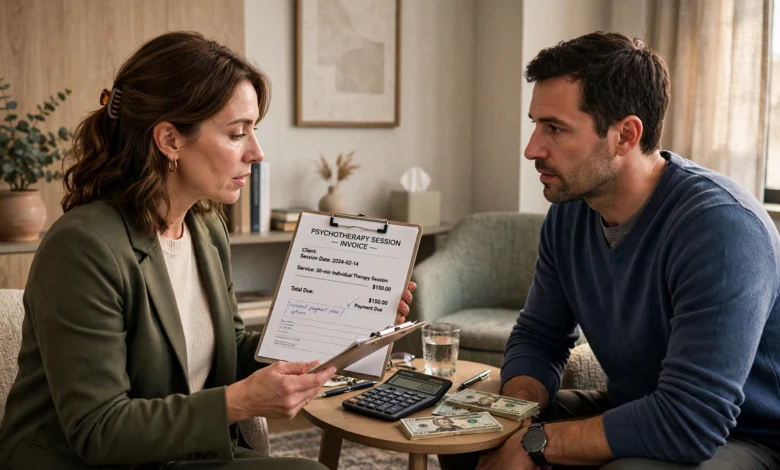
The cost of psychotherapy in America is one of the biggest reasons people put off getting help. You know you probably need to talk to someone, but the moment you start looking up prices, the numbers feel all over the place. One website says $80 a session, another says $300, and your insurance card doesn’t make anything clearer.
Here’s the honest answer: therapy costs in the United States typically run $100 to $250 per session without insurance, with a national average landing around $170 to $180 for a standard 45- to 50-minute appointment. But that range hides a lot of detail that actually matters to your wallet, like where you live, what kind of clinician you see, whether you’re paying in-network or out-of-pocket, and what type of therapy you need.
This guide breaks down psychotherapy pricing in 2026 the way a knowledgeable friend would explain it to you, not the way an insurance brochure would. We’ll cover session rates by therapist credential, cost differences between in-person and online therapy, what insurance actually pays for, sliding scale and low-cost options, and how to budget for ongoing care without draining your savings. By the end, you’ll have a realistic number in your head instead of a guess.
Why the Cost of Psychotherapy Varies So Much
Before getting into numbers, it helps to understand why therapy pricing isn’t a fixed rate the way a haircut or an oil change might be. A handful of factors stack on top of each other to determine what you’ll actually pay.
- Therapist credentials. A licensed clinical social worker (LCSW) or licensed professional counselor (LPC) generally charges less than a psychologist with a PhD or PsyD, who in turn usually charges less than a psychiatrist who also prescribes medication.
- Geographic location. A session in Manhattan or San Francisco can cost double what the same session costs in a mid-sized city in the Midwest or the South.
- Specialization. Standard talk therapy sits at typical market rates. Specialized treatment for trauma, eating disorders, or OCD, along with certified approaches like EMDR, often carries a premium because of the extra training involved.
- Session format. In-person therapy tends to cost more than telehealth, partly because of overhead like office rent.
- Insurance status. Whether a provider is in-network, out-of-network, or private-pay entirely changes what shows up on your bill.
- Practice type. Solo private practitioners set their own rates. Group practices, community clinics, and training clinics usually charge less.
Once you know which of these factors apply to your situation, the price range narrows considerably. Someone using in-network insurance in a smaller city will pay a fraction of what someone paying out-of-pocket for a specialized trauma therapist in a major metro area pays.
Average Cost of Therapy by Provider Type
The cost of psychotherapy shifts a lot depending on who’s sitting across from you. Here’s a realistic breakdown for 2026.
Licensed Counselors and Social Workers (LPC, LCSW, LMFT)
This is where most people start, and it’s usually the most affordable tier of licensed care. Expect to pay $80 to $150 per session out of pocket. These clinicians handle everything from anxiety and depression to relationship issues and grief, and many accept insurance.


Psychologists (PhD or PsyD)
Psychologists typically charge more because of their extensive training and, in many cases, their ability to conduct psychological testing and assessments. Rates generally fall between $120 and $250 per session. In major cities, that ceiling can climb closer to $300.
Psychiatrists
Psychiatrists are medical doctors who can prescribe and manage medication, and their pricing reflects that. An initial evaluation often costs $200 to $500, while follow-up medication management appointments (usually shorter than a full therapy session) run $100 to $300. If a psychiatrist also provides talk therapy, expect rates similar to or higher than a psychologist’s.
Marriage and Family Therapists
Couples and family sessions typically cost 20% to 40% more than individual sessions, landing somewhere between $120 and $350 per session. The higher price reflects longer appointment times (often 60 to 90 minutes instead of 45 to 50) and the added complexity of working with more than one person in the room.
Child and Adolescent Therapists
Therapy for kids generally costs $60 to $150 per session, with pricing shaped by the child’s age, the therapist’s experience, and your location. Some providers offer discounted packages if you book multiple sessions in advance.
What You’ll Actually Pay With Insurance
Insurance is supposed to make therapy costs more manageable, and for many people it does, but the math isn’t always obvious.
Under the Affordable Care Act, mental health care is classified as an essential health benefit, meaning most insurance plans in the U.S. are required to cover it. That doesn’t mean it’s free. It means your plan has to offer coverage comparable to how it treats physical health care. For details on what your specific plan covers, the official Healthcare.gov mental health benefits page is the most reliable place to check your rights and options.
Here’s what the numbers typically look like:
- In-network copay: $20 to $75 per session, depending on your specific plan.
- Out-of-network reimbursement: You pay the full session rate upfront, then your insurer reimburses a percentage, often after you’ve met a deductible.
- Before your deductible is met: You may owe the insurer’s negotiated rate in full, commonly $80 to $150 per session, even though that’s less than the provider’s private-pay rate.
- Coinsurance: Once you’ve met your deductible, many plans require you to pay 20% to 40% of the cost until you hit your out-of-pocket maximum.
One frustrating reality worth knowing: not every therapist accepts insurance. Many licensed clinicians, especially psychologists and specialists in high demand, run private-pay-only practices. Insurance reimbursement rates from major carriers are often lower than what therapists feel their time is worth, so some opt out of insurance panels entirely to set their own rates and avoid the paperwork.
If a therapist doesn’t take your insurance directly, ask whether they can provide a “superbill.” This is an itemized receipt you submit to your insurance company yourself for possible partial reimbursement under your out-of-network benefits.
Online Therapy vs. In-Person: A Real Cost Comparison
Online therapy has reshaped the affordability conversation for psychotherapy over the past few years, and it remains one of the most practical ways to cut costs in 2026.
Subscription-Based Platforms
Apps like BetterHelp and Talkspace bundle messaging and live sessions into a weekly subscription rather than charging per visit. Expect to pay roughly $60 to $100 per week, which works out close to a single traditional session if you meet with your therapist once weekly. The tradeoff is that these platforms typically aren’t billed through insurance, so you’re comparing an unreimbursed subscription against a possible copay.
Independent Telehealth Sessions
Many licensed therapists now offer video sessions directly, outside of a subscription app, at rates that run $60 to $150 per session — often slightly less than their in-person rate because they save on office overhead. If your therapist bills insurance, telehealth sessions are usually covered the same way in-person sessions are.
In-Person Therapy
Traditional office visits remain the priciest format, averaging around $170 to $180 per hour nationally when paying out of pocket. Some people still prefer this setup for the structure and separation it creates between therapy and the rest of their day, and certain approaches (like EMDR or somatic work) are harder to do effectively over video.
If cost is your main concern and your situation doesn’t require in-person specialized treatment, telehealth is usually the more budget-friendly starting point without sacrificing quality of care.
Regional Differences in Psychotherapy Pricing
Where you live has a bigger impact on the cost of psychotherapy than almost any other factor besides your credential choice.
- High-cost regions (New York, California, Washington D.C., Massachusetts): Sessions frequently run $200 to $300, and specialized providers can charge more.
- Moderate-cost states (Texas, Florida, Colorado): Expect $100 to $175 for a typical session.
- Lower-cost states (Kentucky, Louisiana, Alabama, and much of the rural Midwest): Rates often land between $80 and $150.
- Urban vs. rural within the same state: City-based practices generally charge 20% to 30% more than practices in surrounding rural areas, largely due to office rent and cost of living for the clinician.
If you live in a high-cost city but have flexibility in your schedule, some people save meaningfully by seeing a therapist licensed in their state but based in a lower-cost area, using telehealth to bridge the gap. Just confirm the therapist is licensed to practice in your specific state, since licensing is state-based, not national.
Sliding Scale and Low-Cost Therapy Options
If the standard rates above feel out of reach, you have more options than you might think. Affordable therapy exists in several forms across the country.
- Sliding scale fees: Many private practitioners reserve a limited number of sliding scale spots, adjusting the rate based on income. Rates can drop to $30 to $80 per session.
- Open Path Collective: A nonprofit network connecting people with licensed therapists offering reduced rates, typically $30 to $80 per session, for those who qualify financially.
- Training clinics: Graduate programs in psychology and counseling often run low-cost clinics where sessions are conducted by supervised trainees, usually for $0 to $50 per session.
- Community mental health centers: These government-funded or nonprofit centers offer therapy on a sliding scale, and some services are free depending on income and local funding.
- Employee Assistance Programs (EAPs): Many employers offer a set number of free counseling sessions annually as a workplace benefit. It’s worth checking with HR before assuming you have to pay out of pocket.
- University counseling centers: If you’re a student, campus counseling is frequently free or included in tuition fees.
- Support groups: Group therapy and peer-led support groups run a fraction of individual session costs and can be a strong complement to, or even substitute for, one-on-one care depending on your needs.
The American Psychological Association maintains resources for finding a psychologist and understanding what to expect from treatment, which is a solid starting point if you’re unsure where to look. You can find more guidance through the American Psychological Association’s psychologist locator if you want to compare specialties and approaches before committing to a provider.
Hidden Costs to Budget For
Therapy costs don’t stop at the session rate. A few extra expenses catch people off guard.
- Cancellation and no-show fees. Most therapists require 24 to 48 hours’ notice to cancel or reschedule without a charge. Missing that window can mean paying the full session rate, sometimes $60 to $250, even though you didn’t attend.
- Assessment and intake fees. Some practices charge more for the first session, since it involves a longer intake process to build your treatment plan.
- Psychological testing. If your therapist or psychologist recommends formal testing (for ADHD, learning differences, or diagnostic clarity), this is billed separately and can cost several hundred to a few thousand dollars depending on scope.
- Frequency of sessions. Weekly therapy adds up fast. At $150 per session, weekly visits alone total roughly $600 a month, or over $7,000 a year, before factoring in any additional care.
Knowing these costs upfront helps you avoid surprise charges and lets you have an honest conversation with a potential therapist about billing policies before your first appointment.
How to Lower the Cost of Psychotherapy Without Sacrificing Quality
You don’t have to choose between good care and an unaffordable bill. A few practical moves can bring your therapy costs down significantly.
- Ask directly about sliding scale availability. Many therapists don’t advertise it but will offer it if you ask.
- Use your FSA or HSA. Therapy is typically an eligible expense, letting you pay with pre-tax dollars.
- Check your out-of-network benefits before assuming a therapist is unaffordable. Even without an in-network provider, partial reimbursement can bring costs down substantially.
- Consider biweekly sessions once you’re stable in treatment, rather than assuming weekly visits are mandatory. Many therapists adjust frequency based on progress.
- Compare telehealth and in-person rates with the same provider. Some therapists charge less for virtual sessions.
- Look into your employer’s EAP before searching independently, since those sessions are usually free.
- Ask about group rates if you and a partner or family member are both seeking support, since some practices offer combined pricing for related services.
Is Psychotherapy Worth the Cost?
This is the question underneath all the pricing details. Mental health research consistently links untreated anxiety, depression, and chronic stress to lost productivity, strained relationships, and higher long-term healthcare costs. Compared to the cumulative cost of unresolved mental health struggles, whether measured in missed work, damaged relationships, or physical health consequences, the cost of psychotherapy is often a smaller number than the cost of doing nothing.
That said, “worth it” is a personal calculation. If a $200-per-session private practitioner is out of reach, that doesn’t mean therapy itself is out of reach. Between sliding scale practices, community clinics, telehealth, and insurance-covered options, most people can find a version of care that fits both their needs and their budget, even if it takes some research to find it.
Conclusion
The cost of psychotherapy in America in 2026 typically ranges from $100 to $250 per session without insurance, with copays as low as $20 to $75 for those using in-network benefits, and even lower options available through sliding scale practices, community clinics, and online platforms.
What you actually pay depends on your therapist’s credentials, your location, your insurance situation, and the type of care you need, so it’s worth comparing a few providers and asking direct questions about billing before you commit. Therapy is rarely one-size-fits-all in price or in approach, but with a bit of research, most people can find quality mental health care that fits their budget.