Online Psychotherapy: Is Teletherapy as Effective?
Online psychotherapy is booming, but does teletherapy really work as well as in-person care? Here's what the research actually shows.
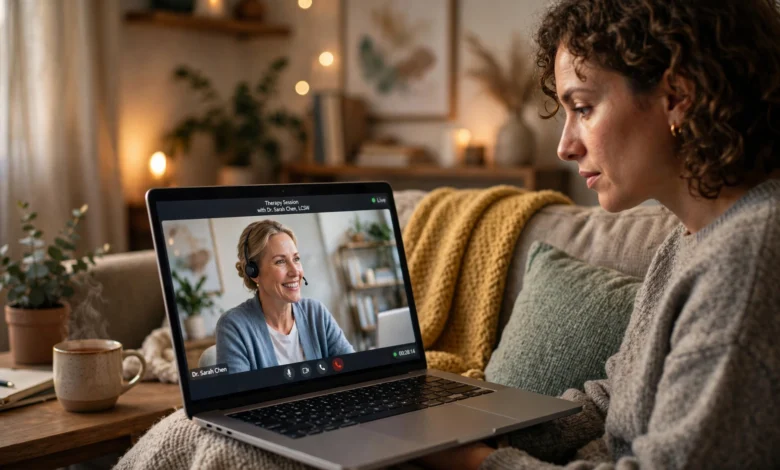
A few years ago, the idea of talking to a therapist through a laptop screen felt like a compromise, something you settled for when the “real” option wasn’t available. That perception has mostly flipped. Online psychotherapy is no longer a backup plan; for millions of people it’s the first and only way they’ve ever done therapy.
The shift happened fast. When in-person offices closed in 2020, therapists and clients had no choice but to move sessions online, and most of them never fully moved back. Today, teletherapy sits alongside traditional office visits as a mainstream form of mental health care, used by everyone from college students squeezing in a session between classes to rural residents who’d otherwise drive two hours to see a licensed provider.
But convenience is one thing. Effectiveness is another. If you’re weighing whether to start online therapy, switch from your current in-person therapist, or recommend it to someone you care about, the real question isn’t “is it easier?” It’s “does it actually work?”
This article walks through what the research says about teletherapy effectiveness, how virtual therapy compares to face-to-face sessions, who tends to benefit most, where the format falls short, and how to set yourself up for a good outcome if you decide to try it.
What Is Online Psychotherapy?
Online psychotherapy (also called teletherapy, telehealth counseling, or virtual therapy) is professional mental health treatment delivered remotely instead of in a therapist’s physical office. It’s provided by the same licensed clinicians, psychologists, counselors, and clinical social workers, who offer in-person care. The only real difference is the delivery method.
Sessions typically happen through one of a few formats:
- Live video calls — the closest equivalent to sitting in an office, usually done through a secure, HIPAA-compliant platform
- Phone sessions — audio-only therapy, often used when video isn’t practical or a client prefers less visual pressure
- Text-based or asynchronous therapy — messaging with a therapist over the course of the day rather than in a fixed session
Most online therapy platforms bundle these options together and let clients pick what fits their situation, sometimes even switching formats week to week.


How Does Teletherapy Actually Work?
Understanding the mechanics of teletherapy helps explain why it can hold up so well against traditional care.
Video Sessions
This is the format most people picture when they hear “online therapy.” Client and therapist log into a secure video platform at a scheduled time and conduct a session that looks almost identical in structure to an office visit, same length, same techniques, same clinical notes. The therapist can still observe body language, tone of voice, and facial expressions, which matters for diagnosis and rapport.
Phone-Based Therapy
Audio-only sessions strip away the visual element but keep the real-time, back-and-forth conversation intact. Some clients actually find phone sessions more comfortable because there’s no camera to worry about, and research on phone therapy has generally found outcomes comparable to video.
Messaging and Async Therapy
A smaller slice of the market, but growing. Clients send messages throughout the day and a therapist responds within a set window, often once or twice daily. This format trades real-time interaction for flexibility and is generally best suited for lower-acuity concerns rather than crisis-level symptoms.
Is Online Psychotherapy as Effective as In-Person Therapy? What the Research Says
This is the question that matters most, and thankfully, it’s been studied a lot over the past decade, especially since the pandemic forced a rapid, large-scale test of remote care.
Meta-Analyses and Clinical Trials
The strongest evidence comes from meta-analyses that pool results across many individual studies. A widely cited meta-analysis of randomized clinical trials published in Clinical Psychology: Science and Practice compared synchronous teletherapy (live video and phone) directly against in-person therapy and found no significant difference in outcomes at the end of treatment, at follow-up, or in how many people dropped out along the way.
Similar conclusions show up elsewhere. Research reviewed by the American Psychological Association has found that telehealth therapy produces outcomes comparable to face-to-face care across a wide range of conditions, and a large-scale review published on PubMed Central noted that telehealth psychotherapy has become both widespread and generally accepted as equally effective following its rapid post-pandemic expansion.
Specific findings worth knowing:
- Cognitive behavioral therapy (CBT) delivered virtually has shown outcomes on par with in-person CBT, and in some studies, participants reported fewer symptoms after three months of virtual CBT compared with the in-office version
- The therapeutic relationship itself, often called the therapeutic alliance and considered one of the biggest predictors of successful therapy, tends to form just as strongly over video as it does in person
- Drop-out rates between online counseling and traditional therapy are roughly the same, which matters because inconsistent attendance is one of the biggest threats to treatment success regardless of format
Conditions Where Teletherapy Excels
Virtual therapy appears to work especially well for:
- Anxiety and depression — the two most common reasons people seek therapy, and the two conditions with the most supporting research behind remote treatment
- PTSD — video-based exposure therapy and trauma-focused CBT have shown strong results in veteran and civilian populations alike
- Panic disorder — being treated from a familiar, safe environment can actually reduce anticipatory anxiety before sessions
- OCD — teletherapy can remove logistical barriers tied to the disorder itself, like avoidance of appointments due to contamination fears
- Eating disorders — some clients find it easier to be open about food and body-related struggles without the added stress of an in-person visit
Where In-Person Therapy May Still Have an Edge
Not every study is unreservedly positive, and it’s worth being honest about that. Some researchers caution that it’s premature to say teletherapy matches in-person care across every condition, symptom, and population. A few patterns are worth noting:
- Clients with severe or complex psychiatric conditions may need the higher level of therapist engagement that in-person sessions provide, and some studies show better outcomes for this group with face-to-face care
- Certain nonverbal cues, small shifts in posture, fidgeting, subtle emotional reactions, are easier for a trained therapist to catch in the same room
- Technology issues (frozen screens, dropped calls, poor lighting) can occasionally interrupt sessions in ways an office setting simply doesn’t allow
The honest takeaway from the research: online psychotherapy works about as well as in-person therapy for most people and most common conditions, with a smaller group of clients, generally those with more severe or complex needs, potentially benefiting more from face-to-face care.
Benefits of Online Psychotherapy
Beyond raw effectiveness, teletherapy offers a set of practical advantages that help explain why so many people have stuck with it even after in-person options fully reopened.
- Access. People in rural areas, small towns, or regions with few licensed therapists can now reach qualified providers they’d never otherwise be able to see
- Convenience. No commute, no waiting room, and far more flexible scheduling, including early mornings, lunch breaks, or evenings after the kids are in bed
- Consistency. Travel, illness, or bad weather no longer has to mean a cancelled session
- Comfort. Being in a familiar space can lower the emotional barrier to opening up, particularly for clients working through anxiety or trauma
- Privacy. For some people, especially in smaller communities, avoiding a physical waiting room reduces the fear of being seen or recognized
- Cost and time savings. Even when session fees are similar, cutting out travel time and gas or transit costs adds up
Drawbacks and Limitations of Teletherapy
To give a fair picture, online counseling isn’t a perfect substitute for everyone, and it’s worth going in with clear eyes.
- Technology dependence. A stable internet connection and a private space to talk are non-negotiable, and not everyone has reliable access to both
- Reduced nonverbal information. Video compresses a lot of the subtle communication a therapist would normally pick up on in person
- Not ideal for crisis or high-acuity care. Clients in active crisis, or with conditions that require close monitoring, are often better served by in-person or higher-level care
- State licensing rules. Many therapists can only legally treat clients located in the states where they’re licensed, which can limit options if you travel or relocate
- Screen fatigue. After a full day of video calls for work, another one for therapy can feel draining rather than restorative for some clients
Who Is Online Psychotherapy Best For?
Teletherapy tends to be a strong fit for:
- People with mild to moderate anxiety, depression, or stress-related concerns
- Busy professionals and parents who struggle to fit an in-person appointment into their schedule
- Students, especially those attending school away from home
- People in rural or underserved areas without local access to mental health providers
- Anyone who feels more comfortable opening up from home than in a clinical office
- People already receiving stable, ongoing care who need continuity during travel or relocation
It may be less ideal for:
- People experiencing active suicidal ideation, psychosis, or a mental health crisis requiring immediate, in-person intervention
- Clients with severe substance use disorders who may benefit from more intensive, in-person program structures
- Young children, who often respond better to therapy that includes hands-on or play-based techniques
How to Choose an Online Therapy Platform
If you’ve decided online psychotherapy is worth trying, the platform and provider you choose matters just as much as the format itself.
- Confirm licensure. Your therapist should be licensed in the state where you’re physically located, not just where the company is headquartered
- Check credentials. Look for licensed psychologists, clinical social workers (LCSW), or licensed professional counselors (LPC), not unlicensed “coaches” marketed as therapists
- Ask about session format. Decide whether you want live video, phone, or messaging-based support, and confirm the platform actually offers it
- Review privacy and security practices. The platform should use HIPAA-compliant video and messaging technology to protect your health information
- Understand the cost structure. Some platforms accept insurance directly, others require you to submit for reimbursement, and some operate on a subscription model
- Read real client reviews, not just testimonials on the company’s own site, to get a sense of typical wait times and therapist quality
Tips for Getting the Most Out of Teletherapy
A few small habits can meaningfully improve how well virtual therapy works for you:
- Treat sessions like an appointment, not a background task. Sit somewhere quiet and private rather than trying to multitask
- Test your tech beforehand. A few minutes checking your camera, mic, and internet connection avoids losing session time to troubleshooting
- Use headphones for better audio quality and added privacy if you’re not entirely alone in your space
- Give it a few sessions before judging fit. Like in-person therapy, the therapeutic relationship takes a little time to build
- Be upfront with your therapist about anything that’s making the remote format harder, whether that’s distractions at home or discomfort with video
Conclusion
The research is fairly consistent: for most people dealing with common concerns like anxiety, depression, PTSD, and panic disorder, online psychotherapy works about as well as sitting across from a therapist in an office, with similar rates of symptom improvement, client satisfaction, and treatment dropout. Teletherapy isn’t flawless, and clients with more severe or complex mental health needs may still benefit from the closer engagement that in-person care provides, but for the vast majority of people, the format itself isn’t the deciding factor in whether therapy works.
What matters more is finding a licensed, qualified therapist, showing up consistently, and being honest in the room, virtual or otherwise. If access, cost, or scheduling has kept you from getting support, virtual therapy is a legitimate, evidence-backed way to start.