Exercises for Mental Health Recovery: 15 Best Proven Moves to Feel Better
xercises for mental health recovery can ease anxiety, lift mood, and rebuild confidence. Here are 15 proven moves, plus tips to start safely today.
Exercises for mental health recovery are one of the simplest tools you have when you are working your way back from anxiety, depression, burnout, or a rough stretch of life. On hard days, even small tasks can feel heavy. Therapy and medication matter a lot, but many people overlook the one thing they can start with right now: movement.
The right exercise for mental health can calm a racing mind, help you sleep better, and give you a small, steady sense of progress when little else feels in your control. You do not need a gym membership or a perfect plan. You need something you can actually do, and then do again.
That is what this guide is about. Below are 15 forms of physical activity for mental health that range from gentle to energizing, so you can pick what fits your body and your current energy level. Some are backed by strong research on exercise and depression and anxiety. Others are simple habits that help you reconnect with your body and your day.
Each section explains how the exercise helps, who it suits best, and an easy way to begin. We will also cover how much movement you really need, how to build a routine that sticks, and when to check in with a professional. Treat this as a practical menu, not a strict program. Recovery is rarely a straight line, and your plan does not need to be one either.
How Exercises for Mental Health Recovery Support Your Brain
Movement changes how your brain and body handle stress. That is why doctors increasingly treat exercises for mental health recovery as part of care, not an optional extra. A large 2023 review in the British Journal of Sports Medicine found that physical activity meaningfully reduced symptoms of depression, anxiety, and psychological distress across many groups of adults. A 2024 analysis in The BMJ found that walking or jogging, yoga, strength training, and dancing were among the most effective options for depression.
Here is what is happening behind the scenes.
It Lifts Mood Chemistry
When you move, your body releases endorphins and boosts brain chemicals such as serotonin and dopamine. These play a role in mood, motivation, and pleasure. The Mayo Clinic explains this clearly in its guide on how exercise eases symptoms of depression and anxiety, noting that regular activity also helps take your mind off worries.


It Lowers Stress Hormones
Chronic stress keeps cortisol and adrenaline high. Regular aerobic exercise helps your body return to a calmer baseline faster after a stressful moment. Over time, many people notice they react less sharply to everyday pressure.
It Improves Sleep
Poor sleep and poor mental health feed each other. Consistent daytime activity helps regulate your body clock, so falling asleep and staying asleep often gets easier. Better sleep then makes the next day feel more manageable.
It Rebuilds Confidence and Control
Depression and anxiety can make you feel stuck. Finishing a ten-minute walk or adding one more rep is a small win you can see. Those wins stack up, and they quietly remind you that change is possible.
It Creates Structure and Connection
A set walk time or a weekly class gives your day shape. Group activities also bring low-pressure social contact, which is a real protective factor for mental wellbeing.
15 Best Exercises for Mental Health Recovery
The list below starts with gentle, low-barrier options and moves toward more demanding ones. You do not need to do all of them. Pick two or three that sound doable and rotate as your energy changes.
1. Brisk Walking
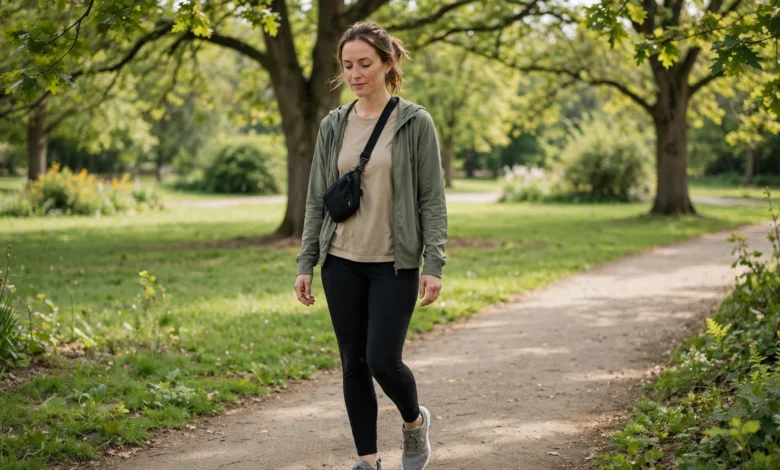
Walking is the easiest place to start because it needs no gear, no skill, and very little planning. A brisk pace, where you can talk but not sing, counts as moderate aerobic exercise and brings real mood benefits. It is also one of the best exercises for anxiety because the steady rhythm helps settle a busy mind.
How to start:
- Walk for 10 minutes after one meal each day.
- Add 2 to 3 minutes every week until you reach 30 minutes.
- Leave your phone in your pocket and notice what you see and hear.
2. Walking or Hiking in Nature
Taking your walk outside, into a park, along a river, or on a trail, adds another layer. Research on green exercise suggests time in nature can lower stress and reduce rumination, the loop of repetitive negative thoughts that often comes with depression. Daylight also supports your sleep cycle.
If you live in a busy city, a tree-lined street or a small local park still helps. Aim for a couple of outdoor sessions a week.
3. Yoga
Yoga for mental health combines movement, breathing, and focused attention. That mix makes it useful for both anxiety and low mood. Slower styles like hatha or restorative yoga calm the nervous system, while vinyasa flows feel more energizing. Many recovery programs include yoga because it builds body awareness without pressure to perform.
How to start:
- Try a free 15-minute beginner video at home.
- Choose trauma-informed or gentle classes if you feel unsure.
- Focus on breathing more than on getting poses right.
4. Running or Jogging
Running is one of the most studied forms of exercise for depression. The sustained effort raises your heart rate, and many people describe a clear lift in mood afterward. It also gives you measurable progress, which can rebuild confidence.
You do not have to run fast or far. A run-walk method, such as one minute jogging and two minutes walking, is a smart way to begin without burning out.
5. Strength Training
Lifting weights, using resistance bands, or doing bodyweight moves like squats and push-ups has solid research behind it for depression. Strength training gives you clear goals and visible gains, which can counter feelings of helplessness.
How to start:
- Do two short sessions a week covering legs, push, pull, and core.
- Use bodyweight first, then add light weights.
- Track your sets in a notebook so you can see your progress.
6. Swimming
Swimming is easy on the joints and naturally rhythmic. The steady breathing and the feeling of water can be deeply calming. Many swimmers say that time in the pool feels like a break from their thoughts. It is a strong choice if you also live with pain, extra weight, or injury.
7. Cycling
Whether it is a stationary bike at home or a ride around your neighborhood, cycling offers cardio benefits with less impact than running. Outdoor cycling adds fresh air and a sense of freedom. Indoor cycling works well on low-motivation days because you can pedal while listening to music or a podcast.
8. Tai Chi and Qigong
These slow, flowing Chinese practices pair gentle movement with deep breathing and focus. They are often described as meditation in motion. Tai chi can lower stress, improve balance, and help with anxiety, and it suits older adults or anyone who finds intense workouts overwhelming. Look for a local class or a beginner video series.
9. Dancing
Dancing may be the most fun entry on this list, and research backs it up. In the 2024 BMJ analysis, dance showed some of the strongest effects on depressive symptoms. It combines cardio, music, rhythm, and self-expression. You can join a class, follow a video, or just put on three favorite songs and move around your room. Nobody needs to watch.
10. Pilates
Pilates focuses on core strength, posture, and controlled breathing. The precise, slow movements demand concentration, which leaves less room for anxious thoughts. It is a good middle ground for people who want something more structured than stretching but less intense than a gym workout.
11. Breathing Exercises with Gentle Movement
Not every session needs to raise your heart rate. Breathing exercises such as diaphragmatic breathing or box breathing (in for four, hold for four, out for four, hold for four) activate the body’s relaxation response. Pairing them with slow arm raises or a gentle walk makes them feel more natural.
This is a useful tool for moments of panic or high stress, and it works well as a warm-up or cool-down for other mental health exercises.
12. Stretching and Progressive Muscle Relaxation
Stress often shows up in the body as tight shoulders, a clenched jaw, or a stiff back. A short stretching routine releases some of that tension. Progressive muscle relaxation takes it further: you tense one muscle group for five seconds, then let it go, working from your feet up to your face.
How to start:
- Stretch for 5 to 10 minutes before bed.
- Try a guided muscle relaxation audio on nights you cannot switch off.
- Keep movements slow and never push into pain.
13. High-Intensity Interval Training (HIIT)
HIIT alternates short bursts of hard effort with rest. It is time-efficient, and many people feel a strong mood lift afterward. That said, a racing heart and heavy breathing can feel like panic for some people with anxiety. If that sounds like you, build a base with walking or cycling first, then try short, gentle intervals once you feel ready.
14. Team Sports and Group Classes
Football, cricket, badminton, basketball, or a group fitness class add something solo workouts cannot: people. Social connection is one of the strongest supports for mental health recovery, and group settings give you built-in accountability. If joining a team feels like too much, start with a beginner class where everyone is new.
15. Gardening and Active Hobbies
Digging, planting, weeding, and watering are real physical work, and they come with fresh air, sunlight, and something living to care for. Gardening gives a gentle sense of purpose that many people in recovery find grounding. Other active hobbies count too, such as playing with a dog, cleaning to music, or walking to the shops instead of driving.
The lesson here is simple. The best exercises for mental health recovery are often the ones that do not feel like a workout at all.
How to Build a Routine with Exercises for Mental Health Recovery
Knowing what helps is the easy part. Doing it on a low day is harder. These steps make consistency more realistic.
How Much Exercise Do You Need?
The World Health Organization physical activity guidelines recommend that adults get 150 to 300 minutes of moderate activity, or 75 to 150 minutes of vigorous activity, each week, plus muscle-strengthening work on two or more days. That sounds like a lot, but it breaks down to about 30 minutes, five days a week.
Here is the encouraging part. Research shows mental health benefits begin well below that target. Even 10 to 15 minutes a day is worth doing, especially at the start.
Start Smaller Than You Think
When motivation is low, set a goal so small it feels almost silly. Put on your shoes and walk to the end of the street. Do five squats while the kettle boils. Small starts lower the barrier, and you will often end up doing more.
Match the Exercise to Your Energy
| How you feel today | Try this |
|---|---|
| Anxious or wired | Walking, yoga, tai chi, breathing exercises |
| Low, flat, or heavy | A short outdoor walk, dancing to one song, gentle cycling |
| Restless or angry | Running, strength training, HIIT |
| Lonely or isolated | Group classes, team sports, walking with a friend |
| Exhausted | Stretching, progressive muscle relaxation |
Build It Into Your Day
- Tie exercise to an existing habit, such as a walk after lunch.
- Schedule it like an appointment and put it in your calendar.
- Lay out clothes and shoes the night before.
- Find a buddy or join a class for gentle accountability.
- Keep a simple log of your mood before and after each session.
That last step matters. Seeing in your own notes that you felt calmer after a walk is often more convincing than any study.
Be Kind About Missed Days
You will skip sessions. Everyone does. A missed day is not a failure, and it does not erase your progress. Just pick it back up the next day without trying to make up for lost time.
Safety Tips and When to Get Support
Exercise works best as one part of a wider mental health recovery plan, alongside therapy, medication if prescribed, sleep, and social support. Keep these points in mind:
- Talk to your doctor before starting if you have a heart condition, a chronic illness, or take medication that affects heart rate or blood pressure.
- Watch for over-exercising. Using workouts to punish yourself or control weight, or feeling panic when you miss a session, is a sign to check in with a professional.
- Do not stop prescribed medication because exercise is helping. Discuss any changes with your doctor.
- If you are having thoughts of harming yourself, please reach out to a local crisis line, emergency services, or someone you trust right away. Exercise can support recovery, but it is not a replacement for urgent care.
Conclusion
Exercises for mental health recovery do not have to be intense, expensive, or complicated to make a real difference. Brisk walking, time in nature, yoga, running, strength training, swimming, cycling, tai chi, dancing, Pilates, breathing work, stretching, HIIT, team sports, and gardening each support your mind in slightly different ways, and lowering stress hormones to improving sleep and rebuilding confidence.
The key is to start small, match your activity to how you feel, aim gradually toward the WHO guideline of 150 minutes a week, and treat movement as one part of a wider recovery plan that includes professional support when you need it. Pick one exercise from this list, try it for a week, and notice what changes.