Online Family Therapy: Does Virtual Counseling Work?
Online family therapy is changing how families heal. Here's what the research says, how sessions work, and if virtual counseling is right for you.
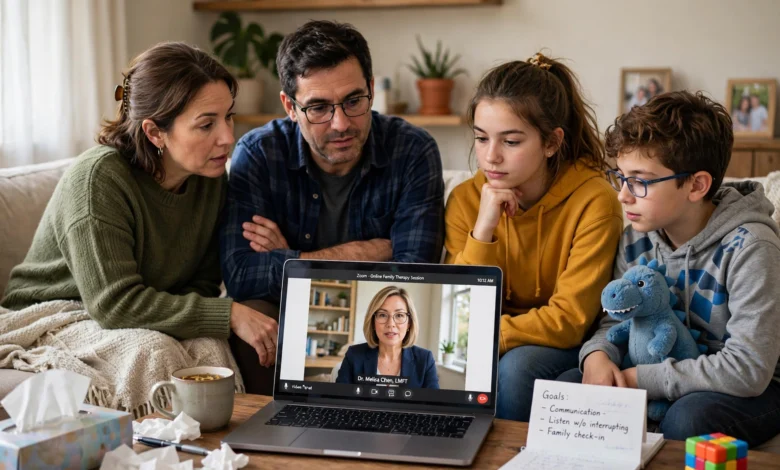
Online family therapy has moved from a pandemic-era workaround to a legitimate, and often preferred, way for families to get help. But if you’re sitting there wondering whether talking through your family’s issues on a laptop screen can actually produce real change, that’s a fair question. Video calls can feel distant. Emotions can feel harder to read through a webcam. So does virtual family counseling actually work, or is it just a more convenient version of something that only really works in person?
The short answer, based on a growing body of research and the experience of thousands of families who’ve tried it, is yes, it works. Not for every situation, and not without a few trade-offs, but the evidence backing online family therapy is stronger than most people expect. Studies comparing outcomes between in-person and remote sessions consistently find similar results in communication improvement, conflict reduction, and relationship satisfaction.
In this article, we’ll break down what online family therapy actually looks like, walk through the research on whether it works, cover who it’s best suited for, and give you a clear-eyed look at the benefits and limitations. If you’re trying to decide whether to book that first virtual session, this should give you what you need to make the call with confidence.
What Is Online Family Therapy?
Online family therapy is counseling that takes place over secure video, phone, or sometimes messaging platforms instead of in a therapist’s office. A licensed family therapist meets with multiple members of a household at the same time, working through the same issues that would come up in a traditional session: communication breakdowns, unresolved conflict, grief, blended family tension, parenting disagreements, or the ripple effects of one member’s mental health struggles on everyone else.
The format itself isn’t radically different from in-person therapy. Sessions usually run 45 to 60 minutes, follow a similar structure, and use many of the same therapeutic techniques a therapist would use across the table from you. What changes is the delivery method, not the substance of the work.
Most platforms offering virtual family counseling use HIPAA-compliant video software, meaning your sessions are encrypted and private in the same way medical records are protected. Some services also offer:
- Secure messaging between sessions for quick check-ins
- Shared digital worksheets or communication exercises
- Flexible scheduling that includes evenings and weekends
- The option to bring in family members who live in different cities or states
How a Typical Virtual Session Works
A first session usually starts with an intake conversation, where the therapist learns about the family structure, the presenting issue, and everyone’s goals for therapy. From there, sessions tend to follow a rhythm:


- Check-in on how the week went and any incidents worth discussing
- Revisiting techniques or homework from the previous session
- Working through a specific conflict or communication pattern in real time
- Assigning a small, practical exercise to try before the next session
Because everyone joins from their own device, some families choose to sit together in one room and share a single screen, while others each log in from a separate location. Both approaches are common, and a good therapist will adjust their style depending on which setup the family prefers.
Does Virtual Counseling Really Work? What the Research Says
This is the question most people actually care about, so let’s look at it directly.
According to the American Psychological Association, telehealth counseling has demonstrated effectiveness comparable to in-person therapy across a wide range of conditions, including anxiety, depression, and relationship distress. That comparability extends to family and couples work specifically, where several studies have found no meaningful difference in outcomes between remote and face-to-face sessions.
A few reasons researchers believe online family therapy holds up so well:
- Reduced dropout rates. Families are more likely to stick with therapy when they don’t have to fight traffic or arrange childcare to get there.
- Increased comfort discussing sensitive topics. Some clients report feeling less confronted and more willing to open up when they’re in a familiar space like their own living room.
- Higher session attendance. Fewer no-shows means more consistent progress, which matters more for outcomes than the format of any single session.
- Access to specialized therapists. A family dealing with a specific issue, like substance use or a blended family transition, can find a therapist who specializes in that exact challenge instead of settling for whoever is available locally.
That said, virtual counseling isn’t a flawless substitute in every scenario. Therapists who work with families report that reading body language across a whole group is harder on video, especially when younger children are involved or when a family member is deliberately trying to avoid the conversation by turning off their camera or stepping out of frame. Sessions dealing with active abuse, safety concerns, or severe crises often still benefit from in-person intervention, at least initially, so a therapist can properly assess the situation.
Who Benefits Most From Online Family Therapy
Not every family situation looks the same, and virtual family counseling tends to be a stronger fit for some circumstances than others.
Families Spread Across Different Locations
If your family includes a college student three states away, a parent who travels for work, or relatives split across time zones after a divorce, online family therapy solves a logistical problem that in-person therapy simply can’t. Everyone joins the same session from wherever they are, which keeps the whole family engaged in the process instead of leaving someone out.
Busy Parents and Working Households
Between school schedules, work commitments, and everyone’s individual activities, finding a time slot that works for an entire family to drive to an office can be its own source of stress. Virtual sessions remove the commute entirely, which often means the difference between a family actually following through with therapy and one that quietly stops going after a few weeks.
Families in Rural or Underserved Areas
Access to a licensed family therapist, particularly one who specializes in a specific issue, is limited in many parts of the country. Online family therapy opens up a much wider pool of qualified professionals to families who would otherwise have to drive hours or settle for a generalist.
Families Navigating Sensitive or Emotional Topics
Some clients genuinely do better discussing painful topics, like a parent’s mental health crisis or a teenager’s self-harm, from home. The reduced sense of confrontation that comes with video counseling can lower the emotional temperature enough for people to actually engage rather than shut down.
Blended and Multi-Household Families
When a family includes stepparents, half-siblings, or co-parents living in separate homes, coordinating everyone for an in-person session can be nearly impossible. Virtual platforms make it far easier to bring every relevant person into the room, even when there technically isn’t one room to share.
The Benefits of Virtual Family Counseling
Here’s a closer look at the practical advantages families consistently report after trying online family therapy.
- Convenience and flexibility. Sessions can be booked around work, school, and extracurriculars, including evenings and weekends that many in-person practices don’t offer.
- Lower cost in many cases. Without office overhead, some virtual therapy services charge less than traditional practices, and you save on gas, parking, and childcare.
- Wider therapist selection. You’re not limited to whoever has an opening near your zip code. You can find someone who specializes in your family’s exact situation.
- Comfort of a familiar environment. Being at home can lower anxiety and make it easier to speak openly, especially for teenagers or reluctant participants.
- Easier to include everyone. Family members who live elsewhere, have mobility limitations, or have demanding schedules can still join consistently.
- Continuity during disruptions. Illness, bad weather, or travel doesn’t have to mean a missed or rescheduled session.
Limitations to Be Aware Of
It wouldn’t be a fair look at whether virtual counseling works without covering where it falls short.
- Technology issues can interrupt sessions. A dropped connection or frozen screen at an emotional moment can break the flow of a conversation.
- Harder to manage group dynamics. A skilled therapist relies on subtle cues, like body language and eye contact, to manage tension in the room. Video makes some of that harder to catch.
- Privacy at home isn’t guaranteed. Not every family member has a private space to speak freely, especially in smaller households or shared living situations.
- Not ideal for active crises. Situations involving immediate safety concerns, active abuse, or acute psychiatric emergencies usually call for in-person evaluation.
- Requires basic comfort with technology. While most platforms are simple to use, some family members, particularly older relatives, may need help getting comfortable with the format.
How to Choose the Right Online Family Therapy Service
If you’ve decided online family therapy is worth trying, the next step is finding the right fit. A few things worth checking before you commit:
- Confirm the therapist is licensed in your state, since licensure requirements for family therapists vary and telehealth doesn’t remove that requirement.
- Ask about specialization. A therapist experienced in blended families won’t necessarily be the best fit for a family working through addiction recovery, so match the specialty to your situation.
- Check the platform’s privacy standards. Look for HIPAA-compliant video software and clear policies on how session data is stored.
- Review scheduling flexibility. If your family’s biggest barrier is time, make sure the service actually offers evening or weekend slots.
- Ask about cost and insurance. Some platforms accept insurance, while others operate on a subscription or per-session model, so it’s worth clarifying upfront.
- Consider a trial session. Many therapists and platforms offer an initial consultation, which is a low-commitment way to see if the fit feels right before scheduling a full course of treatment.
According to guidance from BetterHelp’s family therapy resources, the techniques used in traditional in-person counseling translate effectively to virtual settings, and many clients report feeling more at ease opening up about sensitive topics when they’re not face-to-face with their therapist.
Common Concerns Families Have About Virtual Therapy
“Will my kids actually engage on a screen?”
Younger children often adapt to video sessions faster than parents expect, especially when a therapist uses interactive tools like shared drawing boards, games, or visual aids designed for virtual settings. Teenagers, in particular, tend to feel more at ease with a video format since it mirrors how they already communicate day to day.
“Is it as effective for serious issues, or just minor disagreements?”
Research suggests online family therapy can be effective for a broad range of issues, from everyday communication problems to more serious challenges like grief, trauma recovery, and the family impact of a loved one’s substance use. That said, therapists will often recommend in-person care as a supplement when safety is a concern.
“What if someone in the family refuses to participate?”
This challenge exists in both formats, but virtual therapy can sometimes lower the barrier to entry for a reluctant participant, since joining a session from their own room feels less like being forced into an uncomfortable office setting.
“How do we know if it’s actually working?”
A good therapist will set measurable goals early on, whether that’s reduced frequency of arguments, improved communication at home, or specific behavioral changes. Progress should be revisited regularly, and it’s reasonable to ask your therapist directly how they track it.
Signs Online Family Therapy Might Not Be the Right Fit
While virtual family counseling works well for most families, there are situations where in-person care is the safer or more effective choice:
- Active domestic violence or safety concerns within the household
- A family member experiencing a severe psychiatric crisis
- Young children who need hands-on, in-room therapeutic techniques
- Households without reliable internet access or private space to talk
If any of these apply, it’s worth discussing options with a professional who can help determine whether a hybrid approach, combining virtual and in-person sessions, makes more sense.
Making the Decision for Your Family
There’s no universal answer to whether online family therapy is right for every household, but the evidence makes a strong case that it works for the vast majority of families who try it. The convenience alone often means the difference between a family that follows through with treatment and one that gives up after a scheduling conflict or two. Combined with comparable outcomes to in-person therapy, a wider selection of specialized therapists, and a setting that many families find more comfortable for hard conversations, virtual counseling has earned its place as a legitimate, effective option rather than a lesser substitute.
If your family has been putting off getting help because of logistics, cost, or simply not knowing where to start, online family therapy removes a lot of those excuses. The best next step is usually the simplest one: book an initial consultation, see how it feels, and decide from there.
Conclusion
Online family therapy has proven itself to be more than a temporary fix from the pandemic era. It’s a genuinely effective way for families to work through communication problems, conflict, grief, and the strain that comes with blended households or major life transitions, backed by research showing outcomes comparable to in-person therapy.
It works best for families who are spread across locations, juggling busy schedules, or looking for a therapist with a specific specialty, though it isn’t the right call for active safety concerns or severe crises that need in-person evaluation. For most households, virtual counseling offers a practical, accessible, and genuinely effective way to get the support they need, without the added stress of fitting one more thing into an already full schedule.