The Rise of Flakka in American Cities: A Timeline
The rise of Flakka in American cities shocked the nation. Explore the full timeline of this dangerous synthetic drug — from its origins to its sudden collapse.
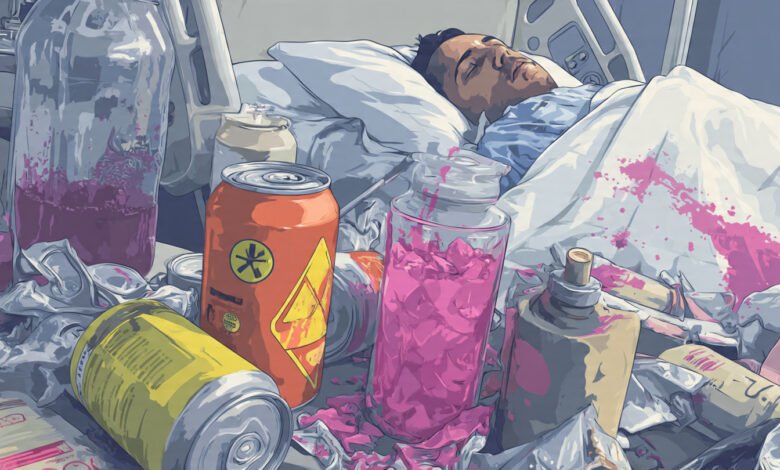
In the span of just a few years, a synthetic drug few people had ever heard of went from a laboratory chemical to a full-blown public health emergency in American cities. The rise of Flakka in the United States is one of the most jarring chapters in the country’s long and complicated history with drugs. It moved fast, hit hard, and left a trail of deaths, hospitalizations, and shattered communities — particularly across South Florida.
Flakka, also known by its chemical name alpha-pyrrolidinopentiophenone (alpha-PVP), belongs to a class of substances called synthetic cathinones — commonly referred to as bath salts. But even by the brutal standards of that drug family, Flakka stood apart. Emergency room doctors called it “$5 insanity.” Rehab directors called it “the devil’s drug.” First responders described scenes that seemed pulled from a science fiction film. People ran naked into traffic. Users ripped off their clothes as their body temperatures spiked to 105 degrees. One man impaled himself on a police station fence trying to escape imaginary pursuers.
This article traces the full timeline of how Flakka infiltrated American cities, which communities were hit hardest, what made the drug so dangerous, how authorities eventually contained it, and why the story isn’t fully over. If you want to understand one of the strangest and most frightening drug epidemics in modern U.S. history, this is where to start.
What Is Flakka? Understanding the Drug Behind the Crisis
Before diving into the timeline, it helps to understand exactly what Flakka is and why it proved so destructive so quickly.
The Chemical Makeup of Alpha-PVP
Flakka is made from alpha-pyrrolidinopentiophenone, a synthetic stimulant that was first documented in scientific literature back in the 1960s. It is closely related to pyrovalerone and is chemically linked to MDPV, the key ingredient in the first wave of bath salts that rattled the U.S. in the early 2010s.
The drug typically appears as white or pinkish crystal-like chunks, which is why it also earned the street name “gravel.” It looks a bit like the stones at the bottom of a fish tank. It has a strong, foul odor when heated — users often describe the smell as resembling dirty socks.
Flakka can be:


- Smoked (the most common method during the epidemic)
- Snorted
- Injected
- Swallowed
- Vaped through e-cigarettes
How Flakka Affects the Brain
Alpha-PVP works by flooding the brain with dopamine and norepinephrine — the same neurotransmitters targeted by cocaine and methamphetamine. But Flakka is far more powerful. Research suggests it is 10 to 20 times more potent than cocaine and significantly more potent than methamphetamine in laboratory models of dopamine reuptake inhibition.
What makes Flakka so dangerous compared to other stimulants is how unpredictably and violently it can tip over into catastrophe. A dose that produces a euphoric high in one instance can, moments later or at a slightly higher quantity, trigger a condition known as “excited delirium” — a state of extreme agitation, paranoid psychosis, and hyperthermia.
During excited delirium, users experience:
- Severe hallucinations (often believing they are being chased or attacked)
- Delusions of superhuman strength or invincibility
- Body temperature spikes to dangerous levels (105–106°F)
- Extreme paranoia and irrational terror
- Violent, uncontrollable behavior
- Rhabdomyolysis (muscle breakdown) leading to kidney failure
The effects come on fast — within 10 minutes of ingestion — peak between 10 and 40 minutes, and can last several hours. But neurological damage from Flakka can be permanent, with survivors reporting concentration problems and cognitive deficits that linger for months.
Why Flakka Was So Cheap and Accessible
The key to understanding how Flakka spread so quickly through American cities is its price. A single dose cost between $3 and $5 on the street — cheaper than a fast food combo meal. Cocaine might run $60 to $80 per gram. Prescription pills could cost $20 or more per tablet on the black market. Flakka was, as one doctor famously said, “five-dollar insanity.”
Nearly all of the Flakka supply at the peak of the epidemic was manufactured in a concentrated cluster of Chinese pharmaceutical labs — most located in a single province just north of Hong Kong. It was ordered over the internet, often through dark web platforms or even regular websites marketing it as a “research chemical,” and shipped directly to the United States. This was the structural vulnerability that would eventually be used to collapse the market.
The Rise of Flakka: A Detailed Timeline
Pre-2012: Origins and Early Warning Signs
Flakka’s origins as a recreational drug actually predate its American epidemic by several years. The drug was used in European club scenes and had circulated among party crowds before gaining traction in the U.S.
In the United States, synthetic cathinones first began appearing in large numbers around 2009–2010, marketed as “bath salts” and sold openly at gas stations and convenience stores. The American Association of Poison Control Centers tracked a sharp increase in emergency room visits related to synthetic cathinone products between 2009 and 2012.
The Synthetic Drug Abuse Prevention Act of 2012 banned many of these substances, including MDPV and mephedrone — compounds that had dominated the first wave of bath salt-related crises. What the ban couldn’t fully anticipate was the speed with which chemists in overseas labs would develop and market replacement compounds.
Alpha-PVP was one such replacement. It had been quietly circulating as a niche product, but with its predecessors now banned, it was positioned for a breakout moment.
January 2014: The DEA Acts — But It’s Already Moving
On January 28, 2014, the U.S. Drug Enforcement Administration (DEA) listed alpha-PVP, along with nine other synthetic cathinones, as a Schedule I controlled substance under a temporary emergency ban, effective February 27, 2014. This classification placed it in the same legal category as heroin — a substance with high abuse potential and no accepted medical use.
The problem was the drug was already moving. In Broward County, Florida, which would become the undisputed epicenter of the American Flakka crisis, the county’s crime lab had already started seeing samples turn up in criminal cases and fatalities. The numbers were still small — just seven confirmed Flakka samples processed in 2013 — but the trend was unmistakable.
At the national level, Poison Control Centers recorded roughly 85 cases involving alpha-PVP in 2012. That number was about to multiply many times over.
Late 2014: The Epidemic Ignites in South Florida
By the second half of 2014, Flakka had clearly arrived in South Florida. Broward County’s crime lab went from testing those 7 samples in 2013 to processing 576 confirmed Flakka cases in 2014 — an increase of over 8,000 percent in a single year.
Nationally, Poison Control Centers logged approximately 670 Flakka-related cases in 2014, representing a 780 percent increase compared to 2012 numbers. In terms of raw volume, the numbers might have seemed manageable nationally. But in Broward County alone, the concentration was alarming enough that public health officials began treating it as an emergency.
The drug had taken root primarily among economically disadvantaged users, particularly those in homeless communities and those who had previously been dependent on prescription opioids. When Florida launched aggressive crackdowns on pill mills in the early 2010s, it disrupted one drug supply — and Flakka, dirt cheap and easily imported, filled the gap.
A critical factor in Flakka’s foothold in South Florida was the role of traditional street gangs, who began incorporating the drug into their supply chains. Some dealers reportedly used young children as lookouts, exchanging a pair of sneakers for their services.
Spring–Summer 2015: Peak Chaos in American Cities
2015 was the year Flakka fully broke through into national consciousness. What had been a regional emergency became a national story, driven by a torrent of disturbing headlines from South Florida.
In March 2015, a man in Fort Lauderdale told police he was on Flakka, then attempted to scale the 10-foot electronic gate around the police station. He fell and was impaled on one of the spikes at the top of the gate.
In April 2015, Kenneth Crowder was found running naked through a Florida town, attempting to have intercourse with a tree before attacking police officers. When subdued, he declared himself both God and Thor. The same month, Broward officials formed a Flakka action task force comprising law enforcement, drug counselors, educators, and community leaders.
In May 2015, a 17-year-old girl jumped through the window of a stranger’s home, covered in blood, repeatedly telling officers “I am God” and “I am Satan.”
These incidents were not isolated curiosities. At four major hospitals in Broward County, emergency doctors were seeing approximately 12 alpha-PVP patients per day by the summer of 2015. Dr. Nabil El Sanadi, then CEO of Broward Health in Fort Lauderdale, told reporters: “They come in hot, crazy, insane, out of their mind — and on top of that, fast heart rate and high blood pressure. Of all the drugs I’ve seen — cocaine, amphetamines, heroin, OxyContin — this is the absolute worst.”
By the time 2015 reached its peak, Broward County’s crime lab had processed 1,415 Flakka-related cases between January 1 and December 24 of that year. Over the 14 months of peak epidemic activity, 63 people died in Fort Lauderdale and surrounding Broward County suburbs — from overdoses, accidents, suicides, and homicides linked to Flakka use.
Statewide, Florida recorded over 80 deaths attributed to Flakka in less than a year during 2015, with over 2,000 emergency room visits in Broward County alone.
The Spread to Other American Cities
While Florida bore the brunt of the crisis, Flakka spread to other cities around the country. The pattern mirrored how bath salts had moved before it — starting in the South, then radiating outward.
Cities reporting significant Flakka activity during 2014–2016 included:
- Chicago, Illinois — Police reported a sudden surge in Flakka-related incidents. Cook County logged 212 confirmed Flakka cases, second only to Broward County nationally.
- Houston, Texas — Authorities confirmed a growing Flakka presence, with local officials noting cases spreading beyond Florida.
- New York City, New York — Reports emerged of 150 Flakka-related hospital admissions per week at one point, making it one of the most heavily affected urban centers outside Florida.
- Los Angeles, California — Addiction specialists noted that the drug had arrived in LA by spring 2015.
- Rural areas of Kentucky, Illinois, and Tennessee — Confirming that Flakka’s reach extended far beyond major metropolitan areas.
Broward County accounted for roughly 20 percent of all Flakka cases nationwide at the peak of the epidemic — an extraordinary concentration for a single county in a country of 330 million people.
October 2015: China Acts — The Supply Chain Breaks
The turning point came not from a single American policy decision but from a diplomatic pressure campaign that bore fruit on the other side of the world.
On October 1, 2015, the Chinese government banned the production and exportation of alpha-PVP, along with 115 other synthetic drugs, classifying them as controlled substances. This was no small act. Nearly all of the Flakka supply reaching American streets had come from a concentrated cluster of laboratories in a single Chinese province just north of Hong Kong.
Jim Hall, an epidemiologist at Nova Southeastern University in Fort Lauderdale and one of the country’s leading experts on Flakka, explained the significance: because the supply was so centralized — essentially a single supply source, not an international cartel — it could be cut off at the root. China moved, the labs shut down, and the pipeline dried up.
The results were near-immediate and stunning.
- In October 2015, Broward County hospitals reported 306 Flakka-related cases.
- By December 2015, that number had plummeted to 54.
- At four major Broward hospitals, daily Flakka patients dropped from 12 per day in summer 2015 to 2 per day by December.
- In the first third of 2016, there were no Flakka-related deaths in Broward County.
- By early 2016, the Broward County Sheriff’s Office reported that Flakka was “virtually gone” from the streets.
Broward Sheriff Scott Israel summed it up bluntly: “I have never seen a drug gain popularity so rapidly and be eliminated so quickly.”
Why Flakka Disappeared — and What That Tells Us
The China Factor
The collapse of the Flakka epidemic in the United States is directly tied to the Chinese production ban. It is a rare example of a drug supply chain being effectively dismantled through international cooperation. Several factors made it work in this case:
- Geographic concentration — Almost all Flakka labs were in one Chinese province, making enforcement feasible.
- International pressure — U.S. and European governments publicly identified China as the source, creating reputational pressure.
- Timing — The ban came early enough in the epidemic’s national spread that dealers hadn’t yet diversified their supply sources.
- Bad reputation — Flakka had developed such an extreme reputation for causing terrifying side effects that even among drug users, demand was limited. Active users reportedly despised the drug but were addicted and compelled to use it.
What Didn’t Work
The DEA’s emergency Schedule I classification in early 2014 did not stop the epidemic. Awareness campaigns took time to gain traction. Law enforcement crackdowns on dealers were helpful locally in Broward County but couldn’t address an import pipeline. In other words, supply-side action at the origin point — rather than domestic enforcement — proved to be the decisive factor.
The Lasting Damage: Health and Social Consequences
Long-Term Health Effects on Survivors
Flakka survivors faced a long and uncertain road to recovery. Unlike heroin addiction, which has established treatment pathways including methadone and buprenorphine, Flakka dependency had no medication-assisted treatment protocol. Medical professionals had simply never encountered it before in significant numbers.
Common long-term effects of Flakka use reported in survivors included:
- Persistent cognitive impairment — difficulty concentrating, completing simple tasks, or retaining information
- Chronic depression and suicidal ideation
- Kidney damage from episodes of extreme hyperthermia
- Psychiatric disorders including paranoia and psychosis that outlasted the drug itself
- Neurological damage — because alpha-PVP sits on neurons for longer than cocaine, the destruction it causes can be more permanent
Treatment specialists noted that even filling out routine paperwork was a challenge for many chronic Flakka users months after they stopped taking the drug. Rehabilitation sessions sometimes lasted only 20 minutes because that was the limit of a patient’s ability to focus.
The Death Toll
The confirmed death toll from Flakka in the United States is difficult to pin down precisely because the drug was often mixed with other substances and standard drug screens could not detect it. Only specialized liquid chromatography-mass spectrometry testing could confirm alpha-PVP in a patient’s system.
Key documented figures include:
- 63 confirmed Flakka-related deaths in Broward County from September 2014 through 2015
- Over 80 deaths statewide in Florida in less than a year during 2015
- 18 deaths in a single Florida county attributed directly to Flakka before the peak of the crisis
- 31 different synthetic cathinones including alpha-PVP identified in 75 reported fatalities nationwide in a study covering 2017–2020
Impact on Younger Americans
A survey of American high school students revealed that roughly 1 percent of teenagers had knowingly used Flakka. More alarming: of the teenagers who reported using the drug, 19.2 percent said they had used it more than 40 times — a level of use that strongly suggests addiction.
The drug was also frequently sold alongside or mistaken for MDMA (Molly or Ecstasy), meaning many users didn’t even know they were taking Flakka. This added an extra layer of danger.
Flakka After 2016: Has It Fully Gone Away?
Signs of Residual Activity
The answer, to be direct, is no — Flakka has not entirely disappeared. While the mass epidemic of 2014–2015 has not recurred, the drug has continued to surface in pockets across the country.
In Atlanta, Georgia, researchers noted a small but growing number of Flakka seizures in 2016, though experts cautioned the numbers were starting from such a low base that trends were hard to interpret.
In Ohio and Utah, as of 2019, the drug had been linked to several deaths, demonstrating that alpha-PVP was still circulating years after the main epidemic subsided.
The broader category of synthetic cathinones has also continued to evolve. A study covering evidence from 2017 to 2020 identified 31 different synthetic cathinones in 75 reported U.S. fatalities — suggesting that even if Flakka specifically has been suppressed, the underlying chemical ecosystem it belongs to remains active and dangerous.
The Replacement Drug Question
When China banned methylone in 2014 — a synthetic stimulant in the same family as Flakka — the drug disappeared. But it was promptly replaced by a successor compound. Drug policy experts raised the same concern about Flakka: would banning alpha-PVP simply lead manufacturers to tweak the molecular structure and introduce a replacement?
Michael H. Baumann, director of the Designer Drug Research Unit at the National Institute on Drug Abuse, addressed this directly: “History has shown that one of the unintended consequences to banning certain drugs is that it typically leads to an explosion of new replacement drugs.”
So far, no direct Flakka successor has emerged with comparable market penetration. Researchers speculate this is partly because Flakka’s terrifying reputation depressed demand — even among people who were already using drugs. A replacement product would inherit that stigma.
Public Health and Policy Lessons from the Flakka Crisis
The Flakka epidemic in American cities offers several hard-won lessons for drug policy, public health response, and law enforcement strategy:
1. International supply chains are a critical vulnerability — and a critical lever. The speed with which the epidemic collapsed after China’s ban shows that addressing supply at its origin can be faster and more effective than domestic enforcement alone. This is especially true when the supply is geographically concentrated.
2. Designer drugs can outpace regulatory frameworks. The DEA’s Schedule I classification came in January 2014, but the epidemic peaked in 2015. Legal bans on specific compounds don’t stop the spread if manufacturing simply shifts to a related molecule.
3. Standard drug testing is inadequate. Routine toxicology screens could not detect Flakka or most synthetic cathinones. Emergency rooms were treating patients who tested “clean” on standard panels while suffering life-threatening emergencies. Expanding the capacity for liquid chromatography-mass spectrometry testing is essential.
4. Treatment gaps are dangerous. When a new synthetic drug hits, the medical community has no established protocols. Flakka addiction had no equivalent of methadone for heroin. Building faster clinical response capacity for novel substances is a gap that still hasn’t been fully addressed.
5. Social conditions matter. Flakka found its largest market among economically disadvantaged communities, particularly those left without access to other drugs after Florida’s pill mill crackdowns. Drug policy that only targets supply without addressing the social and economic conditions driving demand will always face limits.
For those seeking more information on synthetic drug research and policy, the National Institute on Drug Abuse maintains an ongoing body of research on designer drugs and synthetic cathinones. For clinical treatment guidance, the Substance Abuse and Mental Health Services Administration (SAMHSA) provides treatment resources and a national helpline.
Conclusion
The rise of Flakka in American cities between 2013 and 2016 stands as one of the most sudden, violent, and ultimately reversible drug crises in recent U.S. history. Beginning as a fringe synthetic cathinone imported from Chinese labs, Flakka exploded into a full-scale epidemic centered in Broward County, Florida, before spreading to Chicago, Houston, New York, and beyond — fueled by a $3–$5 price point, extreme potency, and a supply chain operating largely in the open. The alpha-PVP epidemic claimed dozens of lives, overwhelmed emergency rooms, introduced the term “excited delirium” to mainstream American vocabulary, and exposed deep gaps in the country’s drug detection and treatment infrastructure.
Its sudden collapse following China’s October 2015 production ban showed both what’s possible when international cooperation targets supply at its source, and how vulnerable any single-origin drug supply chain is to coordinated pressure. The long-term health consequences for survivors, the ongoing residual presence of synthetic cathinones in the drug supply, and the still-unresolved policy questions that the crisis exposed all ensure that the story of Flakka’s rise and fall in American cities remains relevant to anyone working on drug policy, public health, or addiction medicine today.