What is SMART Recovery? An Alternative to AA
SMART Recovery is a science-based, secular alternative to AA. Learn how its 4-Point Program works, what meetings look like, and if it fits you.
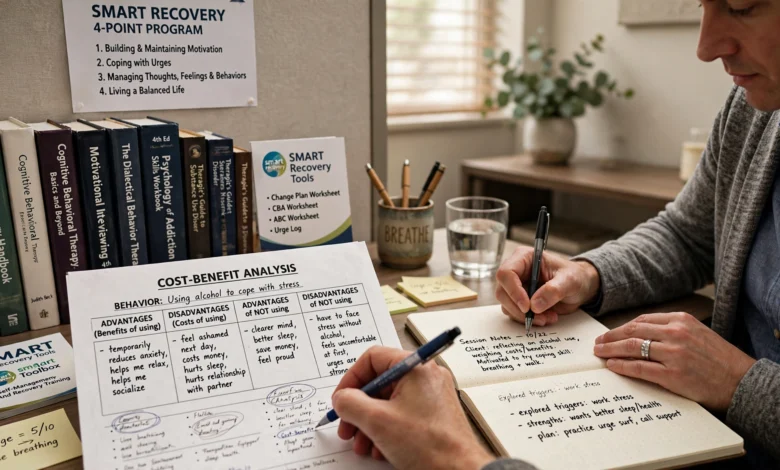
SMART Recovery is one of the fastest-growing addiction support programs in the world, and for good reason. If you’ve ever sat in a 12-step meeting and felt like the language didn’t fit you, or you just don’t connect with the idea of a “higher power,” you’re far from alone. Thousands of people every year go looking for a SMART Recovery alternative to AA that treats addiction as a set of learnable skills rather than a lifelong disease you must surrender to.
SMART Recovery, which stands for Self-Management and Recovery Training, was built on a simple idea: recovery works better when it’s driven by science, self-empowerment, and practical tools rather than spiritual surrender. Instead of working through twelve steps with a sponsor, participants in SMART Recovery meetings use a 4-Point Program grounded in cognitive behavioral therapy (CBT), rational emotive behavior therapy (REBT), and motivational interviewing. There’s no requirement to call yourself an “addict” for life, no mandatory belief in a higher power, and no set number of meetings you’re required to attend.
In this article, we’ll break down exactly what SMART Recovery is, how it compares to Alcoholics Anonymous (AA), what actually happens in a meeting, and how to figure out if it’s the right fit for your recovery journey. Whether you’re sober-curious, newly in recovery, or just tired of programs that don’t match how you think, this guide will give you a clear, honest picture.
What Is SMART Recovery?
SMART Recovery is a free, secular, science-based mutual support program for people working through any kind of addictive behavior, not just alcohol. That includes drugs, gambling, shopping, gaming, food, and other compulsive behaviors. Unlike 12-step programs, SMART Recovery doesn’t ask you to accept that you’re powerless. It works from the opposite assumption: that you have the internal resources to change your relationship with the addictive behavior, and that those skills can be taught, practiced, and improved over time.
The program was founded in 1994 by Dr. Joe Gerstein and Dr. Tom Horvath, growing out of an earlier organization called Rational Recovery. Today, according to <cite index=”17-1″>SMART Recovery’s program emphasizes four areas in the recovery process: Building Motivation, Coping with Urges, Problem Solving, and Lifestyle Balance</cite>. This structure is often called the 4-Point Program, and it forms the backbone of every meeting, worksheet, and tool the organization offers.
A few defining features set SMART Recovery apart from other support groups:
- It is completely secular, with no reference to God, a higher power, or spirituality of any kind.
- It treats addiction as a habit or learned behavior, not a disease requiring lifelong identity change.
- It’s a skills-based program, meaning you’re taught specific cognitive and behavioral tools rather than asked to complete sequential steps.
- Meetings are facilitator-led, not sponsor-led, and facilitators are trained volunteers rather than peer mentors working through their own steps.
- There’s no requirement for lifetime attendance or a lifelong label; people are encouraged to “graduate” once they’ve built the skills they need.
The 4-Point Program Explained
The core of SMART Recovery is its 4-Point Program, and understanding it is the fastest way to understand the whole philosophy behind the organization. Each point represents a stage or skill set that participants work through, often revisiting earlier points as new challenges come up.


Point 1: Building and Maintaining Motivation
Recovery rarely runs on a straight line, and most people cycle through periods of high motivation and periods where they want to give up entirely. This first point of the 4-Point Program focuses on identifying your personal reasons for change and keeping them front and center. Participants often use a Cost-Benefit Analysis (CBA) tool, weighing the short-term pleasure of a behavior against its long-term costs, to keep motivation grounded in something concrete rather than willpower alone.
Point 2: Coping With Urges
Urges and cravings are treated as temporary events, not signs of failure. SMART Recovery teaches specific techniques for riding out an urge without acting on it, including:
- Urge surfing, or observing a craving without judgment until it naturally fades
- Delay, distract, and decide techniques to interrupt automatic behavior
- Identifying personal triggers and building a plan around them in advance
Point 3: Managing Thoughts, Feelings, and Behaviors
This is where cognitive behavioral therapy and REBT show up most clearly. Participants learn to identify the irrational or distorted beliefs that fuel addictive behavior, such as all-or-nothing thinking or catastrophizing, and replace them with more balanced ones. A well-known tool here is the ABC model (Activating event, Belief, Consequence), which helps people see how their interpretation of an event, not the event itself, drives their emotional and behavioral response.
Point 4: Living a Balanced Life
The final point looks beyond simply stopping a behavior and toward building a life that doesn’t need it. This includes goal-setting, values clarification, and finding new sources of meaning and pleasure. Many participants describe this stage as the one that keeps recovery sustainable long after the early, high-intensity phase has passed.
SMART Recovery vs. AA: The Core Differences
If you’re weighing SMART Recovery vs. AA, it helps to look at the philosophical split at the center of each program. <cite index=”4-1″>AA views addiction as a disease with a spiritual and moral solution, while SMART Recovery treats addiction as a dysfunctional habit that can be changed through the application of self-management skills</cite>. That single difference shapes nearly everything else about how the two programs run.
Higher Power vs. Self-Empowerment
AA’s 12 steps ask participants to acknowledge powerlessness over their addiction and to turn their will and their life over to a “higher power as they understand it.” SMART Recovery rejects the powerlessness framing entirely. Instead of surrender, the program is built around self-empowerment, teaching that people have, and can strengthen, the internal capacity to manage urges and change behavior.
Disease Model vs. Learned Behavior Model
AA operates from the disease model of addiction, which frames addiction as a chronic, progressive condition. SMART Recovery approaches addiction more like a learned habit shaped by thoughts, reinforcement, and environment, which means it can also be unlearned or replaced with healthier coping tools.
Sponsors vs. Trained Facilitators
In AA, new members are paired with a sponsor, typically someone further along in their own 12-step journey, who provides one-on-one guidance. SMART Recovery meetings are run by trained facilitators, some of whom are also in recovery and some who are not, but all of whom go through a structured training program rather than informal mentorship.
Lifelong Identity vs. Skill-Based Graduation
AA encourages members to identify as “alcoholics” or “addicts” indefinitely, even after years of sobriety, as a way of maintaining vigilance. SMART Recovery does not require this kind of permanent identity label. Once someone feels they’ve built the tools they need, they’re encouraged to step back from meetings, sometimes referred to informally as “graduating.”
Spiritual Framework vs. Secular, Evidence-Based Framework
This is often the single biggest reason people search for an alternative to AA in the first place. <cite index=”7-1″>Unlike Alcoholics Anonymous, SMART Recovery is secular, does not require belief in a higher power, and emphasizes personal agency in the recovery process</cite>. For atheists, agnostics, or anyone who simply prefers a non-religious framework, this distinction alone can make or break whether a program feels sustainable.
Abstinence-Only vs. Flexible Goals
AA is built around total, lifelong abstinence as the only acceptable outcome. SMART Recovery, while still generally abstinence-oriented in practice, gives more room for participants to define their own goals, and some meetings and facilitators are more open to harm-reduction approaches depending on the individual’s circumstances.
What Happens in a SMART Recovery Meeting?
If you’ve never been to one, a SMART Recovery meeting can feel refreshingly different from what you might picture when you think of a support group. Meetings typically run for 60 to 90 minutes and are structured around open discussion rather than a fixed script.
Here’s a general idea of what to expect:
- Check-in. Each participant briefly shares how their week went and whether they’re facing any current urges or challenges.
- Tool-based discussion. The facilitator introduces or revisits a specific tool from the SMART Toolbox, often tied to whichever of the 4 Points feels most relevant to the group that week.
- Open sharing. Participants discuss how the tool applies to their own situations, ask questions, and offer feedback to one another.
- Homework or reflection. Many meetings end with a suggested exercise, like a Cost-Benefit Analysis worksheet, to work on before the next session.
Meetings are available in multiple formats, including in-person groups, live online video meetings, and 24/7 message boards and chat rooms, which makes the program accessible to people in different time zones, with different schedules, or who aren’t ready for face-to-face groups yet. There’s no cost to attend, though many local groups accept optional donations to help cover costs.
Is SMART Recovery Backed by Evidence?
One of the most appealing parts of SMART Recovery for many people is its explicit commitment to using approaches with research support behind them, rather than relying purely on tradition or personal testimony. The program draws heavily on cognitive behavioral therapy, which has one of the strongest evidence bases of any psychological treatment approach and is recognized by major health authorities as an effective tool for substance use disorders, according to the National Institute on Drug Abuse.
Independent studies on SMART Recovery specifically are still more limited than the decades of research behind 12-step approaches, largely because the program is newer and doesn’t have the scale of AA’s global membership. That said, early outcome studies, including research on heavy drinkers who used the program, have shown reductions in drinking-related problems and increases in abstinent days compared to control groups. The Substance Abuse and Mental Health Services Administration also recognizes mutual-support groups broadly, including non-12-step options like SMART, as a valuable part of a comprehensive recovery plan.
It’s worth being honest here: no single recovery program, including AA or SMART Recovery, has been proven to work best for everyone. What the research does support is that people tend to do better in programs that match their personal beliefs, communication style, and comfort level, which is exactly why having a genuine alternative to AA matters.
Who Tends to Benefit Most From SMART Recovery?
SMART Recovery isn’t the right fit for every person, but certain groups tend to gravitate toward it and find it especially useful.
- Atheists and agnostics who don’t want a spiritual or religious framework attached to their recovery
- People who dislike the “powerless” language and want a program built around personal agency instead
- Analytical or skills-oriented thinkers who respond well to structured tools like CBT worksheets rather than open-ended storytelling
- People managing multiple types of addictive behavior, since SMART isn’t limited to alcohol and also addresses drugs, gambling, food, and other compulsions
- Those who want flexibility, including the option to eventually step back from meetings without guilt once they feel equipped
- People supplementing another treatment approach, such as therapy or medication-assisted treatment, who want a peer support layer that fits alongside it
On the other hand, people who find comfort in AA’s strong sense of spiritual community, or who prefer the built-in accountability of a one-on-one sponsor relationship, may find SMART Recovery‘s more self-directed structure less supportive. Neither approach is objectively better; the fit depends on the individual.
Can You Combine SMART Recovery and AA?
Yes, and many people do. <cite index=”5-1″>Many people find success attending both SMART Recovery and AA meetings simultaneously, as the programs complement rather than compete with each other</cite>. Some individuals like the structured accountability and community of AA but also want the practical, skills-based tools that SMART Recovery offers. Others start with one program, find it isn’t a great fit, and transition to the other without giving up on recovery altogether. If you’re not sure which one fits, there’s nothing wrong with trying both and seeing which language, structure, and community actually keeps you coming back.
How to Find a SMART Recovery Meeting
Getting started with SMART Recovery is straightforward and doesn’t require an intake process, referral, or insurance:
- Visit the organization’s meeting finder to search by location or meeting type.
- Choose between in-person, online video, or 24/7 chatroom formats depending on your comfort level and schedule.
- Attend as a guest; there’s no sign-up requirement and no pressure to speak if you’re not ready.
- Explore free tools like worksheets, the SMART Recovery Handbook, and mobile resources to use between meetings.
Because meetings are run independently by trained volunteer facilitators, the exact tone and pace can vary somewhat from group to group, so it’s worth trying a couple of different meetings before deciding whether the program is a fit.
Common Misconceptions About SMART Recovery
A few myths tend to follow SMART Recovery around, so it’s worth clearing them up.
- “It’s anti-AA.” In reality, SMART Recovery doesn’t position itself as opposed to 12-step programs; it simply offers a different framework for people who need one.
- “It’s only for alcohol.” SMART Recovery addresses a wide range of addictive behaviors, not just alcohol use.
- “There’s no accountability without a sponsor.” Accountability in SMART Recovery comes through consistent meeting attendance, tool practice, and group feedback rather than a single mentor relationship.
- “It’s less serious than AA.” The program is used in hospitals, prisons, and licensed treatment centers worldwide and is taken seriously by clinicians as a legitimate, structured recovery pathway.
Final Thoughts
SMART Recovery offers a genuinely different path for people who want a secular, self-empowering, and evidence-based approach to overcoming addiction. Built around a 4-Point Program that teaches motivation-building, urge management, cognitive skills, and lifestyle balance, it gives participants practical tools rather than a fixed set of steps, and it drops the requirement for spiritual belief or a lifelong “addict” identity.
Compared with AA, the two programs differ most sharply on the disease model versus the learned-behavior model, and on powerlessness versus personal agency, but neither is universally “better.” What matters is finding the framework, community, and language that actually keeps you engaged in your own recovery, whether that’s SMART Recovery, AA, a combination of both, or another support option entirely.