SMART Recovery for Family Members: How It Helps
SMART Recovery for family members offers science-based tools, real support, and a healthier way to cope when someone you love struggles with addiction.

Addiction rarely affects just one person. It reaches into the whole household, and often the people closest to the situation end up just as exhausted, anxious, and stuck as the person struggling with the substance or behavior itself. If you’ve been searching for a way to cope that doesn’t involve labels, confrontation, or waiting around for someone else to “hit rock bottom,” SMART Recovery for family members is worth a serious look.
Unlike traditional 12-step family programs, SMART Recovery Family & Friends is built on cognitive behavioral principles and the CRAFT model (Community Reinforcement and Family Training). It doesn’t ask you to detach with love and wait. It gives you practical tools you can use this week to manage your own stress, communicate more effectively, and, in many cases, actually improve the odds that your loved one moves toward treatment.
This article walks through exactly how SMART Recovery works for family members, what a meeting looks like, the tools you’ll learn, and how it compares to programs like Al-Anon. Whether your loved one is dealing with alcohol, drugs, gambling, or another compulsive behavior, and whether they’re in denial or already in recovery, there’s likely a place for you in this program. Let’s get into how it actually helps, step by step.
What Is SMART Recovery for Family Members?
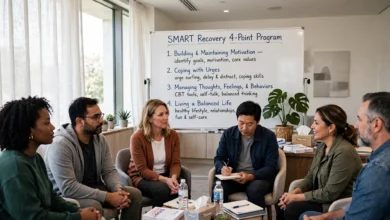
SMART Recovery for family members, officially called SMART Recovery Family & Friends, is a free, science-based support program for anyone whose life has been affected by a loved one’s addiction or problematic behavior. “SMART” stands for Self-Management and Recovery Training, and the family program mirrors the same four-point structure used in SMART Recovery’s individual meetings, just adapted for people supporting someone else rather than working on their own substance use.
The program has two main goals:
- Helping family members and friends manage their own emotional wellbeing using tools drawn from cognitive behavioral therapy (CBT)
- Teaching practical, nonconfrontational communication strategies that can help shift the dynamic with a loved one who is using substances or engaging in harmful behaviors
Meetings are run by trained volunteer facilitators, many of whom have lived through the same experience of loving someone with an addiction. That shared experience matters. You’re not sitting across from a clinician reading from a textbook. You’re in a room (or on a video call) with people who understand exactly what it feels like to check your phone at 2 a.m. wondering if your son is okay, or to rehearse a conversation with your spouse ten times before you actually say it.
How SMART Recovery Differs From Al-Anon and Other Family Support Groups
This is usually the first question people ask, and it’s a fair one. If you’ve heard of Al-Anon, you might wonder why you’d choose something else.


A Science-Based, Secular Approach
SMART Recovery for family members is explicitly described as a secular alternative to Al-Anon and the Johnson Intervention model. It doesn’t use a higher power framework or the traditional 12 steps. Instead, it draws from cognitive behavioral therapy and motivational psychology, the same evidence base used in a lot of modern mental health treatment.
That doesn’t mean Al-Anon is wrong for everyone. Plenty of people find real comfort in that structure. But if the spiritual framing doesn’t fit you, or you simply want something that feels more like a skills class than a fellowship, SMART Recovery Family & Friends tends to feel like a better match.
CRAFT: The Backbone of the Program
A big part of what makes SMART Recovery Family & Friends different is its use of CRAFT, short for Community Reinforcement and Family Training. CRAFT was developed by Dr. Robert Meyers and has a solid body of research behind it, including studies suggesting it helps more loved ones successfully engage a family member in treatment compared to older confrontational approaches like the Johnson Intervention.
CRAFT teaches family members to:
- Reduce accidental enabling behaviors
- Reward sober or healthier behavior naturally, without ultimatums
- Improve communication so conversations don’t end in shutdowns or blowups
- Take care of their own life and wellbeing, regardless of what the loved one chooses to do
You can read more about the evidence behind CRAFT and family-focused addiction treatment through resources like the National Institute on Drug Abuse, which has published extensively on family-involved treatment approaches.
Why Family Members Need Their Own Support
It’s easy to put your own needs last when someone you love is struggling. Many people spend months or years in a kind of survival mode, constantly monitoring, managing, and worrying, while quietly falling apart themselves.
Here’s the thing: your wellbeing isn’t a side issue. It’s actually central to helping the situation improve.
The Emotional Toll of Loving Someone With Addiction
Living alongside active addiction tends to produce a very specific kind of exhaustion. You might notice:
- Chronic anxiety or a constant sense of dread
- Sleep problems from lying awake wondering where they are or what state they’ll come home in
- Guilt over things that were never your responsibility in the first place
- Resentment that builds quietly and then explodes at the wrong moment
- Isolation, because it’s hard to explain the situation to friends who haven’t lived it
SMART Recovery for family members treats these reactions as completely normal responses to an abnormal situation, not as signs of weakness or failure. The program’s first job is helping you steady yourself, because you can’t think clearly or communicate well from a place of panic.
Breaking the Cycle of Codependency
A lot of family members fall into patterns that feel like love but actually keep the cycle going: covering for a loved one at work, paying off debts quietly, or making excuses to relatives. This is often called enabling, and it’s rarely intentional. It usually comes from fear, love, and a desperate wish to avoid conflict.
SMART Recovery Family & Friends helps you spot these patterns without shame. The point isn’t to blame yourself for past choices. It’s to recognize what’s actually working and what isn’t, so you can adjust going forward.
The Core Tools Taught in SMART Recovery Family & Friends
This is where the program earns its reputation. Rather than general encouragement, SMART Recovery for family members hands you specific, repeatable tools.
1. Managing Your Own Emotional Reactions
Much of the early work focuses on you, not the person using substances. Using CBT-based tools, you’ll learn to identify unhelpful thought patterns, like catastrophizing every late-night phone call or assuming the worst about a missed text, and replace them with more balanced thinking. This alone tends to lower day-to-day anxiety significantly.
2. Effective, Nonconfrontational Communication
One of the most practical parts of the program teaches how to talk to a loved one in a way that doesn’t trigger defensiveness. Instead of accusations or ultimatums, you learn to:
- Use calm, specific language instead of vague criticism
- Time conversations for moments when your loved one is more receptive, not mid-crisis
- Express genuine concern without lecturing
- Set a boundary and actually follow through on it, calmly and consistently
3. Positive Reinforcement Over Punishment
CRAFT-based strategies teach family members to notice and encourage healthier choices, however small, rather than only reacting to the bad moments. Over time, this shifts the household dynamic away from constant conflict and toward something more constructive.
4. Recognizing and Reducing Enabling Behavior
You’ll work through real examples of what enabling can look like in daily life, and practice alternatives that still come from a place of love but don’t shield your loved one from natural consequences.
5. Setting Boundaries That Actually Hold
A boundary that isn’t enforced isn’t really a boundary. The program helps you set limits that are realistic for your own life and circumstances, and then supports you in sticking to them, even when it’s uncomfortable.
6. Rebuilding Your Own Life and Identity
Addiction has a way of shrinking a family member’s world down to a single focus. SMART Recovery Family & Friends actively encourages participants to reconnect with hobbies, friendships, and goals that got sidelined. A balanced life isn’t a distraction from helping your loved one. It’s part of what makes you capable of helping at all.
7. Understanding the Stages of Change
Borrowed from motivational psychology, this tool helps family members understand that change happens in stages, and that a loved one who isn’t ready today might be much closer than it looks. It helps you meet people where they are instead of demanding readiness on your timeline.
What Happens at a SMART Recovery Family & Friends Meeting?
If you’ve never been to a support group meeting, walking in (or logging on) for the first time can feel intimidating. Knowing the structure ahead of time tends to help.
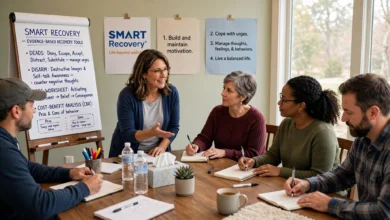
A typical meeting includes:
- An opening statement explaining the format and ground rules
- A brief check-in where each person shares how they’re doing
- Agenda setting, where the group decides which issues to focus on based on what people raised at check-in
- Group discussion, guided by a trained facilitator, working through those issues using SMART tools
- Check-out, a short closing round
- Passing the hat, since meetings are free but donations help cover costs
Meetings are available both in person and online, which matters a lot for people juggling work, kids, or caregiving on top of everything else. Many groups run weekly, and some areas offer multiple options throughout the week so you’re not stuck waiting for one slot.
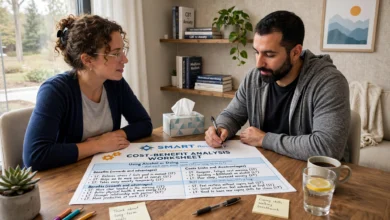
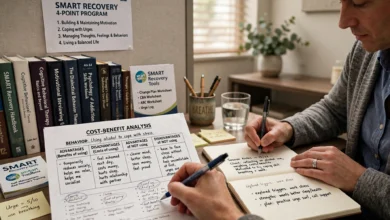
You can find a meeting near you or join an online session directly through SMART Recovery’s official website, which also offers free downloadable worksheets from the Family & Friends handbook if you want to start working through the material before your first meeting.
Who Benefits Most From SMART Recovery for Family Members?
This program tends to help a wide range of people, not just parents of a struggling adult child. It’s commonly used by:
- Spouses and partners trying to figure out whether to stay, how to communicate, or how to protect their own mental health
- Parents of teens or adult children dealing with substance use or gambling
- Adult children of parents with long-standing addiction issues
- Siblings navigating a strained relationship shaped by a brother or sister’s substance use
- Close friends who have become an informal support system
It’s also worth noting that the program isn’t only for situations involving alcohol or drugs. SMART Recovery Family & Friends addresses problematic behaviors more broadly, including gambling and other compulsive behaviors that create similar chaos at home.
SMART Recovery for Family Members vs. Waiting for Your Loved One to “Hit Bottom”
There’s an old idea that a family member should step back, detach, and wait for the person struggling with addiction to reach a low point severe enough to seek help on their own. Research on the CRAFT model actually challenges that idea directly.
Family members trained in CRAFT-based communication are more likely to see their loved one engage with treatment, and they tend to do it without the dramatic, high-conflict “intervention” approach popularized by television. That’s a meaningful shift. It means you’re not stuck choosing between doing nothing and staging a confrontation that could backfire. There’s a middle path, and it’s built on evidence rather than guesswork.
For a broader look at treatment options and family involvement, SAMHSA’s National Helpline is a useful, no-cost resource if you or a loved one need immediate guidance or referrals.
Common Misconceptions About SMART Recovery Family & Friends
A few myths tend to keep people from trying this program, so it’s worth clearing them up.
“It’s Only for People Whose Loved One Is Already Sober”
Not true. Many participants join while their loved one is still actively using and has no interest in stopping. In fact, this is often when family members need the tools most.
“It’s Basically the Same as Al-Anon”
The overlap is smaller than people assume. SMART Recovery for family members is grounded in CBT and CRAFT, not the 12-step tradition, and it tends to feel more like practical skills training than a spiritual fellowship.
“It’s Just Talking About Feelings”
There’s certainly space for emotional support, but the program is built around concrete tools you practice and apply, not just processing emotions out loud each week.
“I Have to Attend In Person”
Online meetings are widely available, run on a regular weekly schedule, and offer the same structure and facilitation as in-person groups. For many people, especially those in rural areas or with unpredictable schedules, this is the more realistic option.
How to Get Started With SMART Recovery for Family Members
Getting started is simpler than most people expect.
- Find a meeting. Search the official meeting directory and filter specifically for “Family & Friends,” since general SMART Recovery listings include meetings for people working on their own recovery.
- Try an online session first if you’re nervous. It’s a low-pressure way to see how a meeting runs before committing to an in-person group.
- Grab the free worksheets. The Family & Friends handbook worksheets are available at no cost and give you a preview of the tools you’ll be learning.
- Go more than once before deciding. Like any support group, the first meeting can feel unfamiliar. Give it two or three sessions before deciding whether it’s the right fit.
- Consider the handbook. If you want a deeper, self-paced option alongside meetings, the official Family & Friends handbook walks through each tool in detail.
The Long-Term Benefits of SMART Recovery for Family Members
People who stick with the program consistently report a few common shifts over time:
- Less reactive anxiety. Situations that used to trigger panic start to feel more manageable.
- Clearer boundaries. Saying no, or meaning it when you do, gets easier with practice.
- Better communication at home. Conversations become less about blame and more about problem-solving.
- A stronger sense of self outside the crisis. Hobbies, friendships, and personal goals start coming back into focus.
- A more realistic view of recovery. Understanding that change is a process, not a single dramatic moment, tends to reduce the emotional whiplash of good days and bad days.
None of this guarantees your loved one will get better. SMART Recovery is honest about that. What it does offer is a way for you to stop white-knuckling your way through the situation and start building a life that isn’t entirely defined by someone else’s addiction.
Final Thoughts
SMART Recovery for family members gives you something a lot of people searching for help have been missing: a structured, evidence-based way to cope that doesn’t require waiting, confronting, or detaching completely. Built on cognitive behavioral therapy and the CRAFT model, the program teaches practical communication skills, helps you recognize and reduce enabling behavior, and puts your own wellbeing back at the center of the picture. Whether you attend meetings in person or online, work through the free worksheets, or read the handbook at your own pace, the tools are designed to be used in real life, not just discussed in a room once a week.
If someone you love is struggling with addiction or another harmful behavior, you don’t have to figure this out alone or wait for things to get worse before seeking support. SMART Recovery Family & Friends exists precisely for people in your position, and taking the first step, finding a meeting, downloading a worksheet, or simply reading through the handbook, can start to change things for you almost immediately, regardless of where your loved one is in their own journey.