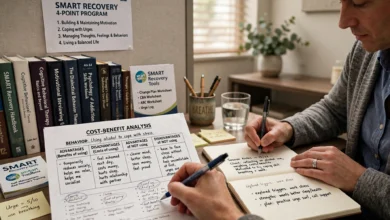
How to Find SMART Recovery Meetings Near You
Looking for SMART Recovery meetings near you? Here's a clear, practical guide to finding in-person and online options that fit your life.

SMART Recovery meetings near you are more accessible than most people realize, but knowing where to start looking can feel overwhelming when you’re already dealing with a lot. Whether you’re supporting a loved one or working through your own recovery, finding the right meeting shouldn’t be another source of stress.
SMART Recovery stands apart from many traditional support programs because it’s built on science, not spirituality or a set number of steps. It gives people practical tools for managing urges, changing unhelpful thinking patterns, and building a balanced life. That approach has made it a popular choice for people who want a secular, evidence-based alternative to 12-step programs.
The good news is that meetings are held almost everywhere now, in community centers, treatment facilities, libraries, and increasingly online. You don’t need insurance, a referral, or even a firm commitment to attend. Most meetings are free and open to anyone who wants to sit in.
This guide walks through exactly how to locate a meeting near you, what the difference is between in-person and online formats, and what you can expect the first time you show up. By the end, you’ll have a clear path forward instead of a list of confusing options.
What Is SMART Recovery?
SMART Recovery (Self-Management and Recovery Training) is a nonprofit organization that offers free mutual support groups for people dealing with addictive behaviors, whether that’s alcohol, drugs, gambling, or other compulsive habits. Unlike 12-step programs, SMART Recovery doesn’t ask participants to identify as an addict for life or follow a spiritual framework. Instead, it uses tools rooted in cognitive behavioral therapy (CBT) and motivational interviewing.
The program is organized around four points:
- Building and maintaining motivation
- Coping with urges
- Managing thoughts, feelings, and behaviors
- Living a balanced life
Meetings are peer-led or facilitated by trained volunteers, and they tend to be more discussion-based and interactive than lecture-style. People are encouraged to bring real situations from their week and work through them together using SMART tools.


Why SMART Recovery Meetings Near You Matter
Finding a SMART Recovery meeting near you matters because consistency is one of the biggest predictors of long-term recovery success. A meeting across town that you can actually get to on a Tuesday night is more useful than a “better” one that’s an hour’s drive away and gets skipped after a few weeks.
Local meetings also tend to build a sense of community. Seeing familiar faces, hearing how neighbors and coworkers are handling similar struggles, and having a regular spot in your calendar all contribute to sticking with the process. That said, proximity isn’t the only factor. Some people do better with a meeting slightly farther away if the group’s tone, size, or facilitator style is a better fit.
How to Find SMART Recovery Meetings Near You
Here’s a practical, step-by-step breakdown of the best ways to locate a meeting, whether you prefer showing up in person or joining from your couch.
1. Use the Official SMART Recovery Meeting Finder
The most reliable starting point is the SMART Recovery meeting finder, which lets you search by city, state, or zip code. The tool pulls from an updated database of both in-person and online meetings, so you’re not relying on outdated Google listings or secondhand information.
When you search, you’ll typically see:
- Meeting day and time
- Location or online platform (Zoom is common)
- Whether it’s open to all addictive behaviors or focused on a specific one
- Facilitator name, in some cases
This should be your first stop before trying anything else, since it’s maintained directly by the organization running the program.
2. Search by Location and Meeting Type
Once you’re on the meeting finder, narrow things down by the type of support you’re looking for. Some meetings are general, while others focus specifically on substance use, gambling, or family and friends supporting someone in recovery (these are called SMART Family & Friends meetings).
If you’re new, it helps to filter for:
- Beginner-friendly meetings (often labeled or described as welcoming to newcomers)
- Meeting size, since smaller groups can feel less intimidating at first
- Day and time that realistically fits your schedule, not an ideal one you won’t stick to
3. Try Online SMART Recovery Meetings
Online meetings have become a major part of how people access SMART Recovery, especially since 2020. They’re run over video conferencing platforms and follow the same structure as in-person sessions. This is a solid option if:
- There isn’t a nearby meeting that fits your schedule
- You’re not ready to attend in person yet
- You travel frequently or live in a rural area
- You simply prefer the privacy of joining from home
Online meetings often have more time slots available throughout the week, including early mornings and late evenings, which makes them easier to fit around work or family obligations.
4. Ask Local Treatment Centers and Hospitals
Addiction treatment centers, outpatient clinics, and hospitals frequently host or refer people to SMART Recovery meetings. Even if you’re not currently a patient, most facilities are happy to share information over the phone. Staff at these centers often know which local groups are active, well-attended, and a good fit for different needs.
This route is especially useful if you’re looking for a meeting connected to a broader treatment plan, since some facilities coordinate SMART Recovery participation alongside therapy or medical care.
5. Check Community Centers, Libraries, and Places of Worship
Many SMART Recovery meetings are hosted in community spaces rather than clinical settings. Local libraries, YMCAs, community centers, and even churches or synagogues (regardless of the group’s secular focus) often donate space for meetings. Calling or checking the bulletin board at these locations can turn up meetings that aren’t always well indexed online.
It’s also worth checking with:
- County health departments
- Local mental health nonprofits
- University counseling centers, if you’re a student
6. Use Directories and Recovery Apps
Beyond the official finder, several recovery-focused directories and apps list SMART Recovery meetings alongside other support groups. These can be helpful if you want to compare multiple recovery pathways side by side, such as SMART Recovery versus 12-step alternatives, before committing to one.
The Substance Abuse and Mental Health Services Administration (SAMHSA) also maintains a national helpline (1-800-662-4357) that can point you toward local resources, including SMART Recovery meetings, treatment options, and crisis support if needed.
7. Reach Out Directly to a Local Facilitator
If a meeting listing includes a facilitator’s contact information, don’t hesitate to send a quick email or message before attending. Facilitators are usually glad to answer questions about group size, what a typical session looks like, and whether the meeting is a good match for your situation. This small step can make walking through the door for the first time feel a lot less intimidating.
In-Person vs Online Meetings: Which Is Right for You?
Both formats follow the same core structure, but they suit different people and circumstances.
In-person meetings tend to work well if you:
- Want face-to-face accountability
- Prefer building relationships with people in your actual community
- Find video calls distracting or impersonal
- Have transportation and a flexible schedule
Online meetings tend to work well if you:
- Have limited mobility, transportation, or childcare
- Live somewhere without a nearby group
- Value the added privacy of attending from home
- Need more flexible scheduling options across time zones
Many people in SMART Recovery actually mix both, attending an in-person meeting weekly while dropping into an online session when their schedule shifts. There’s no rule against attending more than one meeting a week, and doing so is common for people early in recovery.
What to Expect at Your First Meeting
Walking into your first meeting, whether online or in person, is usually less formal than people expect. Here’s a general idea of how it typically goes:
- Check-in. The facilitator opens the meeting and may ask each person to briefly share how their week went.
- Tool discussion. A specific SMART Recovery tool or concept is often introduced or reviewed, such as the DISARM technique for handling urges or a cost-benefit analysis exercise.
- Open discussion. Participants share what’s going on in their lives and how they’re applying the tools, with input from others in the group.
- Closing. Meetings usually end with a brief wrap-up, sometimes including a short reading or reflection.
You are never required to speak. It’s completely normal to attend your first few meetings just listening before you feel ready to share. Nobody will pressure you to talk about anything you’re not comfortable discussing.
Tips for Choosing the Right Meeting
Not every meeting will feel like the right fit immediately, and that’s normal. A few things worth keeping in mind:
- Try more than one meeting before deciding. Group dynamics vary a lot depending on the facilitator and the regular attendees.
- Pay attention to how you feel afterward, not just during the meeting itself.
- Don’t rule out online meetings just because they’re new to you. Many people end up preferring them once they try one.
- Ask about meeting size if large groups make you uncomfortable. Smaller meetings tend to allow more individual discussion time.
- Check in with yourself after a month. Recovery tools take repetition to sink in, so give a meeting a fair shot before moving on.
Frequently Asked Questions
Are SMART Recovery meetings free? Yes. SMART Recovery meetings are free to attend, both in person and online. The organization operates as a nonprofit and relies on donations rather than charging participants.
Do I need to register in advance? Most meetings don’t require registration, though some online sessions ask you to sign up for a Zoom link ahead of time. Check the specific meeting listing for details.
Can family members attend SMART Recovery meetings? Yes. SMART Recovery offers separate Family & Friends meetings designed specifically for people supporting a loved one through addiction, using the same evidence-based tools.
Is SMART Recovery only for alcohol and drug addiction? No. SMART Recovery supports people dealing with a wide range of addictive behaviors, including gambling, food-related issues, and other compulsive habits.
How is SMART Recovery different from Alcoholics Anonymous? SMART Recovery is secular and based on cognitive behavioral techniques rather than a spiritual 12-step model. It doesn’t require lifelong identification with addiction and focuses on self-empowerment rather than surrendering to a higher power.
Conclusion
Finding SMART Recovery meetings near you doesn’t have to be complicated once you know where to look. Start with the official meeting finder, then branch out to local treatment centers, community spaces, and online options if nothing nearby fits your schedule right away.
Both in-person and online meetings follow the same practical, science-based approach, so the right choice really comes down to what fits your life and makes it easiest for you to show up consistently. Give a meeting a genuine try, ask questions along the way, and remember that finding the right group is often a process, not a one-time decision.