SMART Recovery Worksheets: Free Resources for Recovery
SMART Recovery worksheets offer 7 free, practical tools that help you manage urges, build motivation, and stay on track in recovery.
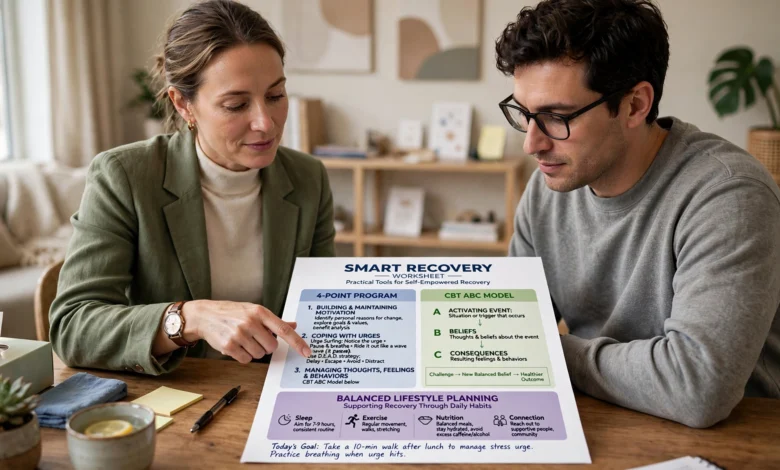
SMART Recovery worksheets are one of the most practical, no-cost resources available to anyone working through addiction or a habit they want to change. If you’ve spent any time researching recovery programs, you’ve probably noticed there’s no shortage of options out there, but not all of them come with tools you can actually sit down and use today. That’s where SMART Recovery stands out.
Unlike some traditional recovery models, SMART Recovery is grounded in cognitive behavioral principles and self-empowerment, and it backs that approach up with a full library of downloadable worksheets designed to help you think through cravings, triggers, motivation, and long-term goals.
Whether you’re new to recovery, supporting a loved one, or working as a counselor looking for materials to use with clients, these worksheets give you something concrete to work with. They’re not abstract concepts you read once and forget. They’re structured exercises you can print out, fill in, revisit, and adjust as your situation changes.
In this article, we’ll walk through what SMART Recovery worksheets are, why they work, where to find them for free, and how to actually use them in a way that supports lasting change. We’ll also cover the specific tools that tend to get the most use, from the Cost-Benefit Analysis to the Change Plan Worksheet, so you know exactly what to expect before you download anything.
What Is SMART Recovery?
SMART Recovery stands for Self-Management and Recovery Training. It’s a global network of mutual support meetings and self-help tools built around cognitive behavioral therapy (CBT) and motivational interviewing techniques, rather than the spiritual or disease-model framework used by 12-step programs like Alcoholics Anonymous.
The core idea behind SMART Recovery is that addiction recovery works best when people are given practical skills to manage their own thoughts, emotions, and behaviors. Instead of framing addiction as a lifelong disease that requires constant surrender to a higher power, SMART Recovery treats it as a set of learned behaviors that can be unlearned and replaced with healthier patterns.
This approach is built around what’s called the 4-Point Program, which includes:


- Building and maintaining motivation to change
- Coping with urges and cravings
- Managing thoughts, feelings, and behaviors in a balanced way
- Living a balanced life by pursuing goals beyond just staying substance-free
Every worksheet SMART Recovery offers ties back to one of these four points, which makes it easier to figure out which tool fits your current situation.
Why SMART Recovery Worksheets Matter
A lot of people underestimate how much writing things down actually helps in recovery. It’s easy to have a vague sense that you want to change, but recovery worksheets force you to get specific. They ask you to name your triggers, write out the actual costs and benefits of using, and map out what you’ll do differently next time you’re in a high-risk situation.
Here’s why these tools tend to work better than just talking things through in your head:
- They create a paper trail of your thinking. You can look back at a worksheet from three weeks ago and see how your reasoning has changed.
- They slow down impulsive thinking. Writing takes longer than thinking, which gives you a built-in pause before you act on an urge.
- They’re structured, not overwhelming. Each worksheet focuses on one specific skill or decision, so you’re not trying to solve everything at once.
- They’re reusable. You can fill one out, set it aside, and pull it back out the next time a similar situation comes up.
For people who prefer a self-directed, evidence-based approach over a more traditional 12-step model, these worksheets are often the first tangible tool that makes recovery feel manageable rather than abstract.
Where to Find Free SMART Recovery Worksheets
The good news is you don’t need to pay for a course or buy a workbook to get started. SMART Recovery makes its full library of tools available for free directly through its official site. You can find the complete collection of downloadable PDFs on the SMART Recovery Toolbox, which organizes worksheets by which point of the 4-Point Program they support.
If you’re looking for a broader understanding of how CBT-based approaches fit into addiction treatment more generally, the National Institute on Drug Abuse (NIDA) also publishes research-backed information on evidence-based recovery methods, which can be a useful companion resource alongside the worksheets themselves.
Most local SMART Recovery meetings, whether in-person or online, also hand out printed copies of these worksheets, so if you attend a meeting, you can ask a facilitator for physical copies to work through together.
The Most Commonly Used SMART Recovery Worksheets
There are dozens of worksheets in the SMART Recovery toolbox, but a handful of them tend to get used the most because they cover the situations people run into constantly during early recovery.
1. The Cost-Benefit Analysis (CBA)
This is probably the single most well-known tool in the whole SMART Recovery system. The Cost-Benefit Analysis worksheet asks you to lay out, in writing, the pros and cons of continuing to use a substance or behavior versus the pros and cons of stopping.
What makes this worksheet effective is that it doesn’t skip over the benefits of using. A lot of recovery materials focus only on the negatives, which can feel dishonest if you know from experience that using did give you something, even temporarily. The CBA lets you be honest about that while also forcing you to sit with the real, often larger costs on the other side of the ledger.
2. The ABC Worksheet (Functional Analysis)
The ABC Worksheet stands for Activating event, Belief, and Consequence. It’s a classic CBT tool adapted for recovery, and it helps you trace back a craving or a slip to the actual trigger that set it off.
This worksheet is especially useful because it teaches you to separate the event itself from the belief you attached to it. For example, an argument with a partner (the activating event) might trigger the belief “I can’t handle this without using,” which then leads to the consequence of a craving or relapse. Once you can see that chain clearly, you can start challenging the belief in the middle instead of feeling stuck between the event and the outcome.
3. The Change Plan Worksheet
This one is a bit more forward-looking. The Change Plan Worksheet asks you to define specific, concrete goals, identify the steps you’ll take to reach them, and name the people or resources that can support you along the way.
It’s similar in spirit to a treatment plan you might get from a counselor, but it’s written in your own words and based on your own priorities. Filling this out helps turn a vague goal like “I want to stop drinking” into something with actual steps attached to it.
4. The DISARM Worksheet
DISARM stands for Destructive Images and Self-talk Awareness and Refusal Method. This worksheet is built specifically for dealing with what SMART Recovery calls “addictive voice,” which is the internal justification that shows up right before a relapse (“just one won’t hurt,” “I’ve earned this,” etc.).
The worksheet walks you through recognizing that voice, labeling it as separate from your actual values, and practicing a refusal response you can use in the moment.
5. The Hierarchy of Values Worksheet
This tool asks you to rank what actually matters to you in life, things like relationships, health, career, or personal growth, and then compare how your current behavior lines up with those stated priorities. It’s a values-clarification exercise, and it’s often eye-opening because it makes the gap between what you say matters and how you’re actually spending your time and energy very visible.
6. The Urge Log
The Urge Log is a simple tracking sheet where you record each urge you experience: what triggered it, how strong it was on a scale, what you did in response, and how you felt afterward. Over time, this creates a pattern you can actually analyze instead of just relying on memory, which tends to be unreliable when it comes to cravings.
7. The ABCs of REBT Worksheet
Building on the earlier ABC model, this worksheet incorporates Rational Emotive Behavior Therapy (REBT) principles more directly, asking you to dispute irrational beliefs and replace them with more balanced, realistic thinking. It’s a good next step once you’re comfortable with the basic ABC framework.
How to Actually Use These Worksheets Effectively
Downloading a worksheet is the easy part. Getting real value out of it takes a bit more intention. Here are a few practical tips:
- Don’t wait for a crisis to fill one out. The Cost-Benefit Analysis and Change Plan Worksheet work best when you complete them during a calm moment, not in the middle of a craving.
- Keep the Urge Log somewhere accessible. A lot of people keep a digital copy on their phone or a small printed version in their bag so they can log an urge as soon as it happens.
- Bring completed worksheets to meetings. SMART Recovery meetings are built around discussion, and sharing what you wrote on a worksheet often opens up feedback you wouldn’t get working alone.
- Revisit old worksheets periodically. Your reasoning and priorities shift as recovery progresses. Looking back at a CBA from six months ago can show you how much your thinking has actually changed.
- Combine worksheets when it makes sense. For example, using the ABC Worksheet to identify a trigger and then the DISARM Worksheet to plan your response to it can work well together.
Who Benefits Most From SMART Recovery Worksheets
These tools aren’t limited to people in formal treatment programs. They tend to be useful for:
- People early in recovery who need structure and concrete steps rather than open-ended reflection
- Family members and loved ones trying to understand the thought patterns behind addictive behavior
- Counselors and therapists looking for CBT-based handouts to use in individual or group sessions
- People managing behaviors beyond substance use, since SMART Recovery’s tools are also used for gambling, food-related issues, and other compulsive behaviors
- Anyone who prefers a secular, self-directed approach over programs built around spiritual surrender
If you’re supporting someone else through recovery, organizations like SAMHSA also offer free guidance on how to talk with a loved one about treatment options, which can be a helpful pairing with the worksheets themselves.
Common Questions About SMART Recovery Worksheets
Do I need to attend a meeting to use the worksheets? No. All of the worksheets are freely available online and can be used on your own, though many people find they get more out of them when combined with meeting discussions or counseling sessions.
Are these worksheets a replacement for therapy? They’re designed as a self-help tool, not a substitute for professional treatment. If you’re dealing with a substance use disorder, it’s worth pairing these worksheets with support from a licensed counselor or medical provider.
Can these worksheets be used for issues other than substance abuse? Yes. SMART Recovery worksheets are commonly adapted for behavioral addictions like gambling, shopping, and disordered eating, since the underlying CBT principles apply broadly.
How often should I use these worksheets? There’s no fixed schedule. Some people use the Urge Log daily during early recovery, while tools like the Change Plan Worksheet might only get revisited every few months as goals shift.
Final Thoughts
SMART Recovery worksheets give people a practical, structured way to work through the thinking patterns that drive addictive behavior, without requiring a spiritual framework or a paid program. From the Cost-Benefit Analysis to the Urge Log, each tool targets a specific part of the recovery process, whether that’s managing motivation, catching a craving, or mapping out concrete goals for the future.
Because they’re free and available directly through the SMART Recovery website, anyone, whether they’re in early recovery, supporting a loved one, or working as a counselor, can start using them today. The real value comes not from downloading the PDFs themselves but from actually sitting down, filling them out honestly, and returning to them regularly as your recovery progresses.