Post-Stroke Physical Recovery: A Complete Rehabilitation Guide
Post-stroke physical recovery explained stage by stage, with real therapy methods, timelines, and home exercises that actually help survivors heal.
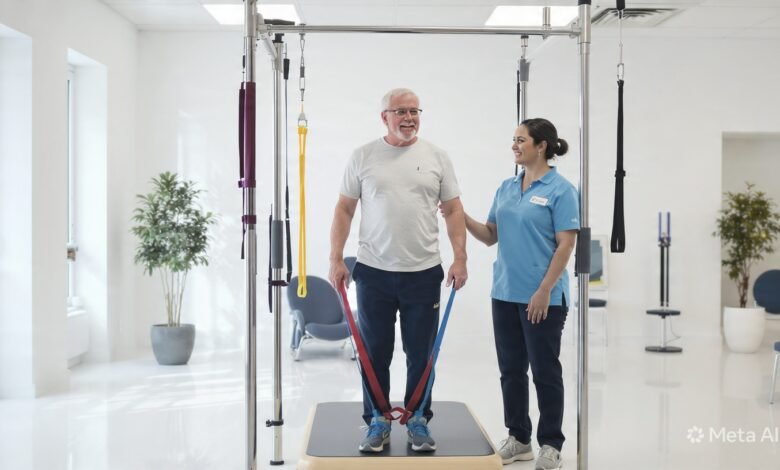
Post-stroke physical recovery is rarely a straight line. One week you might regain a flicker of movement in your hand, and the next week progress seems to stall completely. That unpredictability is normal, and it’s also the reason so many stroke survivors and their families feel lost when they’re handed a discharge folder and sent home to “keep doing the exercises.”
This guide walks through what actually happens to the body after a stroke, how stroke rehabilitation is organized into stages, which therapies are backed by real evidence, and what you can do at home to support the process. Whether you’re a survivor trying to make sense of your own recovery or a caregiver trying to help someone you love, the goal here is the same: give you a clear map instead of a vague pep talk.
Stroke affects nearly 800,000 people in the United States every year, and recovery outcomes vary enormously depending on where the stroke happened in the brain, how quickly treatment started, and how consistent rehabilitation is afterward. The physical side of recovery, rebuilding strength, balance, coordination, and the ability to move safely, is often the most visible part of the journey, but it’s also deeply connected to mental health, motivation, and the support system around a person. We’ll cover all of it, but with a focus on the physical rehabilitation piece, since that’s where most of the day-to-day work happens.
What Happens to the Body After a Stroke
A stroke cuts off blood flow to part of the brain, and brain cells in that area start to die within minutes. Depending on which region is affected, this can knock out movement, sensation, balance, coordination, or the ability to plan and sequence physical actions. It’s not a muscle problem. The muscles themselves are usually fine. The issue is that the brain’s control system for those muscles has been damaged.
This distinction matters because it shapes how physical therapy after stroke works. Instead of just strengthening a weak limb, therapists are trying to help the brain rewire itself, a process called neuroplasticity, so that surviving brain tissue can take over some of the functions the damaged area used to handle. That’s why repetition matters so much in rehab. The brain learns through repeated, structured practice, not through a single big effort.
Common physical effects after a stroke include:
- Hemiparesis (weakness on one side of the body) or hemiplegia (complete paralysis on one side)
- Loss of fine motor control in the hand and fingers
- Balance and coordination problems
- Spasticity, where muscles become stiff or tighten involuntarily
- Fatigue that’s disproportionate to activity level
- Difficulty with swallowing (dysphagia), which is technically physical but often handled by speech-language pathologists
- Sensory changes, including numbness or altered perception of touch and temperature
None of these are fixed traits. They’re starting points, and most of them respond to targeted rehabilitation, especially when therapy starts early and continues consistently.
The Stages of Post-Stroke Physical Recovery
Recovery is usually described in phases. They’re not rigid boxes, more like a rough sequence that most people move through at their own pace. Understanding them helps set realistic expectations, which honestly is half the battle for a lot of families.
1. Acute Stage (Hospitalization, Days 1–7)
This is the emergency and stabilization phase. Doctors are focused on identifying the cause of the stroke, preventing further brain damage, and managing complications like blood clots or pressure sores. A 2024 review in Frontiers in Neurology notes that early rehab efforts at this point center on preventing secondary complications like blood clots and pressure sores, using gentle positioning and passive movement to preserve whatever physical function is still possible.
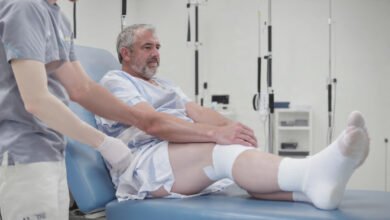
Even at this early point, physical therapy often begins, sometimes within the first one to two days. It’s not intense yet; it’s more about safe positioning, gentle movement, and preventing the body from stiffening up while the medical team stabilizes the patient.
2. Subacute Stage (Weeks 1 to 3–6 Months)
This is where the real work of stroke rehabilitation kicks in. According to Johns Hopkins Medicine, rehab at this stage aims to bring a person’s function as close as possible to their pre-stroke level, or to build compensation strategies for whatever can’t be fully restored. During the first three months in particular, patients may experience “spontaneous recovery,” where an ability that seemed lost suddenly returns as the brain finds new pathways.
During this stage, therapy is typically intensive. Depending on the setting, this might mean:
- Inpatient rehabilitation, for patients who can tolerate about three hours of therapy a day
- Skilled nursing facility care, for a slower pace with one to two hours of daily therapy
- Home health care, with clinicians visiting several times a week
- Outpatient rehabilitation, for patients who can travel to a clinic once or twice a week
This is generally considered the window where the most measurable physical improvement happens, which is exactly why consistency matters so much here. Missing sessions or not practicing between appointments during this stage can genuinely slow long-term outcomes.
3. Chronic Stage (6 Months and Beyond)
Progress typically slows down after the six-month mark, but it does not stop. Research increasingly shows that meaningful gains are possible well beyond the commonly assumed “recovery window.” The Mayo Clinic points out that while recovery is generally fastest in the weeks and months right after a stroke, some people continue to see real improvement even 12 to 18 months later.
This stage is about maintaining gains, continuing to build strength and independence, and adapting to whatever functional limitations remain. Some survivors reach a full recovery. Others live with lasting effects, sometimes called chronic stroke disease, and shift their focus toward maximizing quality of life rather than chasing a full return to baseline.
Core Physical Rehabilitation Therapies
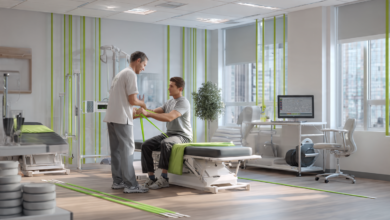
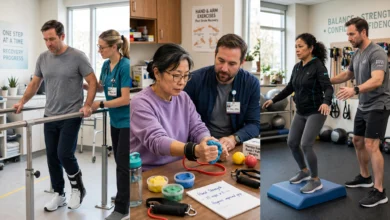
Physical therapy for stroke patients isn’t one single approach. It’s a toolkit, and a good rehab team pulls from different methods depending on what a person actually needs.
Motor-Skill and Strength Training
This is the foundation of most rehab plans. It targets the muscles used for walking, balance, reaching, and even swallowing. The Mayo Clinic describes this as one of the central pillars of stroke rehabilitation, since these exercises help rebuild both muscle strength and coordination across the whole body, not just in the affected limb.
Typical exercises might include:
- Seated or standing weight shifts to rebuild balance
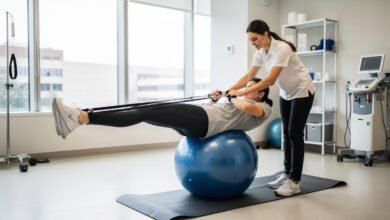
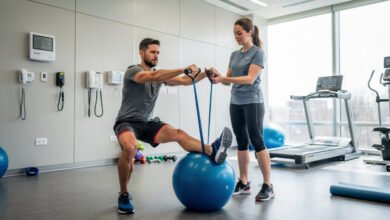
- Resistance band work for the arms and legs
- Sit-to-stand repetitions to strengthen the legs and improve transfer safety
- Gait training with a focus on step length and symmetry
Mobility Training and Assistive Devices
Relearning to walk safely is one of the biggest priorities for most survivors. This often involves mobility aids like a walker, cane, wheelchair, or ankle brace. As Mayo Clinic notes, an ankle brace in particular can help stabilize a weak ankle so a person can bear weight while relearning to walk.
Mobility training isn’t just about the device though. It’s about teaching the body a new, safer way to move, and gradually reducing reliance on the aid as strength and confidence improve.
Constraint-Induced Movement Therapy (CIMT)
This is one of the more counterintuitive but well-supported techniques. The stronger, unaffected limb is deliberately restrained (often with a mitt or sling) to force the weaker limb into repeated use. Over time, this pushes the brain to rebuild the neural pathways controlling that limb.
CIMT tends to work best for people who already have some baseline movement in the affected limb, and it usually requires several hours of practice a day for a few weeks to see meaningful results.
Proprioceptive and Balance Training
A stroke can disrupt a person’s internal sense of where their body is in space, called proprioception. This shows up as clumsiness, overcorrecting, or a fear of falling even on flat ground. Balance training and proprioceptive exercises, like standing on unstable surfaces or practicing controlled weight shifts, help retrain this internal feedback system.
Task-Specific and Repetitive Training
Rather than practicing an isolated muscle movement, task-specific training has patients repeat real, functional activities, buttoning a shirt, picking up a cup, stepping over an obstacle. This approach tends to translate more directly into daily life because the brain is practicing the exact skill it needs, not just a generic motion.
Building a Home Exercise Routine
Therapy sessions matter, but they’re only part of the picture. What happens between sessions often determines the pace of post-stroke physical recovery. A home routine doesn’t need to be complicated, but it does need to be consistent.
A reasonable home routine might include:
- Daily range-of-motion exercises for any joint affected by weakness or spasticity, done gently and without forcing painful movement
- Balance practice, such as standing near a sturdy counter and shifting weight side to side
- Functional practice, repeating small daily tasks like opening jars, buttoning clothes, or standing from a chair
- Short walking sessions, gradually increasing distance as tolerated, with a mobility aid if recommended
- Rest built into the schedule, since post-stroke fatigue is real and pushing through exhaustion can backfire
A few practical tips that make a real difference:
- Set a consistent time of day for practice so it becomes routine rather than an afterthought
- Track small wins in a notebook. Progress after a stroke is often incremental and easy to overlook without a record
- Involve a caregiver in a few exercises so there’s a safety net and a second set of eyes on form
- Communicate any new pain, dizziness, or unusual symptoms to the care team right away rather than pushing through it
Managing Setbacks and Plateaus
It’s common to hit a point where progress seems to stop, sometimes for weeks. This doesn’t necessarily mean recovery is finished. Plateaus are a normal part of stroke rehabilitation, and sometimes they resolve on their own once a new therapy approach or a change in intensity is introduced.
Setbacks are also common, things like a bout of pneumonia, a fall, or even a second stroke, and they can temporarily interrupt a rehab plan. When this happens, the priority shifts back to stabilization before rehab resumes. Working closely with a rehabilitation physician (physiatrist) during these moments helps keep goals realistic and the plan adjusted appropriately rather than abandoned altogether.
Recurrent stroke is a genuine risk during recovery, affecting roughly one in four survivors, which is part of why ongoing medical monitoring stays important even once physical therapy winds down.
The Role of the Rehabilitation Team
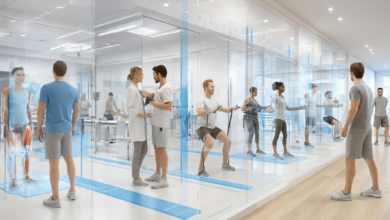
Stroke rehabilitation works best as a team effort, not a solo mission for the survivor. A typical team includes:
- Physiatrists, who oversee the overall rehab plan
- Physical therapists, who lead strength, balance, and mobility work
- Occupational therapists, who focus on daily living skills like dressing, cooking, and bathing
- Speech-language pathologists, who address communication and swallowing difficulties
- Neurologists, who manage the underlying medical condition and stroke prevention
- Psychologists or counselors, who support the emotional side of recovery, including post-stroke depression, which is common and often linked to biochemical changes in the brain rather than simply “feeling down”
- Caregivers and family members, who provide the daily support and encouragement that keeps rehab consistent
According to the American Stroke Association, inpatient stroke rehabilitation is generally recommended for people who can tolerate at least three hours of therapy a day, five days a week, which reflects just how intensive this early team-based work can be.
Emotional and Cognitive Factors That Affect Physical Recovery
It’s tempting to treat physical recovery as purely mechanical, muscles, joints, repetitions, but motivation and mental health have a measurable effect on outcomes. The Mayo Clinic lists emotional factors, including motivation, mood, and the ability to stick with rehabilitation activities outside of therapy sessions, as one of the core drivers of successful recovery, alongside physical, social, and therapeutic factors.
Post-stroke depression affects a significant portion of survivors and can quietly sap the motivation needed to keep up with a home exercise routine. Persistent hopelessness, anxiety, or fear lasting more than two weeks is worth raising with the care team rather than dismissing as an expected part of the process. Treating the emotional side of recovery isn’t a distraction from physical rehab, it’s often what makes physical rehab possible.
How Long Does Post-Stroke Physical Recovery Take
There’s no single timeline, and anyone promising one specific number is oversimplifying. Recovery speed depends on:
- The size and location of the stroke
- How quickly treatment began after symptom onset
- The intensity and consistency of rehabilitation
- Overall health before the stroke, including conditions like diabetes or heart disease
- Access to a strong support system and specialized care
Most of the fastest improvement tends to happen in the first three to six months, but gains, sometimes meaningful ones, continue well past the one-year mark for many survivors. The honest answer is that recovery is ongoing, and “finishing” rehab often means transitioning to a maintenance routine rather than reaching a hard endpoint.
When to Seek Additional Help
Certain signs during recovery deserve prompt attention rather than a wait-and-see approach:
- Sudden new weakness, numbness, or vision changes, which could indicate another stroke
- Falls or a marked increase in balance problems
- Signs of depression lasting more than two weeks
- Unexplained pain during exercises
- A plateau lasting more than a few weeks despite consistent practice
In any of these situations, reaching out to the rehabilitation team or a primary care physician promptly is the right call rather than assuming it will resolve on its own.
Conclusion
Post-stroke physical recovery is a gradual, team-based process that moves through recognizable stages, from the acute hospital phase through intensive subacute rehabilitation and into a longer chronic stage where gains continue at a slower pace. Motor-skill training, mobility work, constraint-induced movement therapy, and consistent home practice all play a role, but so do emotional support, realistic expectations, and a strong care team.
Recovery timelines vary widely from person to person, and while the fastest progress usually happens in the first few months, meaningful improvement is possible well beyond that window for many survivors. The most reliable path forward combines professional therapy, steady home practice, and patience with a process that rarely moves in a straight line.