Mindfulness-Based Stress Reduction (MBSR): Does It Work?
Mindfulness-Based Stress Reduction (MBSR) is backed by decades of research. Here's what the science actually says about whether MBSR works.
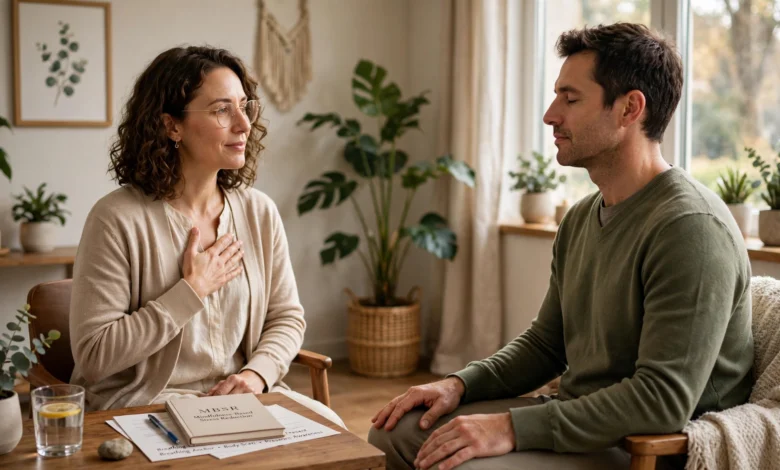
Mindfulness-Based Stress Reduction (MBSR) is one of the most studied stress-management programs in the world, and if you’ve ever felt overwhelmed enough to Google “does meditation actually help with stress,” you’ve probably run into it. It shows up in hospitals, corporate wellness programs, therapy offices, and even Peloton meditation apps. But does it actually work, or is it just another wellness trend that sounds good on paper?
The short answer: yes, for a lot of people, in ways that researchers can actually measure. MBSR isn’t vague “just breathe and you’ll be fine” advice. It’s a structured, eight-week program developed in 1979 by Jon Kabat-Zinn at the University of Massachusetts Medical School, and it’s been the subject of hundreds of clinical trials since then. Studies have linked it to real reductions in anxiety, depression, chronic pain, and even physical markers of stress like blood pressure and cortisol.
That said, MBSR isn’t magic, and it isn’t right for every situation. In this article, we’ll walk through what MBSR actually is, how the program works week by week, what the research really shows (including where it falls short), who benefits most, and how to figure out if it’s worth your time. This isn’t a sales pitch. It’s a straight look at the evidence, so you can decide for yourself.
What Is Mindfulness-Based Stress Reduction (MBSR)?
Mindfulness-Based Stress Reduction is a structured, secular training program that teaches people to use mindfulness meditation to manage stress, pain, and difficult emotions. It was created by Jon Kabat-Zinn, who wanted to take meditation practices rooted in Buddhist tradition and strip them of religious framing so they could be taught in a medical setting to anyone, regardless of belief system.
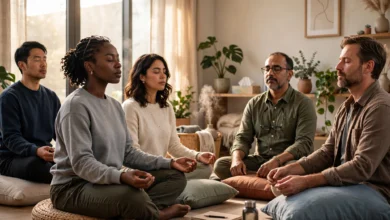
At its core, MBSR teaches you to pay attention to the present moment on purpose, without judging what you notice. That sounds simple, and in a way it is. But the actual skill of doing this consistently, especially when you’re anxious, in pain, or spiraling into worry, takes real practice. That’s why the program isn’t a single class. It’s an eight-week commitment with weekly group sessions, daily home practice, and a full-day retreat near the end.
MBSR is different from generic “meditation apps” in a few important ways:
- It’s standardized, meaning the curriculum is largely the same wherever you take it, which makes it easier to study and replicate in research.
- It’s taught by certified instructors, not just recorded audio.
- It combines several practices rather than just one: body scans, sitting meditation, gentle yoga, and mindful movement.
- It includes group discussion, so participants process what’s coming up for them, not just meditate in isolation.
How Does the MBSR Program Actually Work?
Understanding the structure of MBSR matters because a lot of the research is measuring this exact protocol, not “meditation” in general. When people ask whether MBSR works, they’re often really asking whether this specific eight-week format produces results, and the answer depends partly on whether you actually do the whole thing.


The Eight-Week Structure
A typical MBSR course includes:
- Weekly 2.5-hour group sessions covering a new theme or practice each week
- A full-day silent retreat, usually around week six, combining everything learned so far
- Daily home practice, typically 30–45 minutes, guided by audio recordings
- Group discussion where participants share what came up during practice
Core Practices Taught in MBSR
- Body scan meditation – lying down and slowly bringing attention to each part of the body, noticing sensation without trying to change anything
- Sitting meditation – focusing attention on the breath, and gently returning attention when the mind wanders
- Mindful yoga – slow, gentle stretching done with full attention on physical sensation
- Walking meditation – bringing awareness to the simple act of walking
- Everyday mindfulness – applying present-moment awareness to routine activities like eating or washing dishes
The idea isn’t to empty your mind or achieve some blissful state. It’s to build a different relationship with stress: noticing a stressful thought or sensation as it arises, rather than being swept up in it automatically.
Does MBSR Work? Here’s What the Research Actually Shows
This is the question most people care about, so let’s get into it directly. Does MBSR work? The honest, evidence-based answer is: it works for several specific conditions, with effect sizes that range from modest to substantial, and it tends to work best when people actually complete the program and keep practicing afterward.
MBSR and Anxiety
Anxiety is where MBSR has some of its strongest evidence. A 2023 randomized controlled trial involving 208 participants found that mindfulness-based stress reduction performed about as well as escitalopram, a commonly prescribed first-line medication for anxiety disorders, in reducing anxiety symptoms<cite index=”15-1″>, with a 2023 randomized controlled trial involving 208 participants finding that mindfulness-based stress reduction is noninferior to escitalopram, a commonly used first-line psychopharmacologic treatment for anxiety disorders</cite>. That’s a significant finding, because it puts a structured mindfulness program in the same conversation as an established pharmaceutical treatment, at least for some patients.
Separately, <cite index=”15-1″>a 2021 randomized controlled trial of 108 adults with generalized social anxiety disorder found that cognitive behavioral group therapy and MBSR may be effective treatments with long-term benefits</cite>, suggesting the gains aren’t just short-lived.
MBSR and Depression
Depression outcomes are a bit more nuanced. Mindfulness-based approaches, including MBSR, are generally considered helpful as either a standalone or add-on treatment. <cite index=”15-1″>A 2019 review concluded that as monotherapy or an adjunctive therapy, mindfulness-based meditation has positive effects on depression</cite>. The caveat researchers consistently raise is that MBSR shouldn’t replace established treatment for moderate-to-severe depression without medical guidance, but it can meaningfully support it.
MBSR and Chronic Pain
This is one of the original use cases Kabat-Zinn designed the program for, and it holds up well in research. <cite index=”12-1″>A study funded by the National Center for Complementary and Integrative Health found that mindfulness-based stress reduction and cognitive-behavioral therapy may prove more effective than usual treatment in alleviating chronic low-back pain</cite>, with participants in that trial followed for a full year. A separate federal review confirmed the pattern: <cite index=”13-1″>a 2020 report by the Agency for Healthcare Research and Quality concluded that mindfulness-based stress reduction was associated with short-term improvement in low-back pain, though not for fibromyalgia pain</cite>. That distinction matters. MBSR isn’t a universal pain fix; its benefits appear condition-specific.
MBSR for Cancer Patients
For people navigating a cancer diagnosis, mindfulness-based programs have shown some of the most consistent psychological benefits in the research literature. <cite index=”15-1″>A 2019 analysis of 29 studies with 3,274 total participants found that mindfulness-based practices among people with cancer significantly reduced psychological distress, fatigue, sleep disturbance, pain, and symptoms of anxiety and depression</cite>. Most of that data comes from women with breast cancer specifically, so results may look different across other cancer types.
MBSR for PTSD
Trauma is a newer but growing area of MBSR research. <cite index=”14-1″>Meditation and mindfulness may reduce symptoms of post-traumatic stress disorder, and in one study involving veterans, meditation was found to be as helpful as prolonged exposure therapy</cite>, which is considered a gold-standard PTSD treatment. That’s a meaningful comparison, since prolonged exposure therapy is intensive and not everyone tolerates it well.
MBSR for Everyday Stress and Burnout
This is the use case most people actually associate with the program, and it’s well supported too. Research on mindfulness-based stress reduction in high-stress professions, including teachers, healthcare workers, and midwives, consistently shows reductions in perceived stress and burnout symptoms, along with improvements in general well-being and job satisfaction.
Where the Evidence Is Weaker
To be fair to the science, not every claim about MBSR holds up equally well:
- Some reviews note that MBSR’s effect on acute pain (like post-surgical pain) is less convincing than its effect on chronic pain.
- Evidence for MBSR preventing psychological problems, rather than treating existing ones, is inconsistent, particularly in general student populations.
- Much of the research relies on self-reported outcomes rather than objective biomarkers, which introduces some risk of bias.
- Study quality varies a lot. Smaller trials with fewer participants show more inconsistent results than larger, well-controlled ones.
If you want the single most balanced summary available, the National Center for Complementary and Integrative Health (NCCIH), part of the National Institutes of Health, maintains an evidence-based overview of meditation and mindfulness safety and effectiveness that’s worth reading directly if you want the full nuance rather than a summary.
Why Does MBSR Work? The Mechanism Behind the Practice
It’s worth understanding why mindfulness-based stress reduction produces measurable change, because it helps explain both its strengths and its limits.
- Attention regulation – MBSR trains the brain to notice when attention has drifted into rumination or worry and redirect it, which is a skill that generalizes beyond the meditation cushion.
- Emotional reactivity reduction – With practice, people tend to have a longer pause between a stressful trigger and their emotional reaction, giving them more choice in how they respond.
- Body awareness – The body scan practice helps people notice physical tension and stress signals earlier, before they escalate.
- Acceptance over avoidance – Rather than suppressing or fighting difficult thoughts and sensations, MBSR teaches acknowledging them without judgment, which research links to lower psychological distress over time.
- Physiological changes – Some studies have found that meditation practices, including MBSR-style training, are associated with lower blood pressure and reduced cortisol, a stress hormone.
Some researchers describe this through the “mindfulness-to-meaning” framework, which proposes that mindfulness helps people reappraise stressful situations more positively over time, rather than just tolerating them in the moment.
Who Benefits Most From MBSR?
MBSR isn’t one-size-fits-all, but certain groups tend to see especially strong results:
- People with generalized anxiety or social anxiety looking for a non-medication option, or something to use alongside medication
- Patients managing chronic pain conditions, especially low-back pain
- People with cancer diagnoses dealing with psychological distress, fatigue, or sleep disruption
- Healthcare workers, teachers, and other professionals facing chronic occupational stress and burnout
- People with mild-to-moderate depression looking to supplement other treatment
- Veterans and others managing trauma-related symptoms
MBSR is generally not recommended as a replacement for crisis intervention, medication for severe psychiatric conditions, or emergency mental health care. It’s a skills-based, preventive and supportive practice, not an emergency treatment.
What to Expect If You Try MBSR
If you’re considering signing up for a course, here’s a realistic picture of what the experience looks like:
- Time commitment: roughly 2.5 hours weekly for eight weeks, plus a full-day retreat and 30–45 minutes of daily home practice. This is the part people underestimate, and it’s also the part most linked to results.
- Discomfort is normal: sitting with your own thoughts for extended periods can surface uncomfortable emotions, especially in the first few weeks. Good instructors normalize this rather than treating it as a problem.
- Group format: most MBSR courses are taught in groups of 15–30 people, which some participants find supportive and others find intimidating at first.
- Cost and access: MBSR courses are offered through hospitals, universities, community centers, and increasingly online. Prices vary widely, and some healthcare systems now offer it as a covered service.
- Certification matters: look for instructors trained through a recognized MBSR teacher-training program, since quality of instruction affects outcomes.
MBSR vs. Other Mindfulness Approaches
It’s easy to lump all “mindfulness” programs together, but they’re not identical, and the differences matter if you’re trying to pick the right fit.
- MBSR vs. MBCT (Mindfulness-Based Cognitive Therapy): MBCT combines mindfulness with cognitive therapy techniques and is specifically designed to prevent depression relapse. MBSR is broader and more general-purpose.
- MBSR vs. meditation apps: Apps offer flexibility and lower cost, but lack the structured curriculum, live instruction, and group accountability that MBSR research is actually built on. Some app-based programs have their own research base, but it’s generally separate from MBSR’s.
- MBSR vs. general mindfulness meditation: “Mindfulness” as a broad concept can mean almost anything from a five-minute breathing app session to a silent retreat. MBSR refers specifically to Kabat-Zinn’s standardized eight-week protocol, which is why it’s easier to study and why its evidence base is more robust.
Limitations and Honest Criticisms of MBSR
A fair look at MBSR has to include its weak points, not just its wins.
- Not a cure-all: MBSR helps manage symptoms; it doesn’t eliminate underlying medical or psychiatric conditions.
- Requires consistency: benefits are strongly tied to how much people actually practice, and dropout rates in some studies are notable.
- Research quality varies: many trials are small, and blinding participants to a meditation intervention is inherently difficult, which can inflate placebo-like effects.
- Access and cost barriers: not everyone has access to a certified instructor or the time for an eight-week commitment.
- Not a substitute for medical care: for severe depression, acute suicidal ideation, or serious mental illness, mindfulness-based stress reduction should be a complement to professional care, never a replacement for it. If you’re in crisis, contact a mental health professional or crisis line rather than relying on a meditation program alone.
For anyone weighing MBSR against other treatment options, the American Psychological Association and organizations like the Mayo Clinic’s overview of mindfulness exercises are good starting points for understanding how mindfulness fits alongside conventional therapy and medication.
How to Get Started With MBSR
If the research has you interested, here’s a practical path forward:
- Search for certified MBSR instructors through hospitals, universities, or mindfulness centers near you, or reputable online programs.
- Confirm the format matches the original eight-week model with weekly sessions, a retreat day, and daily home practice, since shorter or informal versions haven’t been studied as thoroughly.
- Set realistic expectations: most people notice initial shifts by weeks three to four, with more consistent benefits building through the full eight weeks and beyond.
- Commit to home practice, even on days it feels pointless. The daily practice is where most of the measurable change actually happens.
- Talk to your doctor or therapist first if you’re managing a diagnosed condition, so MBSR can complement rather than conflict with existing treatment.
Frequently Asked Questions About MBSR
Is MBSR the same as regular meditation? Not exactly. MBSR is a specific, structured eight-week program that includes meditation alongside gentle yoga, body scans, and group discussion. Regular meditation can mean almost any informal practice, with far less consistency in format or research backing.
How long does it take for MBSR to work? Most research measures outcomes at the end of the eight-week program, with many participants reporting noticeable changes in stress and anxiety by the halfway point. Long-term benefits tend to depend on continued practice after the course ends.
Can MBSR replace therapy or medication? Generally, no. MBSR is best used as a complementary approach for many people, particularly for anxiety, chronic pain, and stress. For more severe psychiatric conditions, it should be combined with, not substituted for, professional treatment.
Is MBSR backed by scientific research? Yes. MBSR is one of the most extensively studied mindfulness interventions, with hundreds of clinical trials examining its effects on anxiety, depression, chronic pain, cancer-related distress, and PTSD.
Conclusion
So, does Mindfulness-Based Stress Reduction (MBSR) actually work? Based on decades of clinical research, the answer is a well-supported yes for many of the conditions it targets, particularly anxiety, chronic low-back pain, cancer-related psychological distress, and everyday burnout, with evidence even showing it performing comparably to standard anxiety medication in at least one rigorous trial. That said, MBSR isn’t a universal fix: its benefits are strongest for people who complete the full eight-week program and keep practicing afterward, the evidence is weaker for acute pain and prevention-focused uses, and it should complement rather than replace medical or psychiatric care for serious conditions.
If you’re dealing with chronic stress, anxiety, or pain and you’re looking for a structured, evidence-based way to build a healthier relationship with your own mind, MBSR is one of the few wellness practices that has actually earned its reputation through real clinical data, not just good marketing.