The Truth About CBD Detox Products in 2026
CBD detox products promise fast cleansing, but do they work? Here's what 2026 research actually says before you spend a dollar.
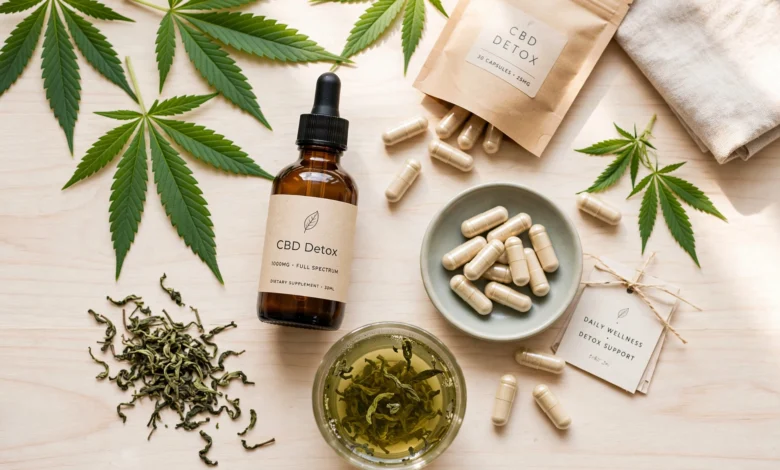
CBD detox products are everywhere right now, from gummies and teas to capsules and tinctures, all promising to flush toxins, clear your system, and reset your body in days. If you’ve searched for a way to pass a drug test, recover from a rough week, or just feel “cleaner,” you’ve probably run into a wall of marketing claims that sound too good to be true. In many cases, they are.
The CBD detox industry has grown fast, and with that growth comes a lot of noise. Some products are backed by real science. Others are repackaged supplements with a CBD label slapped on for marketing. The confusion isn’t your fault. Regulation in this space is still catching up, and most people don’t have time to read every study or ingredient label.
This article breaks down what CBD detox products actually do, what they can’t do, and how to tell the difference between a legitimate option and a waste of money. We’ll look at how these products work, what the research says, common myths, and what to check before you buy. By the end, you’ll have a clear, honest picture instead of another sales pitch.
What Are CBD Detox Products, Exactly?
CBD detox products are supplements that combine cannabidiol (CBD), a non-intoxicating compound derived from hemp, with other ingredients marketed for cleansing or detoxification. These typically include:
- Milk thistle
- Dandelion root
- Activated charcoal
- Electrolytes
- Herbal teas or fiber blends
The idea behind combining CBD with these ingredients is that CBD supports the body’s endocannabinoid system, which plays a role in regulating inflammation, mood, and metabolic balance, while the other ingredients support liver and kidney function. That’s the theory, at least. In practice, the term “detox” is doing a lot of heavy lifting in the marketing.
It’s worth being clear about something upfront: your liver and kidneys already detoxify your body. No supplement, CBD-based or otherwise, replaces that natural process. What these products can potentially do is support general wellness, not perform a medical detox.
How CBD Detox Products Are Marketed vs. How They Actually Work
The Marketing Promise
Most CBD detox products are sold with claims like:

- “Flush toxins in 24 hours”
- “Pass a drug test guaranteed”
- “Reset your system after a night out”
- “Cleanse your liver naturally”
These claims are common across product pages, and they’re exactly why the FDA has issued warning letters to CBD companies over unsubstantiated health claims. According to the U.S. Food and Drug Administration, CBD has not been approved for detoxification purposes, and companies making such claims may be violating federal marketing regulations.
What Actually Happens in Your Body
CBD itself doesn’t detoxify anything in the traditional sense. It interacts with CB1 and CB2 receptors in your endocannabinoid system, which may help with:
- Reducing inflammation
- Supporting sleep quality
- Easing anxiety symptoms
- Promoting general relaxation
None of these effects equal “detoxification.” If a CBD detox product helps you feel calmer or sleep better, that’s a real, documented effect of CBD. But that’s different from clearing THC metabolites, alcohol, or other substances from your bloodstream faster than your body naturally would.
Do CBD Detox Products Actually Help You Pass a Drug Test?
This is the question most people are really asking, so let’s address it directly: no, CBD detox products will not help you pass a THC drug test faster.
Here’s why:
- Standard drug tests screen for THC metabolites, not CBD.
- Full-spectrum CBD products can contain trace amounts of THC (up to 0.3% legally), which can accumulate with regular use and potentially trigger a positive result.
- No supplement speeds up how quickly THC metabolites clear your fat cells and bloodstream. That process is governed by your metabolism, body fat percentage, hydration, and frequency of use.
- “Detox drinks” that claim to mask THC work, if at all, by diluting urine, which most labs test for and flag as suspicious.
If you’re specifically trying to pass a drug screening, a CBD detox product isn’t the tool for that job, and relying on one could backfire, especially if it contains trace THC you didn’t account for.
The Real Benefits of CBD (Without the Detox Hype)
Stripping away the exaggerated claims, CBD does have documented benefits worth mentioning. According to the National Center for Complementary and Integrative Health (NCCIH), CBD has shown promise for:
- Sleep support: Some users report falling asleep faster and experiencing fewer disruptions.
- Anxiety reduction: Preliminary studies suggest CBD may lower cortisol response in stressful situations.
- Pain management: CBD may reduce perceived inflammation and chronic discomfort for some users.
- General relaxation: Many people use CBD as part of an evening wind-down routine.
These benefits are legitimate reasons to try a CBD product. They’re just not the same thing as a “detox,” and honest brands don’t need to stretch the truth to sell a product that already has real value.
7 Truths About CBD Detox Products You Should Know
1. “Detox” Is a Marketing Term, Not a Medical One
The FDA does not regulate the word “detox” the way it regulates drug claims. That means any company can slap it on a label without proving it does anything. When you see CBD detox products marketed with this word, treat it as a flag to read the ingredient list carefully, not as a guarantee of anything.
2. Full-Spectrum Products May Contain THC
If a product is labeled full-spectrum, it likely contains trace THC. This matters if you’re subject to drug testing at work or elsewhere. Broad-spectrum or CBD isolate products are safer choices if THC is a concern.
3. Third-Party Lab Testing Is Non-Negotiable
Reputable CBD detox products provide a Certificate of Analysis (COA) from an independent lab. This document verifies cannabinoid content and screens for contaminants like heavy metals, pesticides, and mold. If a brand doesn’t provide one, that’s a serious red flag.
4. Dosage Matters More Than Marketing Copy
Many products underdose CBD to cut costs while overselling the benefits. Effective doses generally range from 15mg to 50mg per serving, depending on the intended use. Compare the milligrams per serving against the price before assuming a product is a good deal.
5. Detox Teas and Drinks Can Cause Dehydration
Some CBD detox teas rely on diuretics or mild laxatives to create a sensation of “flushing.” This can lead to dehydration and electrolyte imbalance if used frequently, and it has nothing to do with CBD’s actual function in the body.
6. Your Liver Does the Real Work
As mentioned earlier, your liver and kidneys are already handling detoxification around the clock. Supporting them with hydration, sleep, and a balanced diet does more than any supplement claiming to “flush toxins” overnight.
7. Regulation Is Still Catching Up in 2026
Even in 2026, CBD products remain loosely regulated at the federal level in the U.S. Quality control varies enormously between brands, which is why doing your own research before buying matters more than trusting a product label.
How to Choose a Legitimate CBD Product
If you’re still interested in trying a CBD detox product for its general wellness benefits (not as a magic cleanse), here’s a practical checklist:
- Check for third-party lab results. Look for a COA on the brand’s website or packaging.
- Confirm CBD source and extraction method. CO2 extraction is generally considered the cleanest method.
- Avoid vague ingredient lists. “Proprietary blend” without specifics is a warning sign.
- Compare milligrams per dollar. Don’t judge value by bottle size alone.
- Read reviews from verified buyers, not just testimonials on the brand’s own site.
- Choose broad-spectrum or isolate if you need to avoid THC entirely.
- Start with a low dose and adjust gradually to see how your body responds.
Common Myths About CBD Detox Products
Myth: CBD Removes Toxins From Your Bloodstream
This isn’t how CBD works. It doesn’t bind to or remove toxins; it interacts with receptors related to mood, pain, and inflammation regulation.
Myth: More CBD Means Faster Results
Higher doses don’t necessarily speed up any process. Effects depend on individual body chemistry, and excessive doses can sometimes cause grogginess or digestive discomfort instead of added benefit.
Myth: All CBD Detox Products Are the Same
Quality, sourcing, dosage, and third-party testing vary wildly between brands. Two products with nearly identical labels can produce very different results, or none at all.
Frequently Asked Questions
Are CBD detox products safe? Generally, yes, for most healthy adults, when sourced from reputable brands with lab-tested ingredients. As with any supplement, check with a doctor if you’re pregnant, nursing, or taking other medications.
Can CBD detox products help with a hangover? CBD may ease symptoms like nausea or headache for some users, but it won’t accelerate how quickly your body processes alcohol.
How long do CBD detox products take to show effects? Typical wellness effects, like reduced anxiety or better sleep, may appear within a few days to a couple of weeks of consistent use. There’s no scientific basis for a rapid “detox” timeline.
Is it legal to buy CBD detox products in 2026? In most U.S. states, hemp-derived CBD with less than 0.3% THC remains federally legal, though state laws vary. Always check your local regulations before purchasing.
Conclusion
CBD detox products aren’t the miracle cleanse many labels claim, but that doesn’t mean they’re worthless. CBD itself has real, research-backed benefits for sleep, stress, and general wellness, even if it can’t flush toxins or help you pass a drug test overnight.
The key is separating honest product benefits from exaggerated marketing language, checking for third-party lab testing, and understanding that your liver and kidneys are already doing the heavy lifting your body needs. Approach these products with realistic expectations, and you’ll make a smarter, safer purchase in 2026.