The Role of Nurses in Supervised Detoxification
Nurses in supervised detoxification protect patients through monitoring, medication, and support during the riskiest phase of withdrawal.

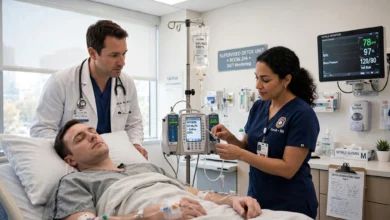
Nurses in supervised detoxification are the reason most withdrawal complications get caught before they become emergencies. Anyone who has sat with a family member through alcohol or opioid withdrawal knows how fast things can change. One hour a patient is anxious and sweating. The next, their heart rate is climbing and they’re disoriented. This is exactly the window where trained nursing care makes the difference between a manageable process and a medical crisis.
Supervised detoxification, sometimes called medical detox or withdrawal management, is the first stage most people go through on the way to treating a substance use disorder. It is not treatment for addiction itself. It’s stabilization: getting a person through the physical process of withdrawal safely enough that they can move on to counseling, medication-assisted treatment, or a residential program. And at nearly every step of that stabilization, a nurse is the one doing the hands-on work.
Physicians write the orders and set the overall plan. But it’s the nursing staff who take vital signs every few hours, score withdrawal severity, give medications on schedule, watch for the early warning signs of seizures or delirium tremens, and talk a frightened patient through their worst hours. This article breaks down exactly what that role looks like, why it matters clinically, and what separates a well-run detox unit from a risky one.
What Is Supervised Detoxification?
Supervised detoxification refers to the process of withdrawing a person from alcohol, opioids, benzodiazepines, or another substance under the observation of trained medical staff, usually in a hospital, dedicated detox facility, or licensed residential program. The goal isn’t just comfort. It’s safety.
Some substances produce withdrawal syndromes that can genuinely kill a person if left unmanaged. Alcohol and benzodiazepine withdrawal can trigger seizures and delirium tremens. Opioid withdrawal is rarely fatal on its own but can cause severe dehydration and cardiac strain, especially in people with existing health problems. This is why the American Society of Addiction Medicine and other clinical bodies recommend a structured, staffed setting rather than trying to detox alone at home.
According to SAMHSA’s Treatment Improvement Protocol on the topic, detoxification is best understood as one part of a larger continuum of care rather than a standalone cure, and it works best when clinicians actively prepare patients for the treatment that follows (SAMHSA TIP 45). That handoff from detox to ongoing care is something nurses are directly involved in coordinating.
Why Medical Supervision Matters
- Withdrawal symptoms can escalate within hours, not days
- Some patients have co-occurring conditions (heart disease, liver damage, mental illness) that complicate withdrawal
- Certain withdrawal syndromes carry a real risk of seizure, stroke, or death
- Patients often underreport how much they’ve been using, which can mask the true severity of what’s coming
- Medication dosing needs constant reassessment based on symptoms, not a fixed schedule
The Core Role of Nurses in Supervised Detoxification
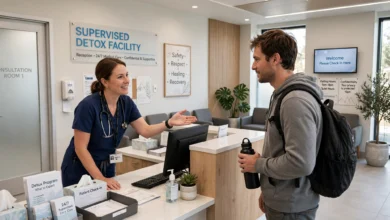
Nurses in supervised detoxification function as the primary point of contact for the patient throughout the process. Physicians and nurse practitioners typically design the care plan and determine which medications are appropriate, but they are not standing at the bedside around the clock. Nurses are.

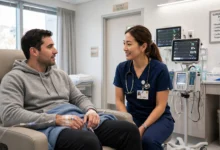
That constant presence is what allows a detox unit to catch problems early rather than reactively. A nurse who has been checking on a patient every hour will notice a shift in mental status or a jump in blood pressure long before it becomes visible on a chart review. This early recognition is arguably the single biggest reason inpatient and residential detox produces better outcomes than unsupervised withdrawal at home.
1. Continuous Monitoring and Vital Sign Assessment
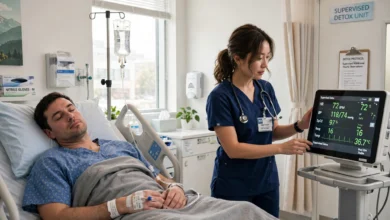
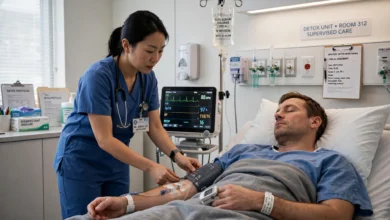
The backbone of nursing care during detox is monitoring. Nurses check blood pressure, heart rate, respiratory rate, and temperature at regular intervals, sometimes every hour during the acute phase of withdrawal. They also track hydration status, mental clarity, and any physical signs of distress.
This monitoring isn’t just clerical. Nurses interpret these numbers in context. A slightly elevated heart rate might mean nothing in one patient and signal impending complications in another, depending on the substance involved and the patient’s history.
2. Using Standardized Withdrawal Assessment Tools
Most detox nurses are trained to use validated scoring systems to measure withdrawal severity in an objective way, rather than relying on guesswork. Common tools include:
- CIWA-Ar (Clinical Institute Withdrawal Assessment for Alcohol) for alcohol withdrawal
- COWS (Clinical Opiate Withdrawal Scale) for opioid withdrawal
- Sedation and agitation scales for benzodiazepine tapers
These scores guide medication dosing. Rather than a rigid schedule, many detox protocols use a “symptom-triggered” approach, where the nurse’s assessment determines whether and how much medication a patient receives. This puts a significant amount of clinical judgment directly in nursing hands.
3. Medication Administration and Titration
Medications used in withdrawal management, such as benzodiazepines for alcohol withdrawal or buprenorphine and methadone for opioid withdrawal, need to be dosed carefully. Too little and the patient suffers unnecessarily or risks seizures. Too much and there’s a risk of oversedation or respiratory depression.
Nurses administer these medications, watch for the patient’s response, and communicate back to the prescribing provider when doses need adjusting. In many facilities, nurses have standing orders that let them titrate medication within a set range based on the patient’s withdrawal score, which speeds up response time considerably.
4. Recognizing and Responding to Complications
Part of the nurse’s job is knowing what “normal” withdrawal looks like versus what’s a red flag. Warning signs nurses are trained to watch for include:
- Rising temperature or heart rate that doesn’t respond to medication
- Visual or auditory hallucinations, especially new-onset confusion
- Tremors that progress to full seizures
- Signs of dehydration or electrolyte imbalance
- Chest pain or irregular heart rhythm
Catching these signs early and escalating to a physician quickly is one of the most consequential parts of the job. This is also where round-the-clock staffing matters most, since complications don’t wait for business hours.
5. Emotional Support and De-escalation
Withdrawal is physically miserable and often emotionally overwhelming. Patients can be anxious, irritable, ashamed, or scared, sometimes all at once. Nurses spend more one-on-one time with patients than any other member of the care team, which puts them in a unique position to offer reassurance and build trust.
This matters clinically, not just as a kindness. A patient who feels supported is more likely to stay in treatment, more likely to be honest about their symptoms, and less likely to leave against medical advice partway through detox. De-escalation skills also come into play with patients who become agitated or combative as part of withdrawal, which nurses are trained to manage without escalating the situation further.
6. Patient Education and Discharge Planning
Detox is a starting point, not a finish line. Nurses play a key role in explaining to patients what withdrawal management does and doesn’t accomplish, and what comes next. That includes:
- Explaining why detox alone doesn’t resolve a substance use disorder
- Reviewing medication instructions for anything prescribed at discharge
- Discussing relapse risk and warning signs to watch for at home
- Coordinating referrals to outpatient counseling, residential treatment, or medication-assisted treatment programs
- Involving family members in aftercare planning when appropriate
This handoff is critical. Research on post-detox outcomes consistently shows that patients who transition directly into further treatment do better than those who leave detox with no plan in place, and nurses are often the ones making sure that plan actually exists before discharge.
7. Interdisciplinary Coordination
Nurses don’t work in isolation. They serve as the communication hub between physicians, psychiatrists, social workers, and counselors involved in a patient’s care. When a physician isn’t physically present, the nurse is often the one relaying changes in condition, requesting order updates, and making sure the whole team is working from the same picture of the patient’s status.
This coordinating role becomes especially important for patients with co-occurring mental health conditions, where addiction treatment and psychiatric care need to move together rather than in separate lanes.
Skills and Training Detox Nurses Need
Not every nurse is trained for withdrawal management, and it’s a specialty with its own learning curve. Facilities that do this well typically look for nurses with:
- Experience or certification in addiction nursing (such as the CARN credential)
- Strong assessment skills and comfort using standardized withdrawal scoring tools
- Familiarity with the pharmacology of benzodiazepines, opioids, and MAT medications
- Crisis de-escalation training
- Comfort working with a population that can be stigmatized elsewhere in the healthcare system
- The ability to stay calm and observant during long, high-acuity shifts
Ongoing education matters here too. Withdrawal management protocols shift as new evidence and medications become available, and nurses who work in this space need to keep up with those changes rather than relying on outdated practices.
Common Withdrawal Syndromes Nurses Manage
Different substances create very different withdrawal pictures, and nursing care has to adapt accordingly.
Alcohol Withdrawal Alcohol withdrawal can range from mild tremors to seizures and delirium tremens, which is a medical emergency. Nurses closely track CIWA-Ar scores and administer benzodiazepines as needed to prevent progression to more severe stages.
Opioid Withdrawal Opioid withdrawal is intensely uncomfortable, with symptoms like nausea, muscle aches, and severe anxiety, but it’s rarely life-threatening in otherwise healthy adults. Nursing care here focuses heavily on comfort medications and, increasingly, initiating buprenorphine or methadone as a bridge to ongoing medication-assisted treatment.
Benzodiazepine Withdrawal Like alcohol, benzodiazepine withdrawal carries a real seizure risk, especially with abrupt discontinuation after long-term use. This typically requires a slow, carefully monitored taper rather than a quick detox, which means longer nursing involvement over time.
Stimulant Withdrawal Withdrawal from cocaine or methamphetamine isn’t usually medically dangerous, but it often comes with severe depression, fatigue, and, in some cases, suicidal thoughts. Nursing care shifts here toward psychological monitoring and safety planning.
Why the Nursing Role Is Often Underestimated
Detox programs are frequently marketed around their physicians or their facilities, but the daily, hour-to-hour work of keeping patients safe falls to nursing staff. A facility can have an excellent medical director on paper, but if the nurse-to-patient ratio is too thin or the nursing staff isn’t specifically trained in addiction care, the actual safety of the program suffers.
When people are researching a medical detox program for themselves or a family member, one of the most useful questions to ask is how the facility staffs its nursing team: how many nurses are on shift, what their training background is, and how frequently patients are checked during the highest-risk period of withdrawal. This detail tends to matter more for outcomes than almost anything else on a facility’s brochure.
The National Institute on Drug Abuse notes that withdrawal management is most effective when it’s paired with follow-up treatment rather than treated as a complete solution on its own (NIDA), which reinforces why the nursing team’s discharge planning work is just as important as their acute care work.
Frequently Asked Questions
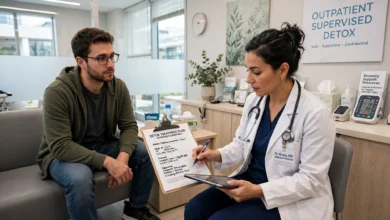
Is a nurse or a doctor in charge during detox? Physicians typically design the treatment plan and set medication parameters, but nurses manage the day-to-day monitoring and often have standing orders to adjust medication based on withdrawal scores between physician visits.
How long does supervised detoxification usually take? Most medical detox stays last anywhere from three to seven days, depending on the substance involved, the severity of dependence, and the patient’s overall health. Benzodiazepine tapers can take considerably longer.
Can withdrawal be managed safely at home? For mild dependence on certain substances, outpatient management with medical support is sometimes appropriate. For alcohol, benzodiazepines, or long-term opioid use, medically supervised detox in a staffed facility is significantly safer due to the risk of sudden complications.
Does detox treat addiction? No. Detox addresses the physical withdrawal process only. It’s considered a stabilization step that should be followed by counseling, medication-assisted treatment, or a structured treatment program to address the underlying substance use disorder.
Conclusion
Supervised detoxification is one of the more dangerous windows in the entire addiction treatment process, and nurses are the people doing the constant, hands-on work of keeping patients safe through it. From tracking vital signs and scoring withdrawal severity to administering medication, catching early warning signs of complications, and preparing patients for what comes after discharge, the nursing role touches nearly every part of the detox experience.
Physicians set the plan, but nurses are the ones executing it hour by hour, which is exactly why the quality of nursing care at a detox facility often matters more than any other single factor in how safely a patient gets through withdrawal.