Alcohol Detox Timeline: What to Expect Day by Day
Alcohol detox timeline explained day by day, including withdrawal symptoms, danger points, and safe ways to get through the process.
Alcohol detox timeline questions come up constantly among people who are ready to quit drinking but don’t know what the next week actually looks like. That uncertainty is understandable. Alcohol withdrawal doesn’t follow a single script, and the internet is full of vague warnings without much practical detail. If you or someone you love is preparing to stop drinking after a long period of heavy use, knowing what happens hour by hour and day by day can make the process feel far less frightening.
This article walks through the alcohol withdrawal timeline from the first symptoms to the weeks that follow, explains why certain days carry more risk than others, and covers the factors that shape how detox unfolds for different people. It also explains why medical supervision during alcohol detox is often the safest choice, especially for anyone who has been drinking heavily for years or has gone through withdrawal before.
None of this replaces a conversation with a doctor. Alcohol withdrawal can become medically serious, sometimes within the first 48 hours, and the safest path through it almost always involves professional support. What follows is meant to give you a realistic picture of the process so you can make an informed decision about how and where to detox.
What Is Alcohol Detox and Why Does Timing Matter
Alcohol detox is the process your body goes through as it clears alcohol and readjusts to functioning without it. Heavy, regular drinking changes brain chemistry over time. The brain slows down its own calming signals (GABA) and ramps up its excitatory ones (glutamate) to compensate for alcohol’s depressant effect. When drinking suddenly stops, that balance is thrown off, and the nervous system becomes overstimulated. This is what causes alcohol withdrawal symptoms.
Timing matters because withdrawal isn’t static. Symptoms build, peak, and fade in a fairly predictable pattern, and knowing where you are in that pattern helps you (or a treatment team) anticipate what’s coming rather than reacting to it. It also matters because some of the most dangerous complications, like seizures and delirium tremens, tend to cluster around specific points in the timeline rather than appearing randomly.
Alcohol Detox Timeline Day by Day
Here is what the detox timeline generally looks like for someone with a moderate to heavy drinking history. Keep in mind that everyone’s experience varies, and this should be read as a general guide, not a diagnosis.
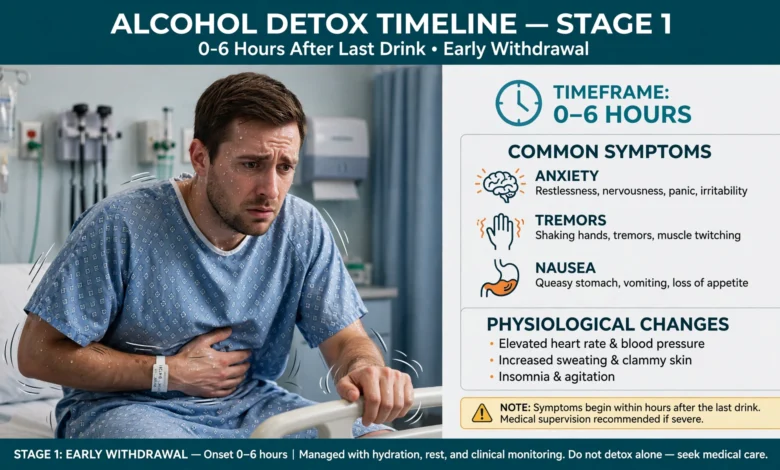
Hours 6–12: Early Withdrawal Symptoms Begin
For many people, the first signs of withdrawal show up within six to twelve hours of the last drink, sometimes even sooner. Early symptoms are usually mild to moderate and include:


- Anxiety or restlessness
- Sweating
- Mild tremors, especially in the hands
- Nausea
- Headache
- Insomnia or trouble falling asleep
- Rapid heartbeat
These symptoms can feel similar to a bad hangover at first, which is part of why people sometimes underestimate what’s coming next.
Day 1: The First 24 Hours
By the end of the first day, symptoms have typically become more noticeable. Blood pressure and heart rate may rise, sweating increases, and anxiety often intensifies. Some people also experience mood swings or irritability. This is generally the point where medical professionals recommend beginning close monitoring, since it’s difficult to predict in advance who will go on to develop more serious symptoms.
Day 2: Symptoms Often Peak
For most people, day two brings the most intense physical symptoms of the alcohol withdrawal timeline. This is also when the risk of seizures rises. Withdrawal seizures typically occur within 12 to 48 hours of the last drink and can happen without much warning, which is one of the main reasons unsupervised detox is discouraged for anyone with a history of heavy or long-term drinking.
Common day two symptoms include:
- Elevated blood pressure and heart rate
- Heavy sweating
- Noticeable tremors
- Nausea and vomiting
- Confusion or difficulty concentrating
- Increased anxiety
Day 3: The Critical Window for Severe Complications
Day three is often when delirium tremens (DTs) can appear, usually between 48 and 96 hours after the last drink. DTs are a severe form of alcohol withdrawal that can involve:
- Severe confusion and disorientation
- Hallucinations (visual, auditory, or tactile)
- High fever
- Rapid heart rate and dangerously high blood pressure
- Agitation or extreme restlessness
DTs occur in a minority of people going through withdrawal, but when they do occur, they are a medical emergency. Without treatment, delirium tremens carries a real risk of death, which is why this window is treated with particular caution in supervised detox settings.
Days 4–5: Symptoms Begin to Ease
For people who don’t develop DTs, physical symptoms usually start improving noticeably by day four or five. Heart rate and blood pressure begin returning toward normal, tremors lessen, and nausea typically subsides. Sleep is often still disrupted, and anxiety or low mood can linger, but the acute physical crisis has generally passed.
Days 5–7: Stabilization
By the end of the first week, most of the intense physical symptoms have resolved. What often remains includes:
- Fatigue
- Mood swings
- Difficulty sleeping
- Trouble concentrating
- Cravings for alcohol
This is a common point for people to feel like they’re “through the worst of it,” which is true in a physical sense, though the psychological work of recovery is really just getting started.
Weeks 2–4 and Beyond: Post-Acute Withdrawal Syndrome (PAWS)
Some people experience a longer-lasting set of symptoms known as post-acute withdrawal syndrome, or PAWS. This can include mood swings, anxiety, low energy, sleep problems, and difficulty handling stress. PAWS can come and go in waves for weeks or even months after the acute alcohol detox phase ends. It’s a normal part of the brain’s recovery process, and it generally improves with time, though ongoing support such as therapy or a recovery program can make a meaningful difference.
Factors That Affect Your Alcohol Detox Timeline
No two people go through withdrawal in exactly the same way. Several factors influence how the alcohol detox process unfolds:
- How much and how often you drank. Heavier and more frequent drinking generally means a longer and more intense withdrawal.
- How long you’ve been drinking heavily. Years of heavy use tend to produce more pronounced withdrawal than a shorter period.
- Previous withdrawal episodes. Each prior withdrawal can make subsequent ones more severe, a phenomenon sometimes called kindling.
- Overall physical health. Liver function, nutritional status, and cardiovascular health all play a role.
- Co-occurring mental health conditions. Anxiety, depression, or other conditions can intensify the emotional side of withdrawal.
- Use of other substances. Combined use of alcohol with sedatives or other drugs can complicate the timeline and increase risk.
- Age. Older adults sometimes experience more prolonged or complicated withdrawal.
Why Medical Supervision Matters During Alcohol Detox
Because seizures and delirium tremens can develop quickly and without much warning, medical supervision is strongly recommended for anyone with a history of heavy, prolonged drinking. According to the National Institute on Alcohol Abuse and Alcoholism, withdrawal can range from mild discomfort to a life-threatening emergency, and it’s often difficult to predict in advance which category a given case will fall into.
Supervised detox settings, whether inpatient or outpatient, typically offer:
- Regular monitoring of vital signs
- Medications to ease symptoms and reduce seizure risk (commonly benzodiazepines, used under medical guidance)
- Fluid and nutritional support
- Immediate response if complications like DTs develop
- A calmer, lower-stress environment than trying to manage symptoms alone at home
The Substance Abuse and Mental Health Services Administration also notes that medically supervised withdrawal management is the safest route for people with a history of heavy or long-term alcohol use, and can serve as the entry point into longer-term treatment and recovery support.
What Happens After Detox
Detox addresses the physical dependence on alcohol, but it doesn’t address the habits, triggers, and underlying reasons someone was drinking heavily in the first place. That’s why detox is generally described as the first step rather than the whole process. After the alcohol detox timeline runs its course, many people move into:
- Outpatient or inpatient treatment programs
- Individual or group therapy
- Support groups such as Alcoholics Anonymous or SMART Recovery
- Medication-assisted treatment options, where appropriate
- Ongoing medical follow-up
Skipping this next step is one of the more common reasons people relapse shortly after detox. The physical symptoms may be gone, but the psychological and behavioral work of recovery is often just beginning.
Tips for Getting Through Alcohol Detox Safely
If you’re preparing for detox, a few practical steps can make the process safer and more manageable:
- Talk to a doctor before you stop drinking, especially if you’ve been drinking heavily for an extended period or have gone through withdrawal before.
- Don’t detox alone if you have a history of heavy drinking. Have someone with you, or better yet, go through a supervised program.
- Stay hydrated and try to eat regularly, even if appetite is low.
- Avoid other substances, including over-the-counter sleep aids, unless a doctor has approved them.
- Watch for warning signs like confusion, hallucinations, high fever, or seizures, and treat any of these as a medical emergency.
- Plan for what comes after detox, whether that’s a treatment program, therapy, or a support group, before the detox process even begins.
Conclusion
The alcohol detox timeline typically moves through early symptoms within the first 6 to 12 hours, a peak in intensity around day two, a critical window for complications like delirium tremens around day three, gradual improvement through days four to seven, and sometimes a longer stretch of post-acute symptoms in the weeks that follow.
Because withdrawal can escalate quickly and unpredictably, medical supervision is the safest way to get through it, and detox itself works best as the first step in a longer recovery plan rather than a standalone fix. If you’re considering stopping drinking after a period of heavy use, a conversation with a doctor before you start is one of the most important steps you can take.