Drug Detox Timeline: 7 Critical Stages to Safely Beat Withdrawal by Substance
Drug detox timelines vary by substance, from days to weeks. Here's how long withdrawal actually lasts for alcohol, opioids, and more.

Anyone getting ready to quit a substance asks the same question first: how long is this actually going to take? A drug detox timeline isn’t one-size-fits-all. It depends on what you’ve been using, how long you’ve used it, how much your body has come to depend on it, and whether you’re going through it with medical support or on your own.
Some people feel the worst of it within a day or two. Others are still dealing with symptoms weeks later, even after the acute phase has passed. Understanding what to expect at each stage doesn’t just ease the anxiety of not knowing, it can also help you (or someone you care about) recognize when symptoms are normal and when they need urgent medical attention.
This guide walks through the detox timeline by substance, covering alcohol, opioids, benzodiazepines, stimulants, and cannabis, along with the factors that speed things up or slow them down. It also covers why a medically supervised detox is often the safer route, and what typically comes next once the physical withdrawal has passed.
None of this replaces a conversation with a doctor or addiction specialist. If you or someone you know is detoxing from a substance with a history of severe withdrawal, that conversation should happen before you stop using, not after symptoms start.
What Affects How Long Drug Detox Takes
Before getting into specific timelines, it helps to understand why the same substance can produce a three-day detox for one person and a two-week detox for another. A handful of variables consistently shape how long withdrawal lasts and how intense it gets:
- Type of substance – Depressants like alcohol and benzodiazepines tend to have longer, more medically risky withdrawal periods than stimulants.
- Duration of use – Someone who has used a substance for ten years will generally have a longer, harder detox than someone who used it for ten weeks.
- Amount and frequency of use – Higher doses and daily use lead to a stronger physical dependence, which stretches out the timeline.
- Method of use – Injecting or smoking a substance tends to create dependence faster than oral use, which can affect withdrawal severity.
- Individual metabolism and genetics – How quickly your liver and kidneys process a substance affects how fast it clears your system.
- Co-occurring physical or mental health conditions – Anxiety, depression, liver disease, or heart conditions can extend recovery and add complications.
- Whether detox is medically supervised – Medications used in supervised detox can shorten the acute phase and reduce the severity of symptoms.
With those factors in mind, here’s what the timeline tends to look like for the substances people ask about most.
Alcohol Detox Timeline
Alcohol withdrawal is one of the more unpredictable and, in severe cases, dangerous detox processes. The alcohol detox timeline typically unfolds in three overlapping stages.


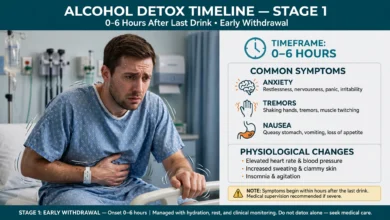
Stage 1: Early Withdrawal (6–12 Hours After Last Drink)
Symptoms can start surprisingly fast, sometimes within six hours of the last drink. Early signs include anxiety, sweating, nausea, headache, and insomnia. For light to moderate drinkers, this may be as far as symptoms go.
Stage 2: Peak Symptoms (24–72 Hours)
This is the window where things can get serious. Symptoms may include tremors, elevated heart rate, high blood pressure, confusion, and in more severe cases, seizures or delirium tremens (DTs). DTs are a medical emergency and are one of the main reasons heavy drinkers are advised not to detox alone at home.
Stage 3: Protracted Withdrawal (1–2 Weeks or Longer)
After the acute phase eases, many people experience lingering symptoms such as fatigue, mood swings, and disrupted sleep for one to two weeks. Some people report a longer-lasting condition called post-acute withdrawal syndrome (PAWS), where mood and sleep issues persist for weeks or months.
Because of the seizure and DT risk, heavy or long-term drinkers should not attempt alcohol detox without medical supervision.
Opioid Detox Timeline
Opioid withdrawal is rarely life-threatening on its own, but it’s often described as one of the most physically miserable detox experiences. The opioid detox timeline depends heavily on whether the opioid is short-acting or long-acting.
Short-Acting Opioids (Heroin, Oxycodone, Hydrocodone)
- Onset: 8–24 hours after last use
- Peak: 1–3 days
- Duration: Most acute symptoms resolve within 5–7 days
Symptoms include muscle aches, sweating, chills, anxiety, insomnia, nausea, and diarrhea.
Long-Acting Opioids (Methadone, Extended-Release Oxycodone)
- Onset: 12–48 hours after last use
- Peak: 3–8 days
- Duration: Can last up to 2 weeks or more
Because methadone stays in the system longer, withdrawal starts later but often drags on longer than with shorter-acting opioids.
Cravings and mood-related symptoms (irritability, low motivation, disrupted sleep) can persist for weeks or months after the physical symptoms fade. Medication-assisted treatment, using drugs like buprenorphine or methadone under medical guidance, is often used to make this stage more manageable and reduce relapse risk.
Benzodiazepine Detox Timeline
Benzodiazepine withdrawal deserves particular caution. Like alcohol, it carries a risk of seizures, and abrupt discontinuation after long-term use can be dangerous. The benzo detox timeline also splits by how long the drug stays active in the body.
Short-Acting Benzodiazepines (Xanax, Ativan)
- Onset: 6–12 hours after last dose
- Peak: 1–4 days
- Duration: Acute symptoms typically last 1–2 weeks
Long-Acting Benzodiazepines (Valium, Klonopin)
- Onset: 1–4 days after last dose
- Peak: 5–10 days
- Duration: Can extend to several weeks
Symptoms range from anxiety and insomnia to muscle stiffness, tremors, and in severe cases, seizures. Because of this risk, benzodiazepine detox is almost always done through a slow, medically supervised taper rather than stopping cold turkey.
Stimulant Detox Timeline (Cocaine and Methamphetamine)
Stimulant withdrawal looks different from depressant withdrawal. There’s typically less physical danger, but the psychological symptoms, especially the “crash,” can be intense.
Cocaine
- Crash phase: 1–3 days, marked by fatigue, increased appetite, and depressed mood
- Withdrawal phase: 1–3 weeks, with irritability, low energy, and strong cravings
- Extinction phase: Cravings can resurface intermittently for months, often triggered by stress or cues associated with past use
Methamphetamine
- Crash phase: 1–3 days of exhaustion and increased sleep
- Withdrawal phase: Up to 2–3 weeks, including depression, anxiety, and intense cravings
- Longer-term symptoms: Mood disturbances and cognitive fog can linger for a month or more
Because stimulant withdrawal is largely psychological, this is one area where behavioral support and mental health treatment make a real difference in how manageable the process feels.
Cannabis Detox Timeline
Cannabis withdrawal is milder than most other substances on this list, but it’s not nothing, especially for daily, long-term users.
- Onset: 1–3 days after last use
- Peak: Days 2–6
- Duration: Most symptoms resolve within 1–2 weeks
Common symptoms include irritability, anxiety, disrupted sleep, decreased appetite, and vivid dreams once sleep normalizes. Heavy, long-term users sometimes report sleep disturbances lasting several weeks beyond the main withdrawal window.
Why Medical Detox Often Matters
A supervised medical detox doesn’t just make withdrawal more comfortable, it can be a genuine safety measure for certain substances. Alcohol and benzodiazepine withdrawal, in particular, carry a real risk of seizures and other complications that are far safer to manage in a clinical setting where they can be caught and treated immediately.
Medical detox typically includes:
- An initial assessment of substance use history, health conditions, and withdrawal risk
- Round-the-clock monitoring of vital signs during the acute withdrawal window
- Medications to ease specific symptoms (anti-nausea medication, sleep aids, blood pressure management, or medications like buprenorphine for opioids)
- A plan for transitioning into ongoing treatment once the physical detox is complete
According to the National Institute on Drug Abuse, detox alone is rarely enough to produce long-term recovery. It’s the first step, not the whole process.
What Happens After Detox
Detox handles the physical dependence, but it doesn’t address the habits, triggers, or underlying issues that led to substance use in the first place. That’s why most treatment providers recommend some form of continued care after detox, which might include:
- Inpatient or outpatient rehab programs
- Individual or group therapy (cognitive behavioral therapy is commonly used)
- Support groups such as 12-step programs or SMART Recovery
- Medication-assisted treatment for opioid or alcohol use disorder
- Ongoing psychiatric care for co-occurring mental health conditions
Skipping this step is one of the most common reasons people relapse shortly after detox. The physical symptoms are gone, but the underlying patterns usually aren’t.
If you’re not sure where to start, the Substance Abuse and Mental Health Services Administration (SAMHSA) operates a free, confidential national helpline that can connect you with local treatment resources.
Frequently Asked Questions
How long does drug detox take overall? It depends entirely on the substance. Cannabis and short-acting opioids often resolve within a week to ten days. Alcohol, benzodiazepines, and long-acting opioids can take two weeks or longer, and lingering symptoms like disrupted sleep or mood changes can persist for months in some cases.
Can you detox from drugs at home? For milder substances, some people manage at home, though it’s still wise to have a check-in plan with a doctor. For alcohol, benzodiazepines, or long-term heavy use of any substance, home detox carries real medical risk and is not recommended.
Is medical detox faster than detoxing alone? Not necessarily faster, but generally safer and more comfortable. Medications used during medical detox can also reduce the severity of symptoms, which makes the process more tolerable even if the overall timeline is similar.
What’s the hardest day of detox? This varies by substance, but for most depressants and opioids, days 2 through 4 tend to be when symptoms peak.
Conclusion
There’s no single answer to how long drug detox takes, because the timeline shifts based on the substance, the length and intensity of use, and whether the process is medically supervised. Alcohol and benzodiazepines carry the highest short-term medical risk and often require professional oversight, opioid withdrawal is physically brutal but rarely dangerous on its own.
And stimulant or cannabis withdrawal tends to be more psychological than physical. What stays consistent across every substance is that detox is the starting point of recovery, not the finish line, and the days or weeks that follow it usually matter more for long-term success than the detox itself.