The Cost of Physical Therapy in the USA: Insurance Coverage Guide
The Cost of Physical Therapy in the USA ranges from $20 copays to $350 self-pay sessions. See what insurance actually covers and how to pay less.
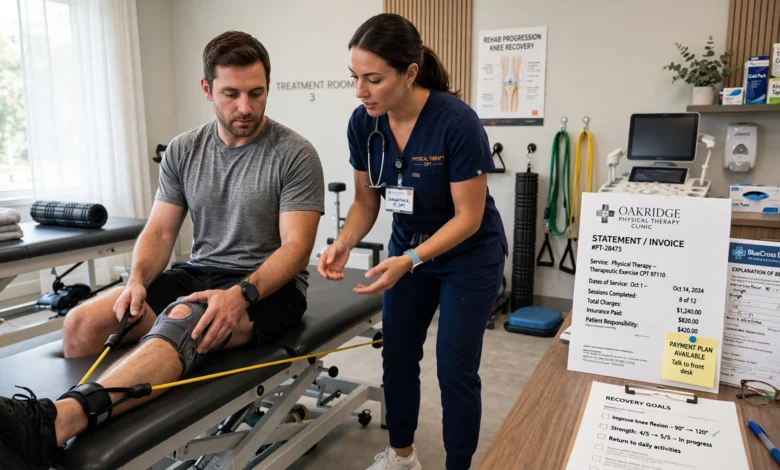
If you’ve ever left a physical therapist’s office and stared at a bill wondering how a 45-minute session could cost more than your dinner reservation, you’re not alone. The Cost of Physical therapy is one of the most confusing parts of American healthcare, mostly because the price you pay has almost nothing to do with the price the clinic charges. It depends on your insurance plan, your deductible, your diagnosis, and sometimes just which zip code you happen to live in.
Across the country, a single visit can run anywhere from a $20 copay to $350 out of pocket, and a full course of treatment for something like a knee injury or chronic back pain can add up to thousands of dollars before you’re done. That’s a big range, and it’s exactly why so many people put off care they actually need. Some end up skipping sessions to save money, which usually backfires: research has shown that people who start physical therapy soon after a back injury end up with meaningfully lower total healthcare costs and a much lower chance of needing surgery or opioids down the road.
This guide breaks down what physical therapy actually costs with and without insurance, how Medicare and Medicaid handle it, what drives the price up or down, and what you can do right now to pay less without cutting corners on your recovery.
How Much Does Cost of Physical Therapyin the USA?
The honest answer is: it depends heavily on whether you have insurance, and if so, what kind.
With insurance, most people pay a copay of $20 to $60 per session once their deductible is met. Some plans use coinsurance instead of a flat copay, meaning you pay a percentage (often 10% to 30%) of the negotiated rate. Either way, your insurance company has already negotiated a lower rate with the clinic than what a self-pay patient would see.
Without insurance, a typical session runs $75 to $250, with a national average landing somewhere around $130 to $150. Prices at the low end tend to come from cash-pay clinics that have opted out of insurance billing entirely and pass the savings on to patients. Prices at the high end usually show up in hospital-affiliated outpatient departments or major metro areas like New York, San Francisco, and Boston.
A few things to keep in mind about how sessions are priced:
- Initial evaluation visits cost more. Expect to pay $150 to $400 for your first appointment, since it includes a full assessment of your condition, medical history, and a custom treatment plan.
- Follow-up sessions cost less than the first visit, typically 30 to 90 minutes long depending on the treatment involved.
- A full treatment plan, not a single session, is really what determines your total Cost of Physical Therapy. Most conditions need 2 to 3 visits per week for 6 to 8 weeks, sometimes longer for post-surgical recovery.
To put a full course of care in perspective, a standard plan of 12 to 24 sessions over 6 to 8 weeks can total $900 to $4,000 out of pocket without insurance, and $200 to $1,450 with insurance once copays are factored in. Post-surgical rehabilitation for something like a rotator cuff repair, which can run 26 to 34 sessions, tends to land on the higher end of both ranges.
What Actually Drives Cost of Physical Therapy Up or Down
The price isn’t random. A handful of factors explain almost all of the variation you’ll see between clinics and patients.
1. Type and Severity of Your Condition
A minor muscle strain that needs six visits is going to cost a fraction of what a post-surgical ACL reconstruction requiring 20-plus sessions will run. More complex conditions, like neurological rehab after a stroke, involve specialized techniques and longer treatment timelines, which pushes the total higher even if the per-session rate looks similar.
2. Location of the Clinic
Urban clinics in high cost-of-living areas charge more than suburban or rural practices, largely because of rent and staffing costs. It’s not unusual to see the same treatment cost 30% to 50% more in a major city than in a smaller town.
3. Type of Facility
Hospital-owned outpatient departments almost always charge more than independent or cash-pay clinics, sometimes billing an extra “facility fee” on top of the treatment itself. If you have a choice, an independent clinic is usually the cheaper route for the same quality of care.
4. Therapist Experience and Credentials
Board-certified specialists and therapists with advanced clinical certifications (in orthopedics, sports medicine, or pelvic health, for example) often charge higher rates than general practice therapists, similar to how a specialist physician costs more than a general practitioner.
5. Insurance Network Status
In-network clinics have already agreed to discounted rates with your insurer, so your physical therapy cost stays predictable. Out-of-network providers can bill whatever they want, and your insurance may only reimburse a small portion, leaving you responsible for the rest.
6. Session Length and Modalities Used
A quick 30-minute follow-up costs less than a full hour combining manual therapy, therapeutic exercise, and modalities like ultrasound or electrical stimulation. Specialized equipment and one-on-one time both add to the bill.
7. Additional Diagnostic Costs
X-rays, MRIs, and other imaging ordered alongside your therapy aren’t included in the per-session price and can add hundreds of dollars to your total treatment cost.
Physical Therapy Cost by Common Condition
Since so many people search for pricing based on their specific injury, here’s a rough breakdown of what treatment tends to cost by condition, with and without insurance:
- Knee injuries: $160 to $1,450 with insurance for 8-24 sessions; $640 to $3,850 without insurance. Recovery generally takes 6 to 8 weeks.
- Back pain: $240 to $1,450 with insurance for 12-24 sessions; $840 to $3,850 without insurance. Chronic or post-surgical cases can extend treatment for months.
- Rotator cuff injuries: $520 to $2,000 with insurance for 26-34 sessions; $1,800 to $5,450 without insurance. Recovery often takes around six months.
- Pelvic floor therapy: $160 to $720 with insurance for 8-12 sessions; $560 to $1,900 without insurance.
- Sports injuries: $100 to $250 per session without insurance, with mild strains needing 6-10 visits and post-surgical athletic injuries needing 20 or more.
These numbers move around based on the factors above, so treat them as a starting point for budgeting, not a guaranteed quote.
Insurance Coverage for Physical Therapy: What You Need to Know
This is where things get genuinely complicated, because “insurance covers physical therapy” doesn’t mean the same thing across plan types. Here’s how coverage typically breaks down.
Employer-Sponsored and Marketplace Insurance
Most private health plans cover physical therapy when it’s deemed medically necessary and prescribed by a physician, but the details vary by plan structure:
- HMO plans usually require you to use an in-network therapist and often need a referral from your primary care doctor. Copays typically run $20 to $60 per visit.
- PPO plans offer more flexibility to see out-of-network providers, but you’ll pay more out of pocket if you do. In-network copays are similar to HMO plans.
- High-deductible health plans (HDHPs) paired with an HSA mean you’ll pay the full negotiated rate for physical therapy until you meet your deductible, at which point coinsurance kicks in.
Almost every private plan also caps the number of covered visits per year, commonly somewhere between 20 and 60 sessions. Once you hit that cap, you’re responsible for the full cost unless your plan approves an exception.
Before you book anything, call your insurer and ask three specific questions: Is physical therapy covered under my plan? How many visits am I allowed per year? And is this particular clinic in-network? Skipping this step is the single most common reason people end up with surprise bills.
Medicare Coverage of Physical Therapy Cost
Medicare Part B covers outpatient physical therapy that’s medically necessary, and it pays 80% of the Medicare-approved amount once you’ve met your annual Part B deductible. That typically leaves you responsible for about 20% coinsurance, which averages out to roughly $20 to $40 per session for most beneficiaries.
There’s no hard limit on how much physical therapy Medicare will cover in a year anymore. The old “therapy cap” was repealed back in 2018 and replaced with a threshold system. For 2026, once your covered therapy expenses hit $2,480, your provider has to attach a special billing code (called the KX modifier) to confirm your continued care is medically necessary. You can keep receiving covered treatment past that point as long as your therapist documents why it’s still needed. There’s a second, higher threshold of $3,000 where Medicare may take a closer look at your claims, but this doesn’t mean your care gets cut off. You can read the full technical details directly from the Centers for Medicare & Medicaid Services therapy services page.
If you have a Medicare Advantage plan instead of Original Medicare, your Cost of Physical Therapy and coverage rules will follow that plan’s specific structure, which can include different copays, networks, and prior authorization requirements.
Medicaid Coverage
Medicaid coverage for physical therapy varies significantly by state, since each state runs its own program within federal guidelines. Many states cover physical therapy for specific conditions with little to no copay, while others impose visit limits or require prior authorization before treatment starts. If you’re on Medicaid, your best move is calling your state’s Medicaid office directly or asking the clinic’s billing staff to verify your specific benefits before your first appointment.
If You Don’t Have Insurance
Going without coverage doesn’t mean physical therapy is out of reach. A few realistic options:
- Cash-pay clinics often charge 20% to 40% less than insurance-based clinics for the same quality of care, since they skip the administrative overhead of billing insurers.
- Session bundles or package deals can lower your per-visit rate if you commit to a full treatment plan upfront.
- Sliding-scale fees based on income are available at some clinics, along with reduced rates at university-affiliated clinics where supervised students provide care.
- HSA and FSA funds can be used to pay for physical therapy, which effectively reduces your cost by your tax rate.
- Payment plans offered directly by the clinic can spread out a larger total bill into manageable monthly payments.
7 Ways to Lower Your Cost of Physical Therapy
- Verify your benefits before your first visit. A five-minute call to your insurer can save you from a surprise bill down the line.
- Choose an in-network provider whenever possible. Out-of-network care almost always costs significantly more, even with insurance.
- Ask about cash-pay rates even if you have insurance. In rare cases, especially with high-deductible plans, the self-pay rate can actually be cheaper than what you’d owe toward your deductible.
- Do your home exercise program. Patients who consistently follow through on prescribed home exercises tend to need fewer total sessions to reach their goals, which directly lowers the final bill.
- Ask about package pricing. If your treatment plan is fairly predictable (say, a standard 12-session program for a sprain), bundled pricing can shave a meaningful amount off the total.
- Use HSA or FSA dollars. These pre-tax accounts are built for exactly this kind of medical expense.
- Check for telehealth or hybrid PT options. Virtual physical therapy programs are often priced lower than in-clinic visits and are increasingly covered by insurance, including Medicare through 2027.
Questions Worth Asking Before You Start Treatment
- Does my plan require a physician referral for physical therapy, or can I use direct access?
- How many visits does my plan cover per calendar year, and how many have I already used?
- Is the initial evaluation billed separately from the treatment sessions?
- What’s the clinic’s cash-pay rate if I want to compare it to my insurance costs?
- Will imaging or additional testing be billed separately from my therapy sessions?
Getting clear answers to these questions before your first appointment is the best way to avoid an unpleasant surprise later. For a deeper look at how insurance plans classify medical necessity and coverage decisions more broadly, the American Physical Therapy Association’s payment resources are a solid, unbiased place to start.
Conclusion
The Cost of Physical Therapy in the USA swings widely depending on your insurance status, your specific condition, where you live, and which type of clinic you choose, ranging from a $20 copay to a $350 self-pay session. Private insurance, Medicare, and Medicaid each cover physical therapy differently, with Medicare’s 2026 threshold sitting at $2,480 before extra documentation kicks in, and Medicaid rules shifting state by state.
Even without insurance, options like cash-pay clinics, package pricing, HSA/FSA funds, and sliding-scale fees can make treatment realistic on a tighter budget. The smartest move before your first appointment is always the same: call your insurer, ask about your specific benefits, and get a clear price estimate from the clinic, so your recovery isn’t derailed by a bill you didn’t see coming.