Detox Symptoms by Drug Type: A Comprehensive Guide
Detox symptoms by drug type. This guide breaks down withdrawal signs by drug type and explains when medical detox is necessary.

Detox symptoms by drug type differ so much that what feels manageable with one substance can be life-threatening with another. Someone quitting caffeine might deal with a headache and some fatigue for a few days. Someone quitting alcohol or benzodiazepines cold turkey can face seizures. That gap is exactly why understanding withdrawal on a substance-by-substance basis matters, rather than treating “detox” as one universal experience.
Withdrawal happens because the body adapts to the regular presence of a substance. Once that substance is removed, the nervous system, cardiovascular system, and brain chemistry all have to recalibrate, and that recalibration produces physical and psychological symptoms. The timeline, severity, and risk level depend on the drug class, how long someone used it, the dose, and individual health factors like liver function, mental health history, and whether multiple substances were involved.
This guide walks through drug withdrawal symptoms for the most commonly used substance categories: alcohol, opioids, benzodiazepines and other sedatives, stimulants, cannabis, and nicotine. For each, we’ll cover what typically happens, how long it tends to last, and what warning signs mean it’s time to get medical help rather than tough it out alone. The goal is to give you a clear, honest picture so you or someone you care about can make an informed, safer decision about detox.
Why Detox Symptoms Vary So Much by Substance
Before getting into specifics, it helps to understand the underlying reason these symptoms look so different across drug categories.
Different substances act on different systems in the brain and body:
- Depressants (alcohol, benzodiazepines, opioids) slow down the central nervous system. When they’re removed, the nervous system rebounds into overdrive, which is why withdrawal from these often involves anxiety, tremors, elevated heart rate, and in severe cases, seizures.
- Stimulants (cocaine, methamphetamine) speed up the nervous system. Withdrawal tends to swing the other direction, producing exhaustion, low mood, and slowed cognition rather than physical agitation.
- Cannabinoids and nicotine affect mood and appetite regulation more than vital signs, so withdrawal is usually uncomfortable but rarely dangerous on its own.
This is the core reason a one-size-fits-all approach to detox doesn’t work. According to the National Institute on Drug Abuse, the physiological mechanisms behind dependence are substance-specific, and treatment approaches need to reflect that.
Alcohol Detox Symptoms
Alcohol withdrawal is one of the more medically serious detox processes, and it’s often underestimated because alcohol is legal and socially normalized.


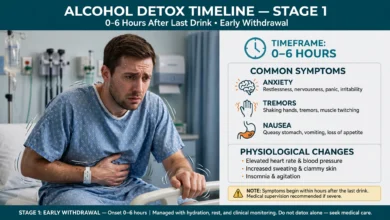
Early Symptoms (6–24 Hours After Last Drink)
- Anxiety and restlessness
- Sweating and clammy skin
- Nausea and stomach upset
- Elevated heart rate and blood pressure
- Hand tremors
- Trouble sleeping
Peak and Severe Symptoms (24–72 Hours)
For people with heavy, long-term alcohol use, symptoms can escalate significantly:
- Seizures — usually within the first 48 hours
- Delirium tremens (DTs) — confusion, hallucinations, severe agitation, and dangerously high heart rate and blood pressure
- Fever
- Severe disorientation
Delirium tremens is a medical emergency. It doesn’t affect everyone going through alcohol withdrawal, but when it happens, it carries real risk without proper medical supervision. This is one of the clearest cases where detox symptoms by drug type genuinely change the calculation on whether someone should attempt withdrawal at home at all. The Substance Abuse and Mental Health Services Administration recommends medically supervised detox for anyone with a history of heavy or prolonged alcohol use.
Opioid Detox Symptoms
Opioid withdrawal (heroin, fentanyl, oxycodone, morphine, and similar prescription painkillers) is known for being intensely uncomfortable, though it’s generally not considered life-threatening in the way alcohol or benzodiazepine withdrawal can be, unless complications like severe dehydration develop.
Early Symptoms (Within 6–12 Hours for Short-Acting Opioids)
- Muscle aches
- Anxiety and agitation
- Sweating
- Runny nose and watery eyes
- Yawning
- Insomnia
Peak Symptoms (1–3 Days)
- Severe nausea, vomiting, and diarrhea
- Abdominal cramping
- Dilated pupils
- Goosebumps and chills (“cold turkey” skin)
- Rapid heartbeat
- Intense drug cravings
Longer-Term Symptoms
Some people experience post-acute withdrawal symptoms for weeks or months, including:
- Low mood and irritability
- Sleep disturbances
- Ongoing cravings
- Difficulty feeling pleasure (anhedonia)
Because opioid withdrawal is so uncomfortable, relapse risk is high without support. It’s also worth noting that after a period of abstinence, tolerance drops, which makes returning to previous use amounts particularly dangerous for overdose risk.
Benzodiazepine and Sedative Detox Symptoms
Benzodiazepines (like Xanax, Valium, and Ativan) and other sedative-hypnotics carry withdrawal risks similar to alcohol, and in some ways they require even more caution because withdrawal can be delayed and drawn out.
Common Symptoms
- Rebound anxiety and panic attacks
- Insomnia
- Muscle tension and tremors
- Sweating
- Irritability
- Sensory disturbances (sensitivity to light or sound)
Severe Symptoms
- Seizures
- Psychosis or severe confusion
- Dangerous spikes in blood pressure and heart rate
A key detail with benzodiazepine detox is timing. Symptoms can appear days after the last dose, especially with longer-acting benzodiazepines, which sometimes leads people to mistakenly believe they’re through the worst of it. Abrupt discontinuation after long-term use is considered one of the more dangerous forms of withdrawal, which is why tapering under medical guidance is the standard approach rather than stopping abruptly.
Stimulant Detox Symptoms (Cocaine and Methamphetamine)
Stimulant withdrawal looks almost like the opposite of what happens with depressants. Instead of physical agitation, the body and brain essentially crash.
Common Symptoms
- Extreme fatigue and oversleeping
- Increased appetite
- Depression and flat mood
- Intense drug cravings
- Difficulty concentrating
- Vivid or disturbing dreams
The “Crash” Phase
In the first few days after stopping stimulant use, many people go through what’s often called “the crash,” marked by:
- Deep exhaustion
- Sleeping far more than usual
- Low motivation
- Sometimes, suicidal thoughts in people with underlying depression risk
While stimulant withdrawal is rarely medically dangerous in the way alcohol or benzodiazepine withdrawal can be, the psychological symptoms, particularly depression, deserve serious attention. Anyone experiencing thoughts of self-harm during this period should not manage it alone.
Cannabis Detox Symptoms
Cannabis withdrawal is milder physically than the categories above, but it’s more real and more disruptive than it’s often given credit for, especially with regular, long-term use.
Common Symptoms
- Irritability and mood swings
- Anxiety
- Sleep problems, including vivid dreams
- Decreased appetite
- Restlessness
- Headaches
- Stomach discomfort
Most cannabis withdrawal symptoms peak within the first week and taper off over two to three weeks. They’re rarely dangerous, but sleep disruption and irritability are commonly reported as the hardest parts to push through, which is a major reason people relapse even without physical dependence in the classic sense.
Nicotine Detox Symptoms
Nicotine withdrawal is extremely common and, while uncomfortable, is not physically dangerous.
Common Symptoms
- Intense cravings
- Irritability and frustration
- Difficulty concentrating
- Increased appetite
- Restlessness
- Anxiety
- Trouble sleeping
Nicotine withdrawal symptoms typically peak within the first three days and gradually improve over two to four weeks, though cravings can resurface periodically for much longer, often triggered by habit or stress cues rather than physical need.
Comparing Detox Timelines Across Drug Types
To put the differences in perspective, here’s a general comparison. These are typical ranges and can vary based on usage history and individual factors.
| Substance | Onset of Symptoms | Peak Symptoms | Medical Risk Level |
|---|---|---|---|
| Alcohol | 6–24 hours | 24–72 hours | High |
| Opioids | 6–24 hours | 1–3 days | Moderate |
| Benzodiazepines | Hours to days | Days to weeks | High |
| Stimulants | Within 24 hours | 2–4 days | Low to Moderate (psychological) |
| Cannabis | 1–3 days | 2–6 days | Low |
| Nicotine | Within 24 hours | 1–3 days | Low |
Warning Signs That Require Immediate Medical Attention
Regardless of the substance, certain symptoms during drug detox should never be managed at home. Seek emergency medical care if you or someone you’re supporting experiences:
- Seizures of any kind
- Hallucinations or severe confusion
- Chest pain or irregular heartbeat
- High fever
- Severe dehydration from vomiting or diarrhea
- Thoughts of suicide or self-harm
- Loss of consciousness
These symptoms can appear across multiple substance categories, but they’re particularly associated with alcohol and benzodiazepine withdrawal.
Why Medical Detox Is Often the Safer Choice
A medical detox program provides supervision, medication support when appropriate, and monitoring of vital signs throughout the withdrawal process. This matters for a few reasons:
- Safety: Trained staff can recognize early signs of complications like seizures or dangerous vital sign changes before they become emergencies.
- Comfort: Certain medications can ease specific symptoms, making the process more tolerable and reducing the temptation to relapse just to stop the discomfort.
- Continuity of care: Detox is the first step, not the whole process. Facilities connect people to counseling, support groups, and longer-term treatment planning right away.
For substances with high medical risk, like alcohol and benzodiazepines, medical detox isn’t just a convenience; it’s a genuine safety measure. For lower-risk substances like nicotine or cannabis, at-home withdrawal is more common, but support still improves the odds of staying substance-free.
What Influences How Severe Detox Symptoms Are
Several factors affect how intense someone’s withdrawal symptoms will be:
- Duration of use: Longer-term use generally produces more pronounced withdrawal.
- Dosage: Higher typical doses tend to correlate with more severe symptoms.
- Polysubstance use: Using multiple substances together complicates withdrawal and increases risk, since symptoms can overlap or mask one another.
- Physical health: Liver or kidney function, cardiovascular health, and nutritional status all play a role.
- Mental health history: Pre-existing anxiety, depression, or trauma history can intensify the psychological symptoms of withdrawal.
- Age: Older adults may process withdrawal differently and face higher risk from certain symptoms, like dehydration or cardiovascular strain.
Conclusion
Detox symptoms by drug type vary enormously, from the relatively mild discomfort of nicotine or cannabis withdrawal to the potentially life-threatening complications of alcohol and benzodiazepine withdrawal. Opioid withdrawal is grueling but rarely dangerous on its own, while stimulant withdrawal tends to hit harder psychologically than physically.
What all of these have in common is that the body and brain need time, and often support, to recalibrate after dependence develops. Understanding what to expect from a specific substance, recognizing which symptoms are medical emergencies, and knowing that professional detox support exists can make the difference between a dangerous, isolating experience and a safer path toward recovery.